
The great belfries of Belgium and northern France were civic architecture with a very public message: the town had rights of its own.
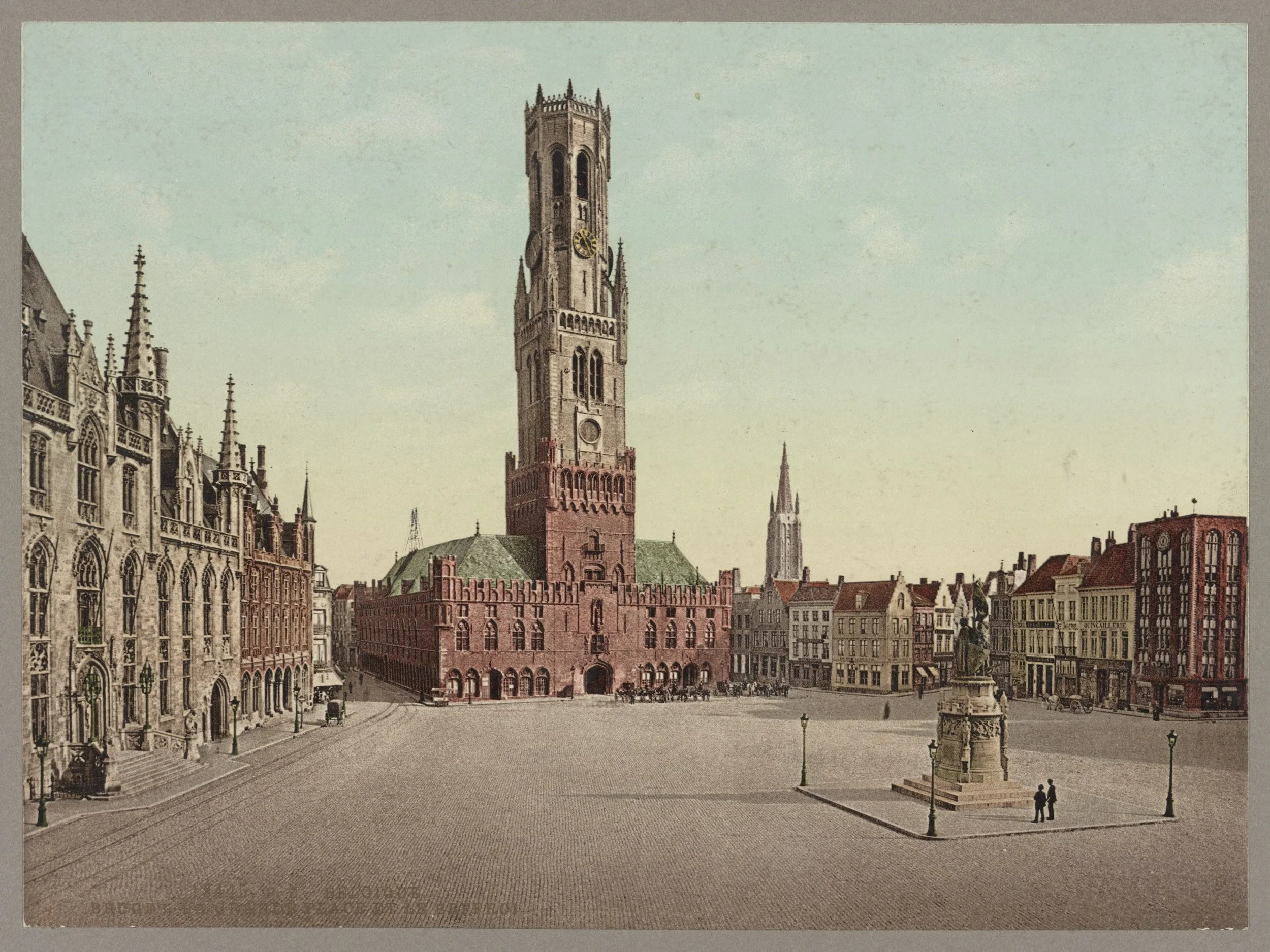
The Markt in Bruges and its belfry in a photochrom print published by the Photoglob Company of Zurich around 1890. The belfry was added to the market square around 1240. It once housed the city’s treasury and municipal archives and served as a lookout for fires and other dangers.
Photo: Photoglob Co., Public domain, via Library of Congress and Wikimedia Commons
These towers held bells, but they could also hold charters, seals, treasuries, clocks, and watchmen. Bruges and Ghent are good examples. Their belfries rose over commercial squares where the bells regulated work, announced danger, and called civic assemblies.
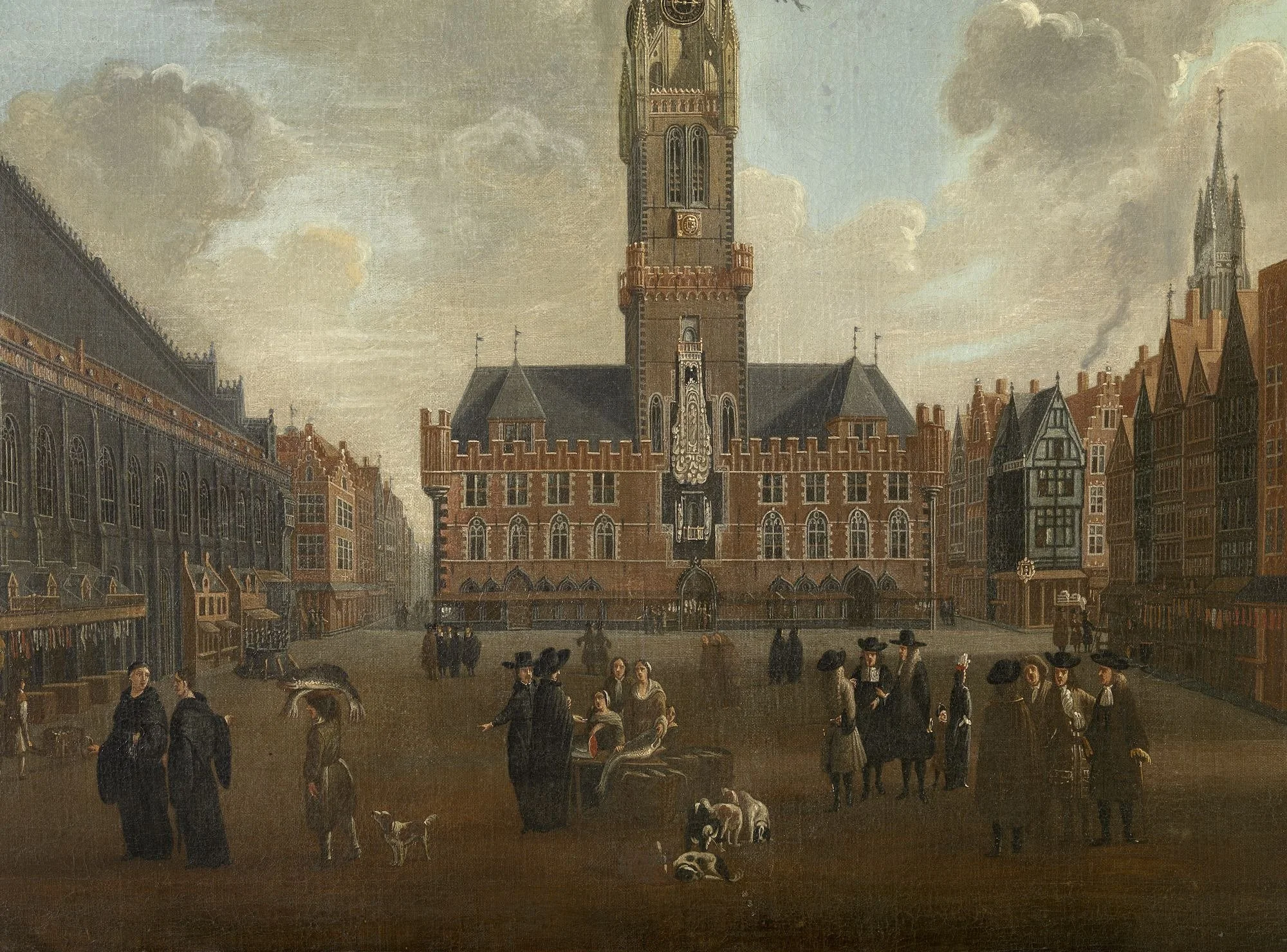
The Market in Bruges, a late 17th-century painting by Jan Baptist van Meunincxhove in the Groeningemuseum, Bruges. Townspeople and traders fill the Markt beneath the belfry and the market hall at its base. The tower’s bells announced the time, work hours, fire alarms, and civic events to the city below.
Photo: Jan Baptist van Meunincxhove, Public domain, via Musea Brugge (Art in Flanders) and Wikimedia Commons
That helps explain why UNESCO treats the region’s historic belfries as monuments to urban independence rather than simply as attractive towers. A church bell answered to ecclesiastical authority. A municipal bell could answer to magistrates, guilds, or the city itself.
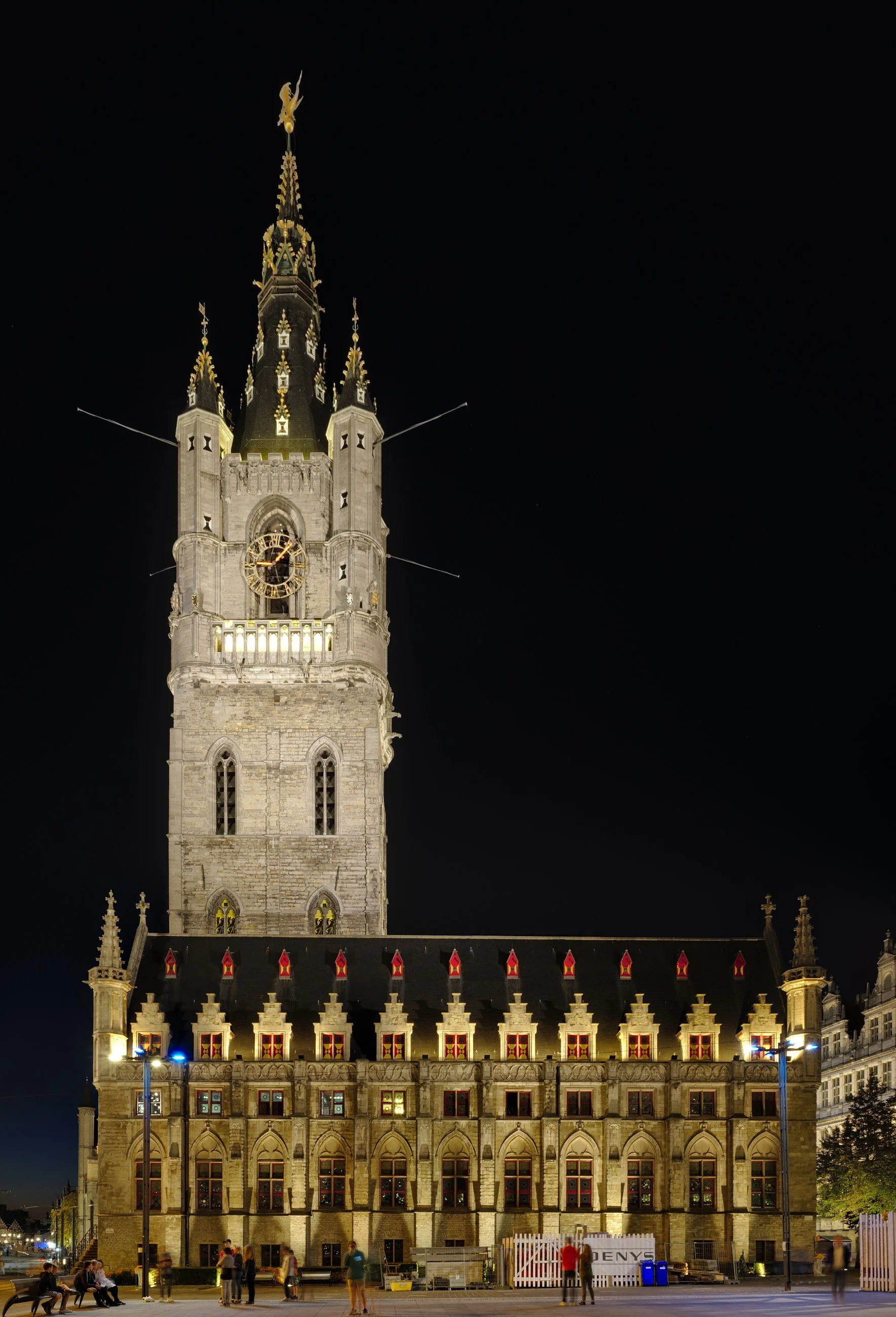
The Belfry of Ghent and its adjoining Cloth Hall at twilight. Work on the tower began in 1313 and was completed in 1380. Over the centuries it served as a bell tower, a fortified watchtower, and the place where the documents recording the city’s privileges were kept. It is part of the UNESCO World Heritage listing of the Belfries of Belgium and France.
Photo: Trougnouf (Benoit Brummer), CC BY 4.0, via Wikimedia Commons
The distinction was audible. Medieval urban freedom was written into charters, but it was also announced from above the rooftops. A town with its own belfry possessed a machine for making its government heard.
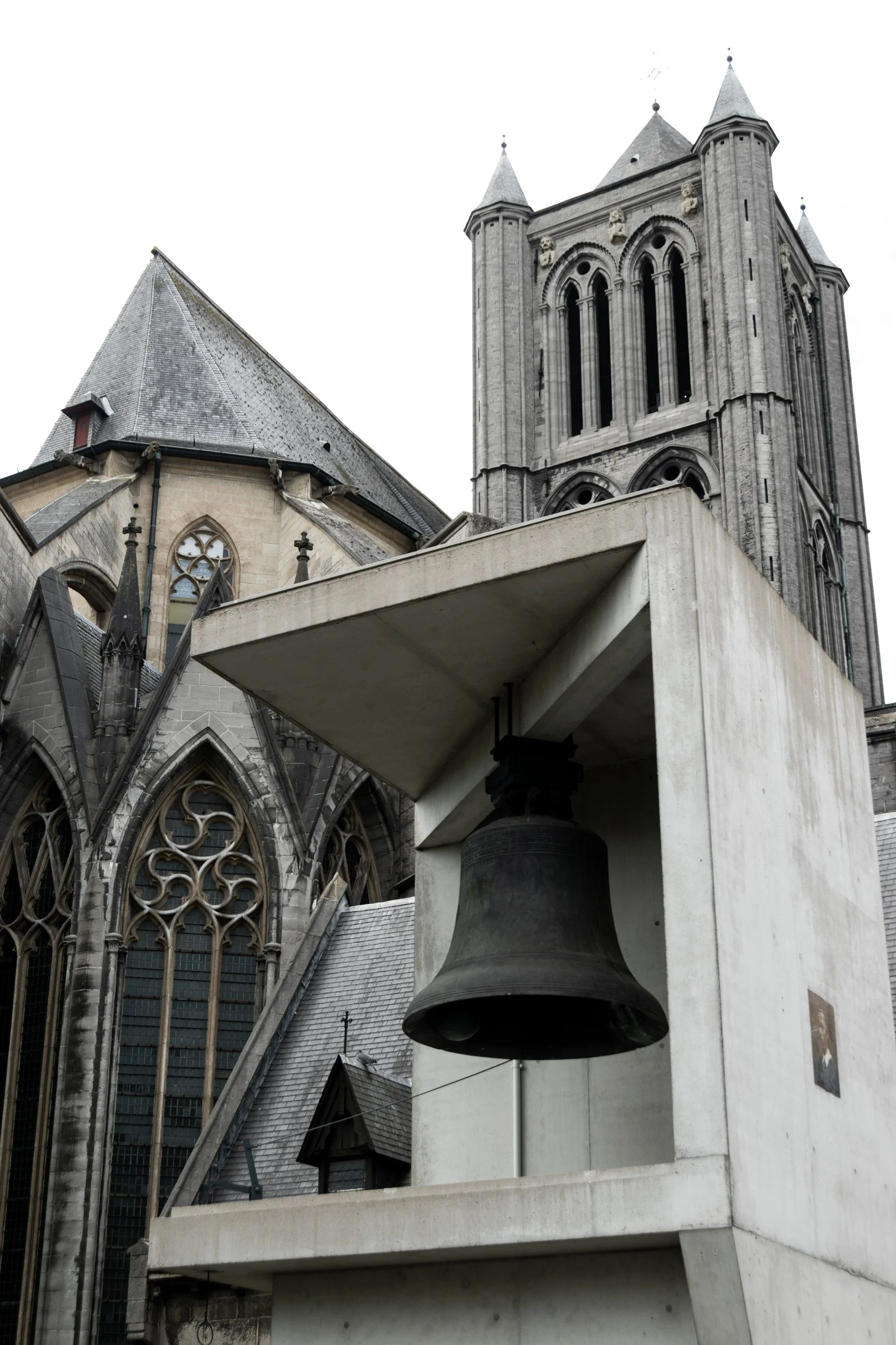
The Grote Triomfante, cast by Pieter Hemony from the bronze of Klokke Roeland, Ghent’s medieval storm bell, which hung in the belfry until 1659. The Triomfante took over the name Klokke Roeland, cracked in 1914, and was taken down from the belfry in 1948. Since 2012 it has hung in a concrete frame on the Emile Braunplein, beside Saint Nicholas’ Church.
Photo: Julian Lupyan, CC0, via Wikimedia Commons
