One tower. Two community days. A permanent local institution. Build together, raise together, keep it alive.
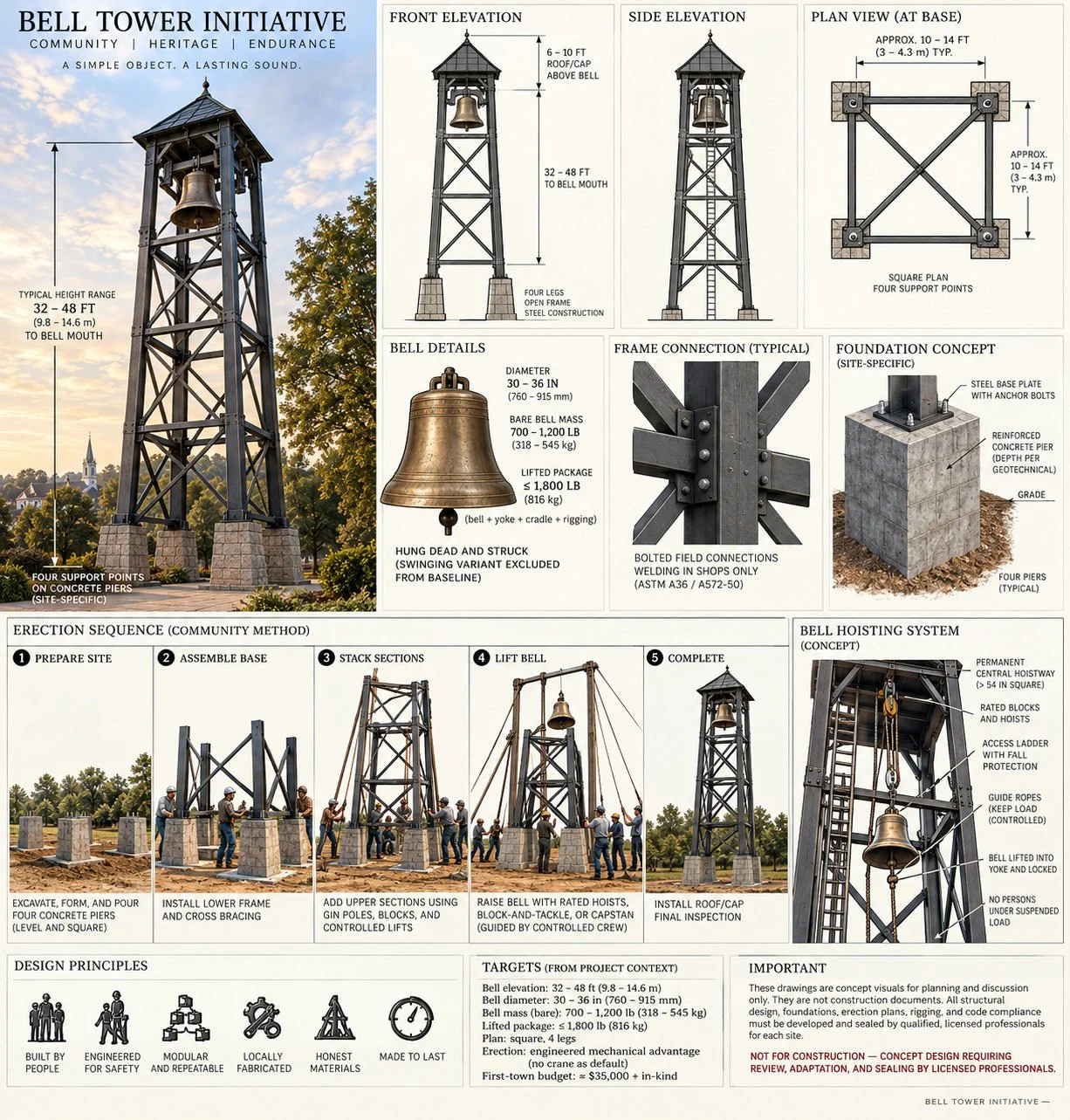
A real bronze bell in an open steel tower.
A four-leg lattice tower with bolted field connections, galvanized steel with a duplex finish, and an external ladder and service platform. The standard tower places the bell mouth at 37 ft with a finial height of 48.5 ft. One repeatable family of 31, 37 and 43 ft towers means repeatable engineering, procurement, training, documentation and maintenance. Site-specific engineering governs every installation.
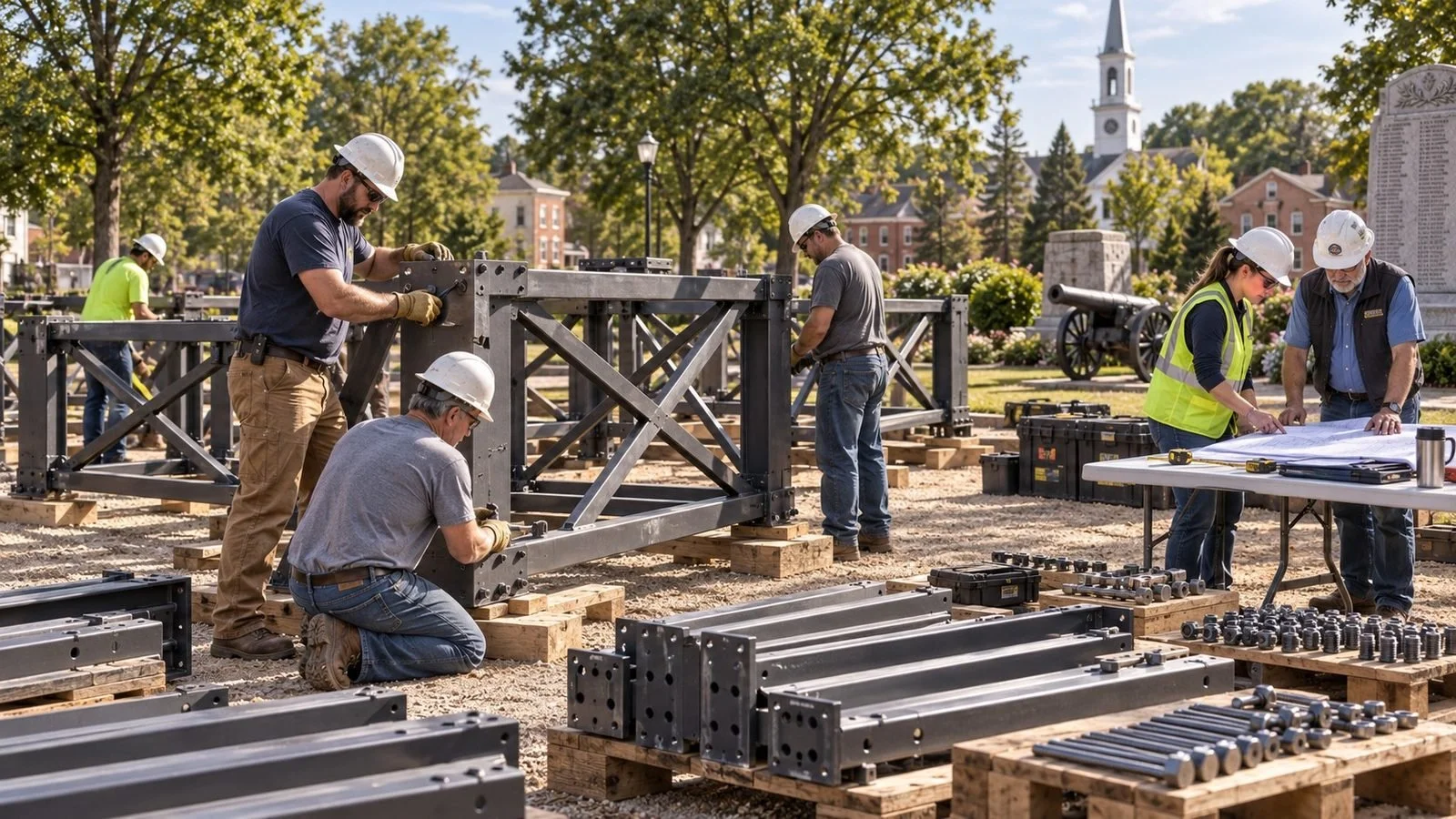
Build Day: many hands, one controlled work package.
Most of the structure is assembled on the ground in tiered, bolted modules. Qualified supervision defines the work volunteers may perform, assembly is broken into bounded tasks with inspection points, and people contribute labor without improvising structural decisions.
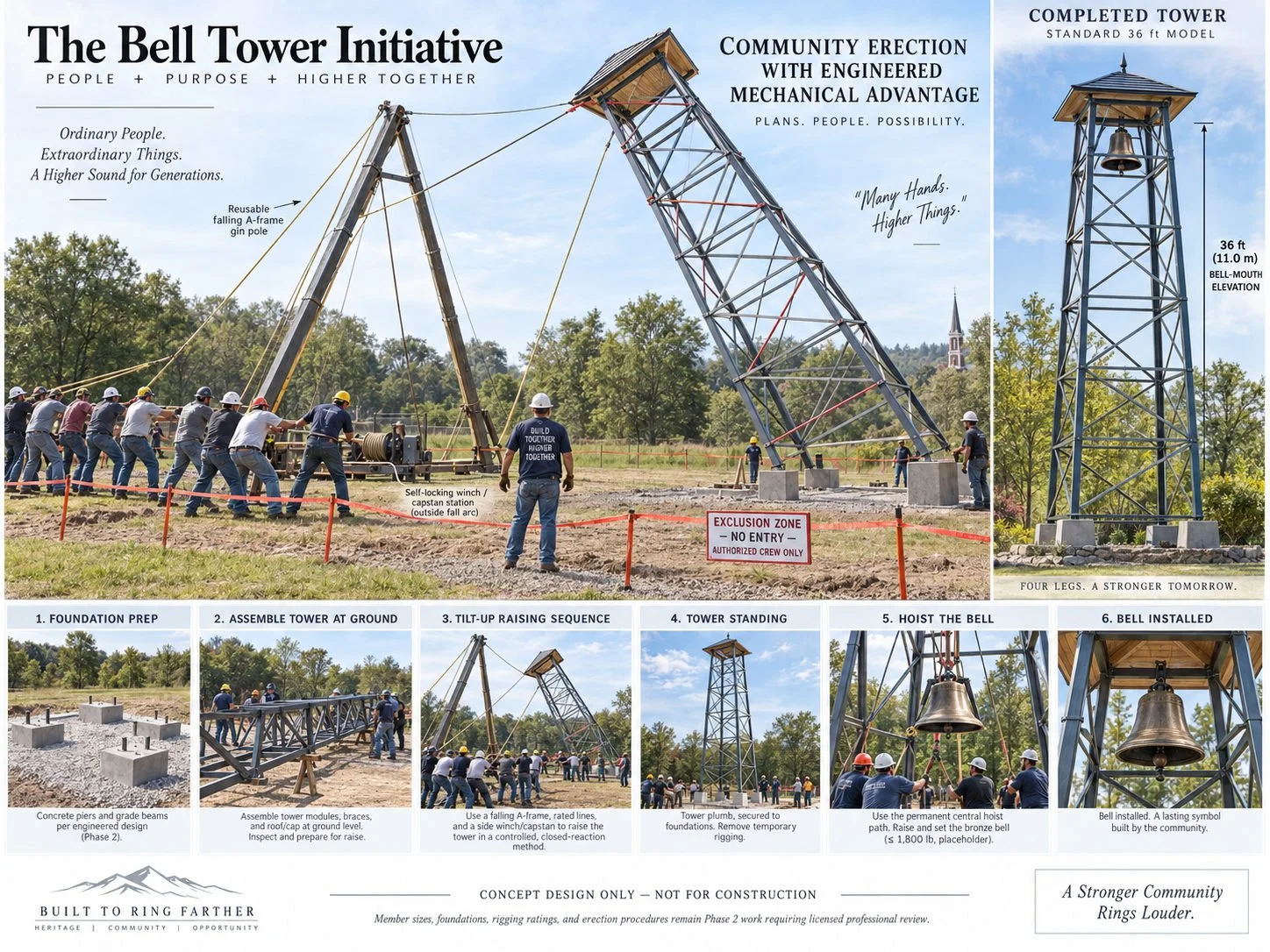
Raise Day: the tower goes up empty.
The tower raise is a separate engineered operation with dedicated temporary works, exclusion zones, defined stations and stop authority. The public spectacle is the result of engineering, not a substitute for it.
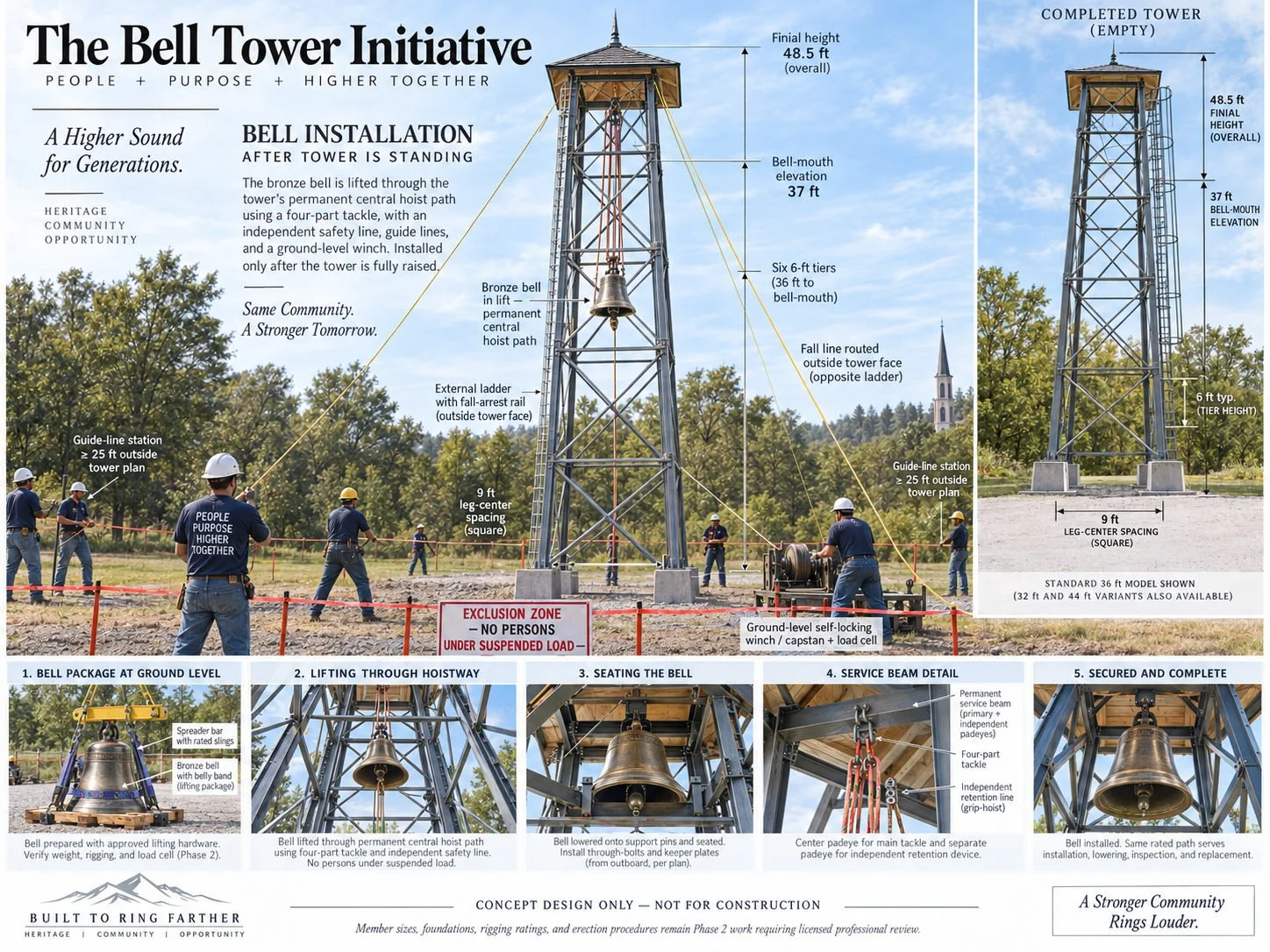
Bell Day: the bronze rises after the tower stands.
A dedicated service beam and hoist lift the bell in a separate operation, with rated lifting elements, a clear hoistway, and no one beneath the suspended load.
A fixed bronze bell. A human being on the rope.
Trained local volunteers ring the bell by hand with an external striker and rope hammer. A bell should not merely sound; someone should answer for sounding it.
All engineering is preliminary and not for construction until reviewed and sealed for a specific site.