
St. Mark's Campanile did far more than tell Venetians the hour.
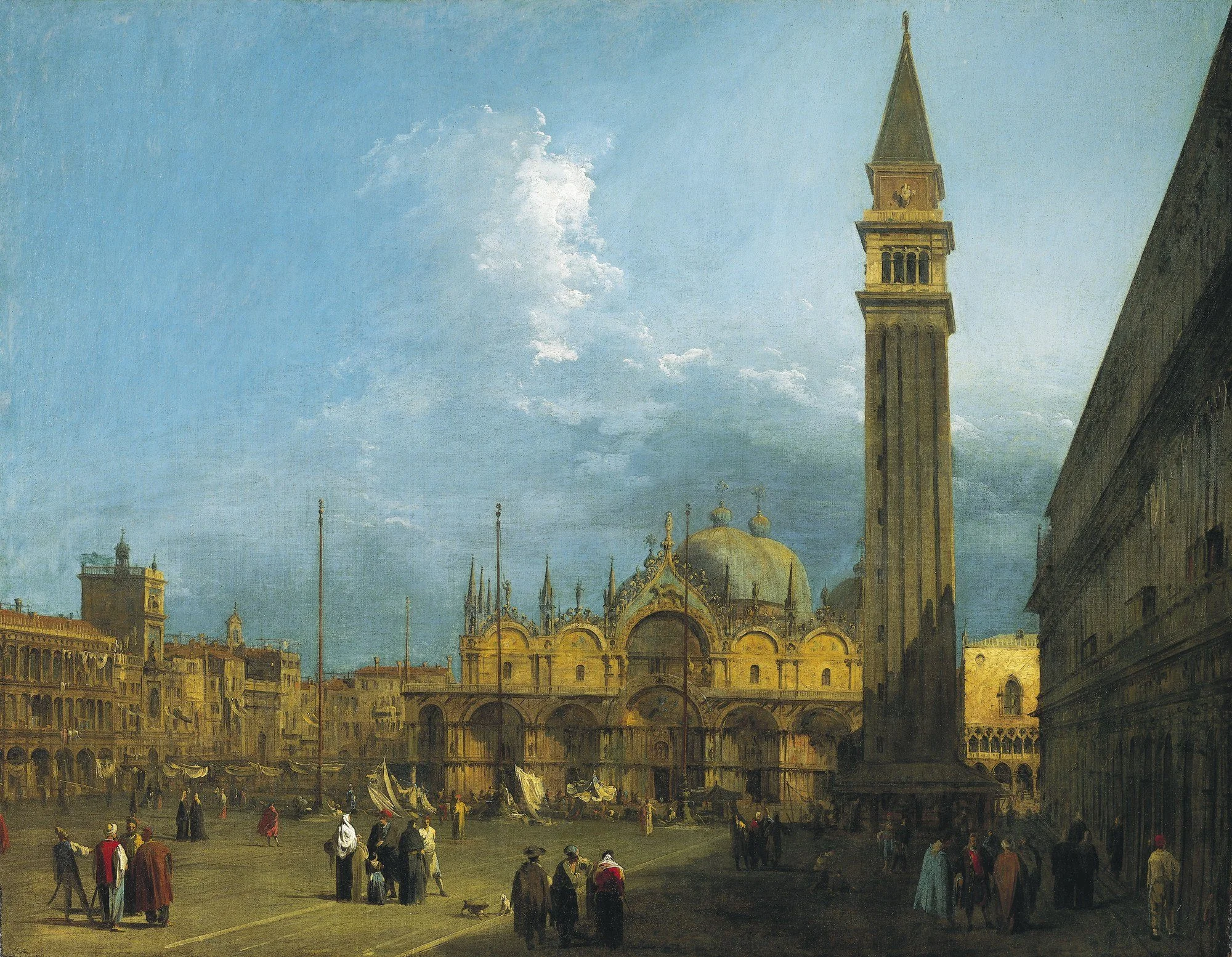
Piazza San Marco looking east towards the Basilica and the Campanile, painted by Canaletto around 1723 to 1724 as part of a set of six views of Venice now in the Royal Collection. The campanile rises above the square at the front of St Mark's Basilica. Its bells marked the working day, the meetings of government, and public executions.
Photo: Canaletto (Giovanni Antonio Canal), Public domain, via Royal Collection Trust and Wikimedia Commons
Different bells carried different instructions. The Marangona helped regulate the working day. Other bells were tied to meetings of government and public events. The smallest, known as the Maleficio or Renghiera, was associated with criminal justice and rang in connection with public executions.
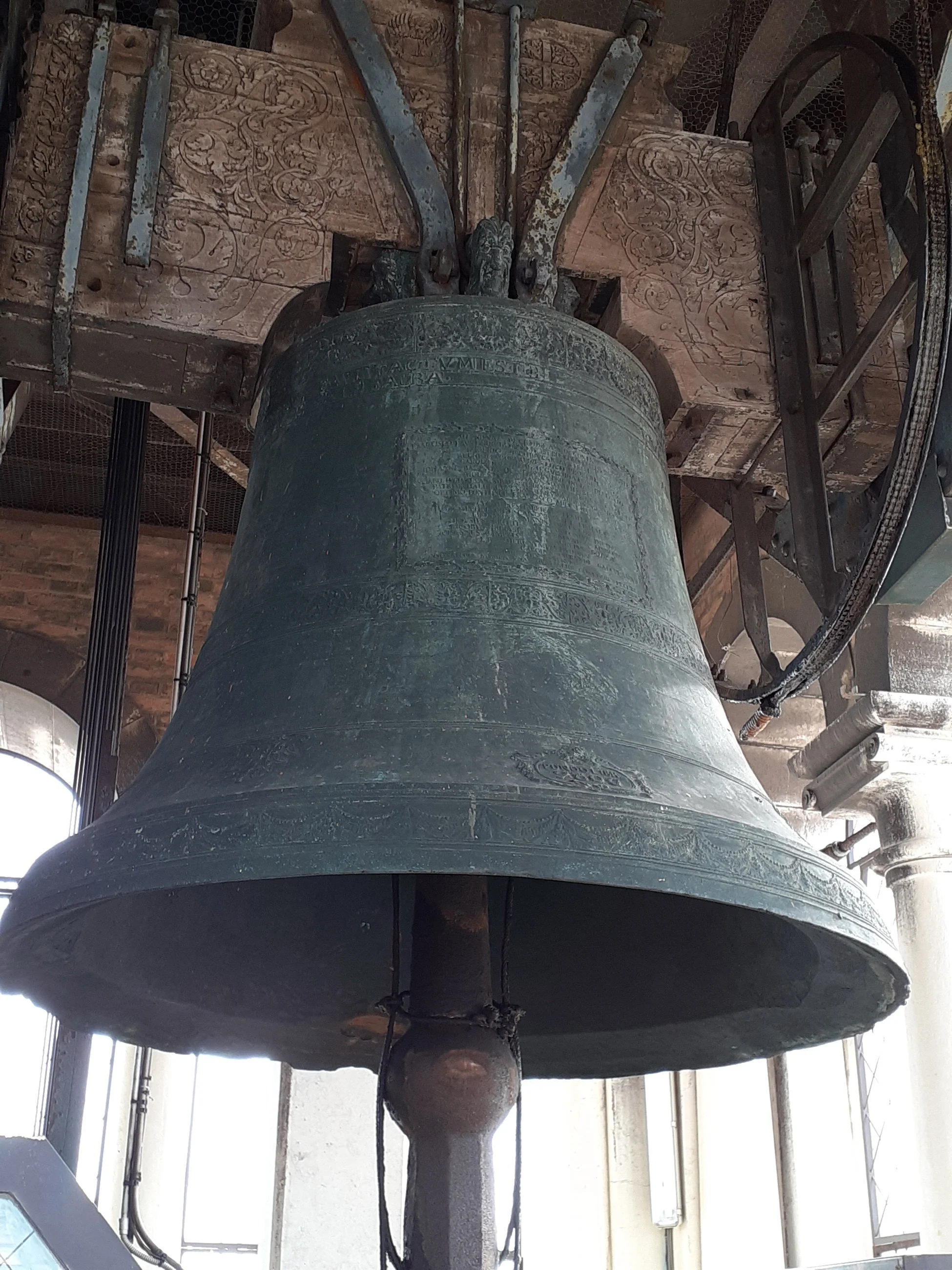
The Marangona, the largest bell of St Mark's Campanile, in the belfry in 2021. Its name comes from the marangoni, the carpenters of the Arsenal, because it rang to mark the start and end of the workday. It also announced sessions of the Great Council. Cast by Domenico Canciani Dalla Venezia in 1820, it was the only one of the tower's five bells to survive the collapse of 1902.
Photo: Nikos D. Karabelas, CC BY-SA 4.0, via Wikimedia Commons
That meant one tower could announce labor, politics, ceremony, and punishment without saying a word. The population learned the code through repetition.
The campanile also dominated the skyline of a maritime republic where visibility mattered. It served historically as a lookout as well as a belfry. When the tower collapsed in 1902, Venice rebuilt it where it had stood, reopening the replacement in 1912.
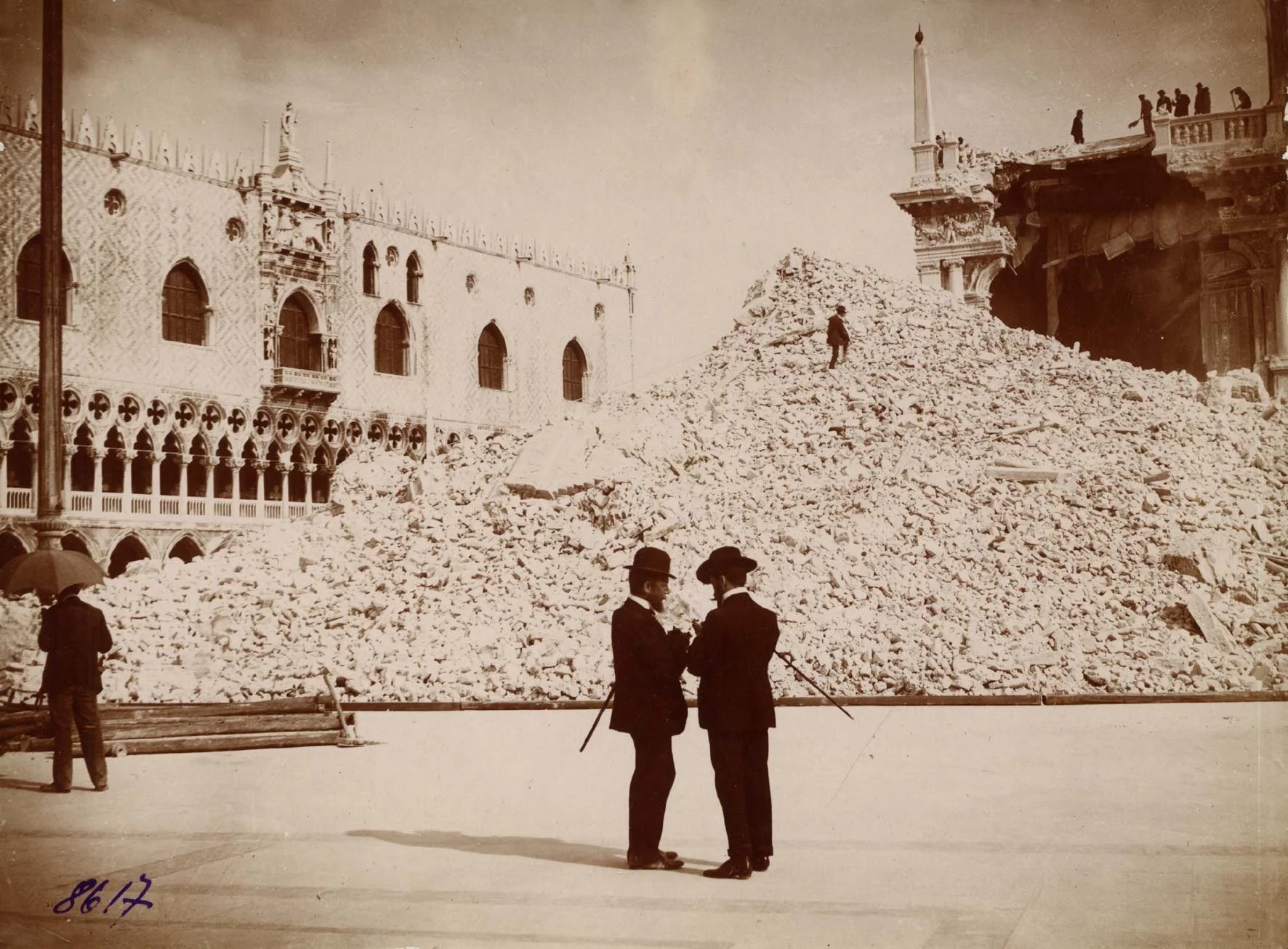
Onlookers in Piazza San Marco beside the rubble of the campanile, which collapsed on the morning of 14 July 1902. The fall destroyed the Loggetta at the base of the tower and a corner of the Marciana Library, but no one was killed. That evening the city council voted to rebuild the tower exactly as it had been.
Photo: Unknown photographer, Public domain, via Shchusev State Museum of Architecture and Wikimedia Commons
The famous phrase was "where it was, as it was." For a city that had organized so much of its public life around that height, rebuilding the campanile was less sentimental than it sounds.
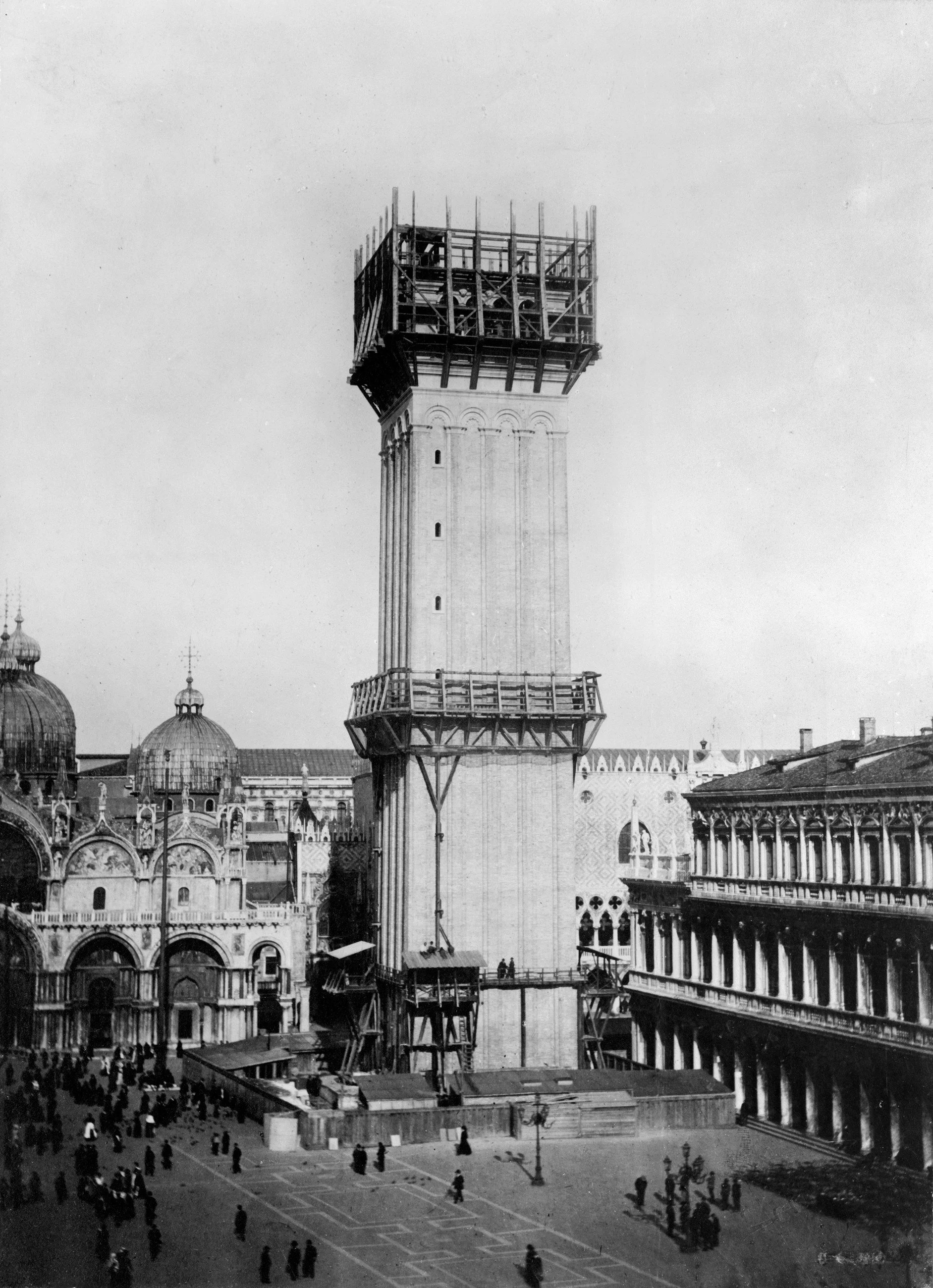
The new campanile under construction beside St Mark's Basilica, in a photograph dated 27 February 1911. A mobile scaffold surrounded the tower and was raised as the work progressed. The rebuilt campanile was inaugurated on 25 April 1912, St Mark's feast day.
Photo: Unknown photographer, Public domain, via Library of Congress and Wikimedia Commons
