
The Angelus made prayer audible beyond the church walls.
By the later Middle Ages and early modern period, bells in many Catholic communities marked the Angelus in the morning, around midday, and again in the evening. Exact local schedules varied, but the effect was familiar: people working in fields, workshops, and homes heard the same signal at roughly the same points in the day.
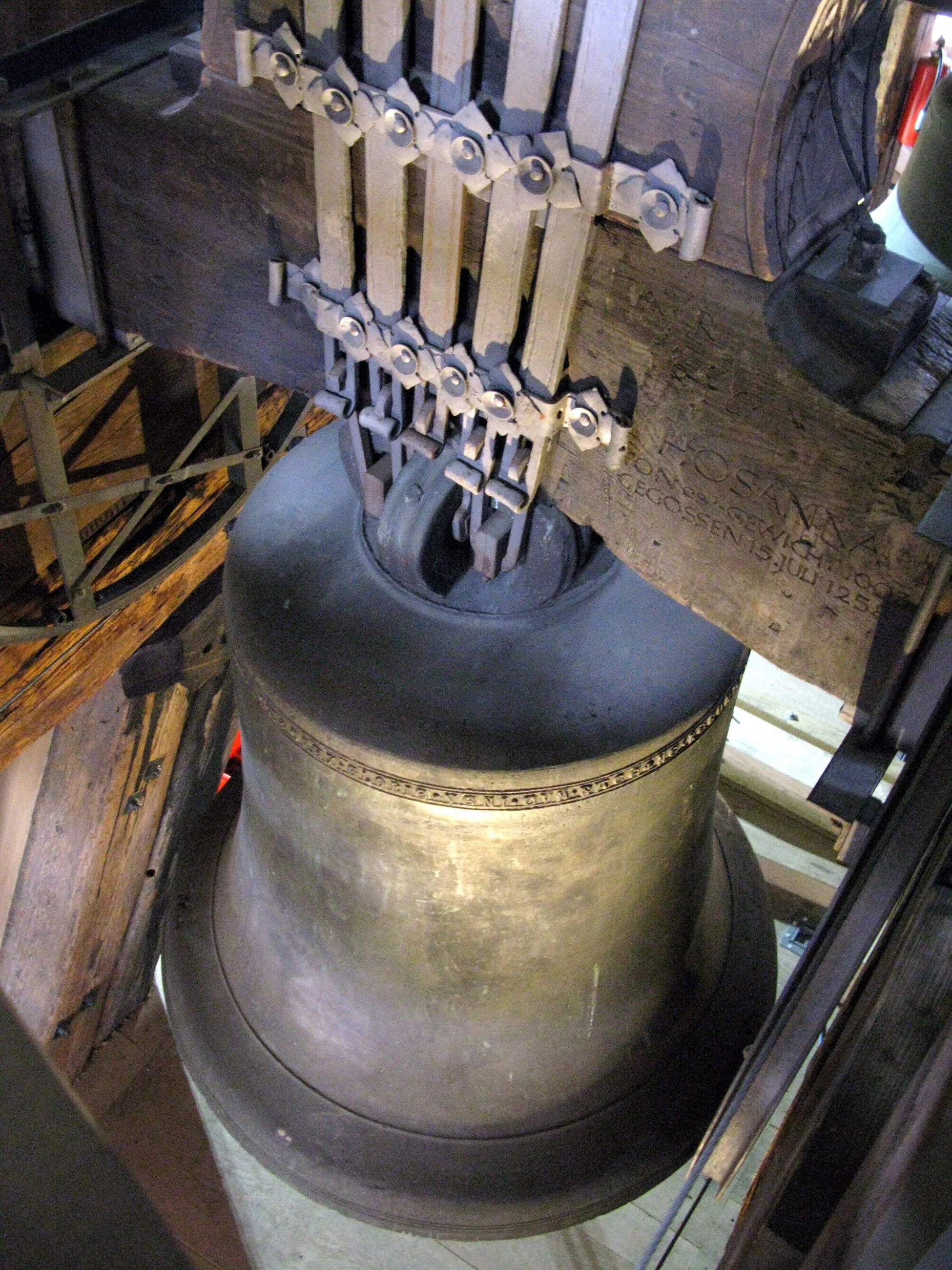
The Hosanna bell in the tower of Freiburg Minster in Germany. Its inscription records that it was cast on 18 July 1258 and asks Mary to come to the aid of the people when it sounds. It weighs 3,290 kg and is one of the oldest surviving bells of its size. It still rings on Thursday evenings after the Angelus, on Fridays at 11 o’clock, and on Saturday evenings for the dead of the week. Photo: Andreas Schwarzkopf, CC BY-SA 4.0, via Wikimedia Commons
Nobody had to walk into the church for the bell to do its work. The sound carried the prayer into ordinary labor. Jean-Francois Millet’s nineteenth-century painting The Angelus captures that habit perfectly: two workers stop in a field while a distant church tower sits on the horizon.
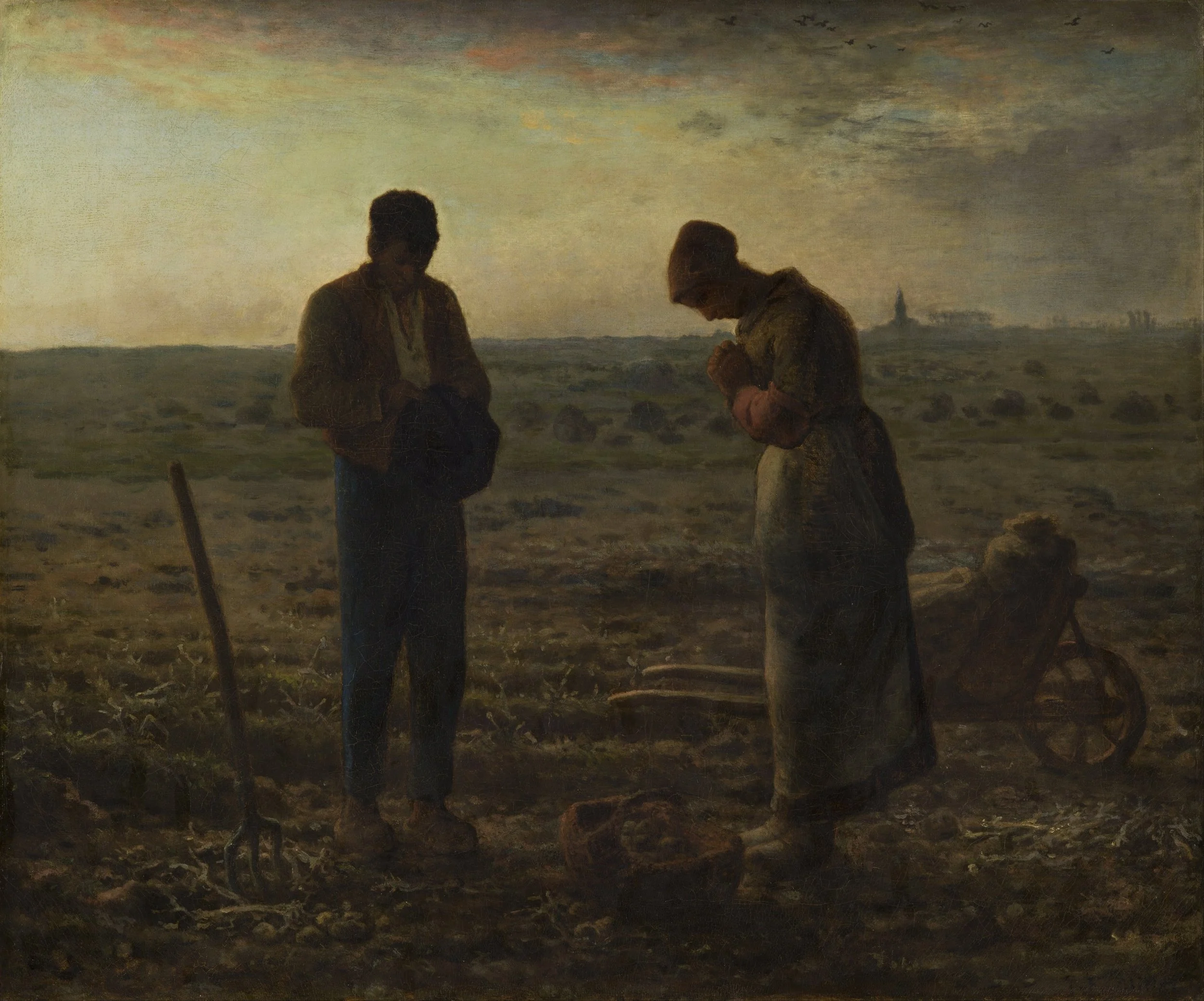
The Angelus by Jean-François Millet, oil on canvas, completed between 1857 and 1859, now in the Musée d'Orsay in Paris. Two peasants stop during the potato harvest near Barbizon to say the prayer, with the church steeple of Chailly-en-Bière on the horizon. Millet recalled that his grandmother, hearing the church bell while the family worked in the fields, always made them stop to say the Angelus. Photo: Jean-François Millet, Public domain, via Google Arts & Culture and Wikimedia Commons
The tower gave a private devotional practice a public rhythm. Even people who did not stop to pray still knew what time it was and what the bell meant.
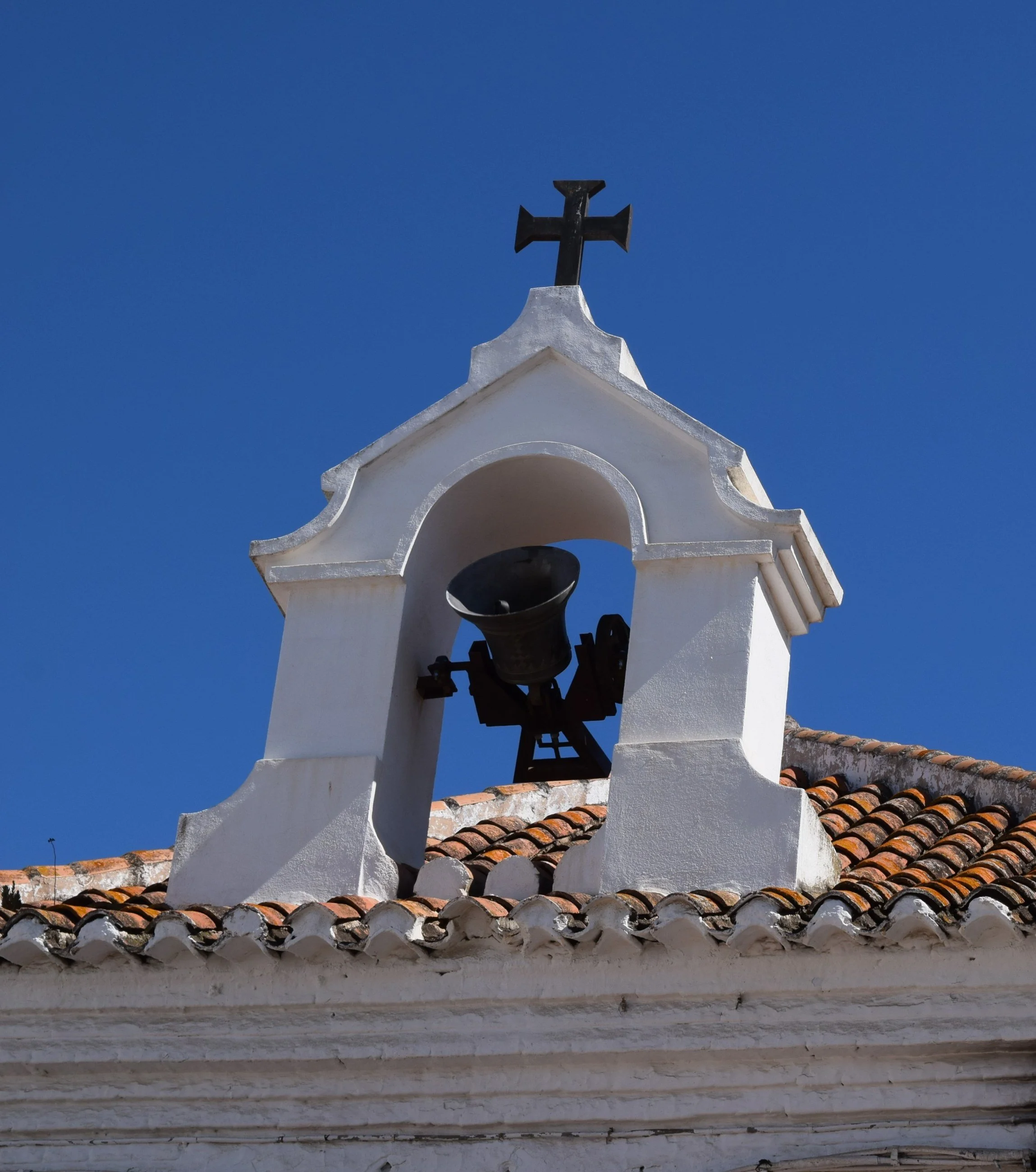
The Angelus bell being rung in the small belfry of La Ermita in Nerja, Spain, photographed on 9 April 2018. Photo: Haydn Blackey, CC BY-SA 2.0, via Wikimedia Commons
