
A tocsin was not a pleasant peal. It was the sound that told a town something had gone wrong.
The urgent alarm could mean fire, invasion, riot, or a call to arms. Because bells carried farther than a human voice, whoever had authority over the alarm could mobilize people before a messenger could reach the edge of town. That made bell ropes politically sensitive equipment.
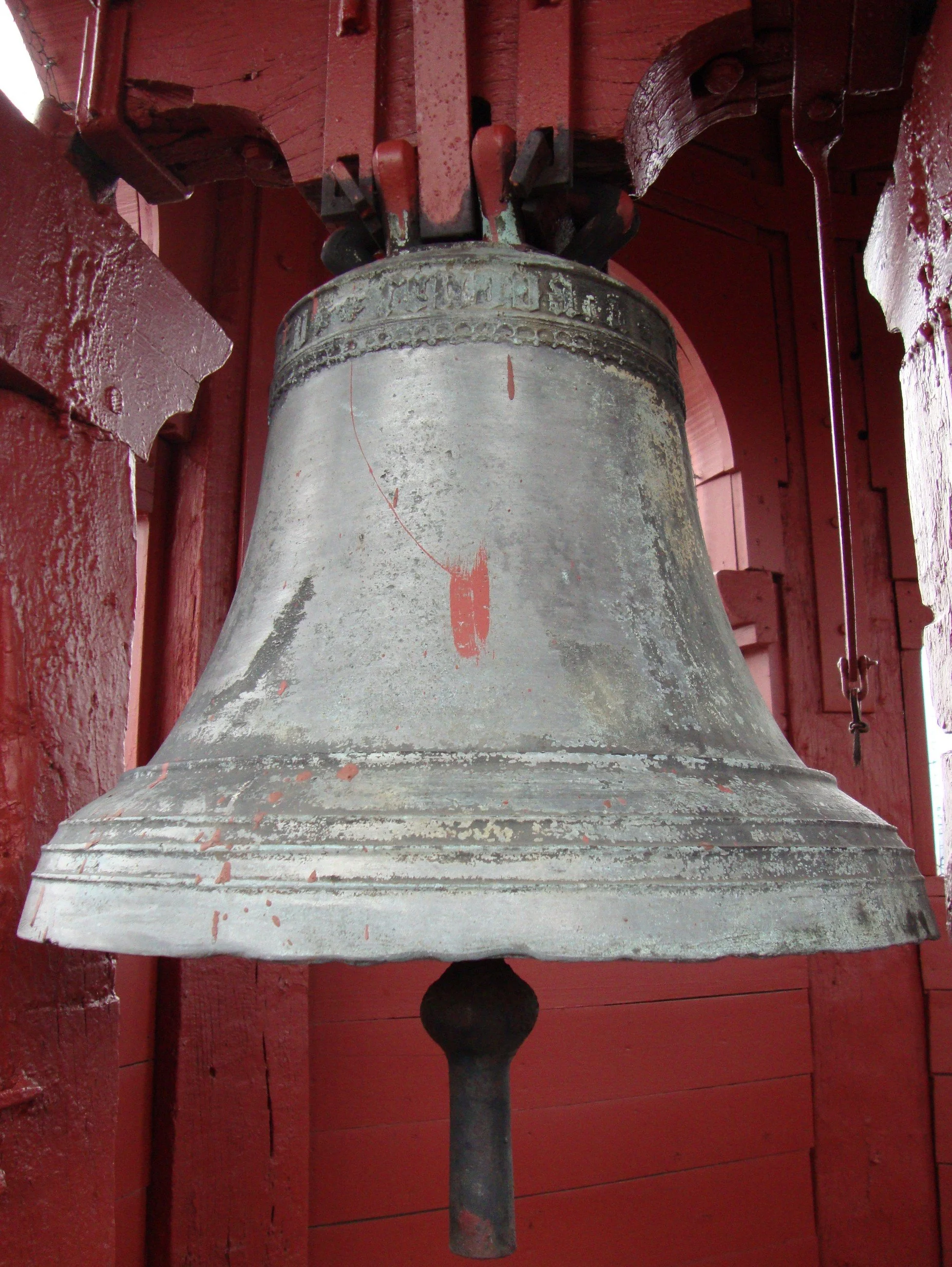
The Brandglocke, or fire bell, of the Namen-Jesu-Kirche in Bonn, Germany, cast in 1535. In German towns a fire bell was rung to sound the alarm and call out firefighters, helpers, and in some places the whole population. Photo: Andreas Dziewior, CC BY-SA 3.0 DE, via Wikimedia Commons
During periods of revolt, the logic could reverse. If insurgents seized a church or civic tower, they could use the established alarm system against the authorities who normally controlled it. Revolutionary France made the word tocsin almost synonymous with collective emergency, but the practice was older than the Revolution.
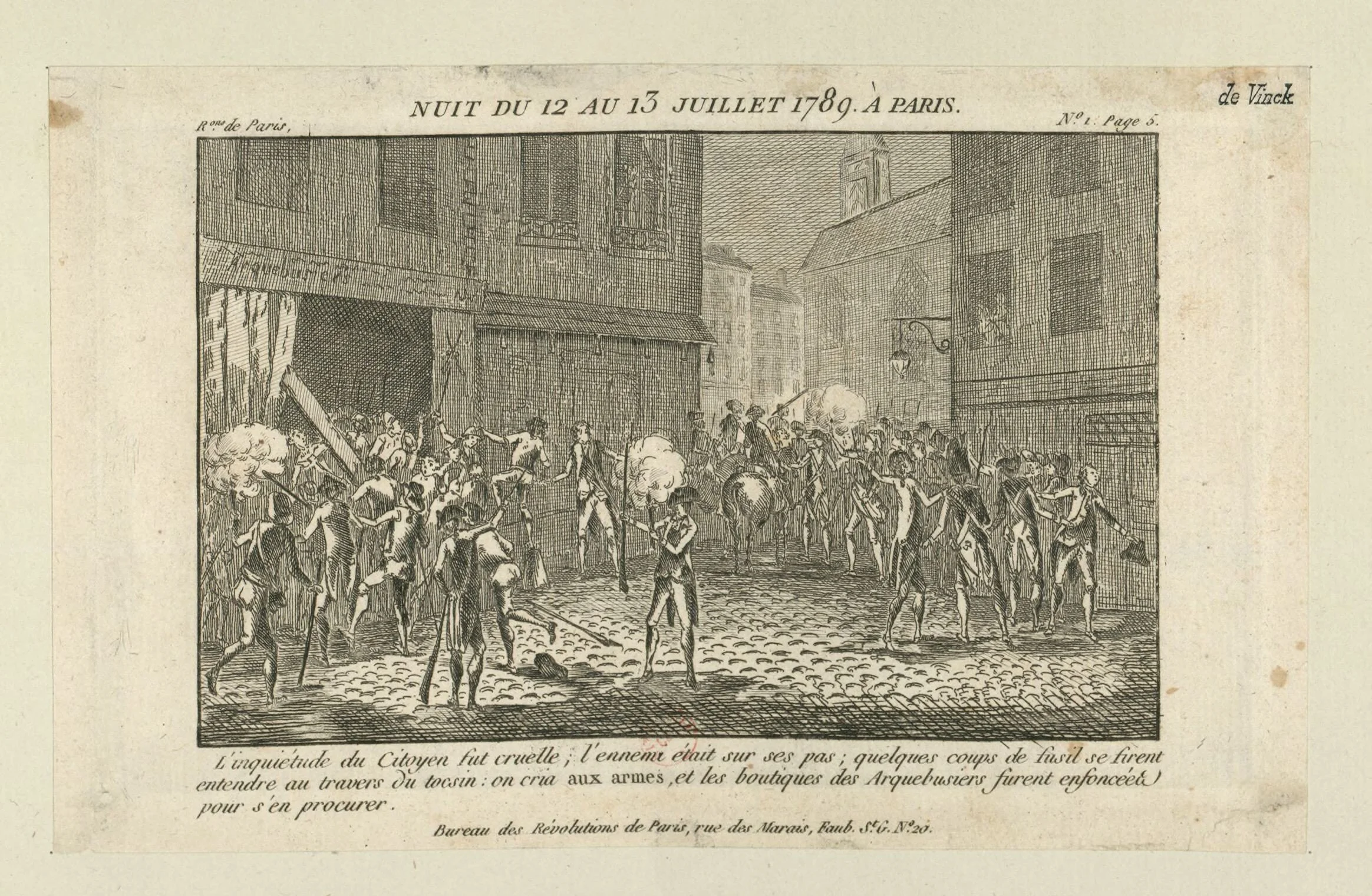
“Nuit du 12 au 13 juillet 1789 à Paris,” a print published in 1789 by the newspaper Révolutions de Paris. The text beneath the scene says gunshots were heard through the tocsin, the cry “to arms” went up, and the gunsmiths’ shops were broken open for weapons. Photo: Unidentified engraver, Public domain, via Bibliothèque nationale de France and Wikimedia Commons
People did not need a written explanation every time it sounded. They knew the pattern. Ordinary ringing belonged to the schedule of the day. The tocsin meant stop what you are doing and pay attention now.
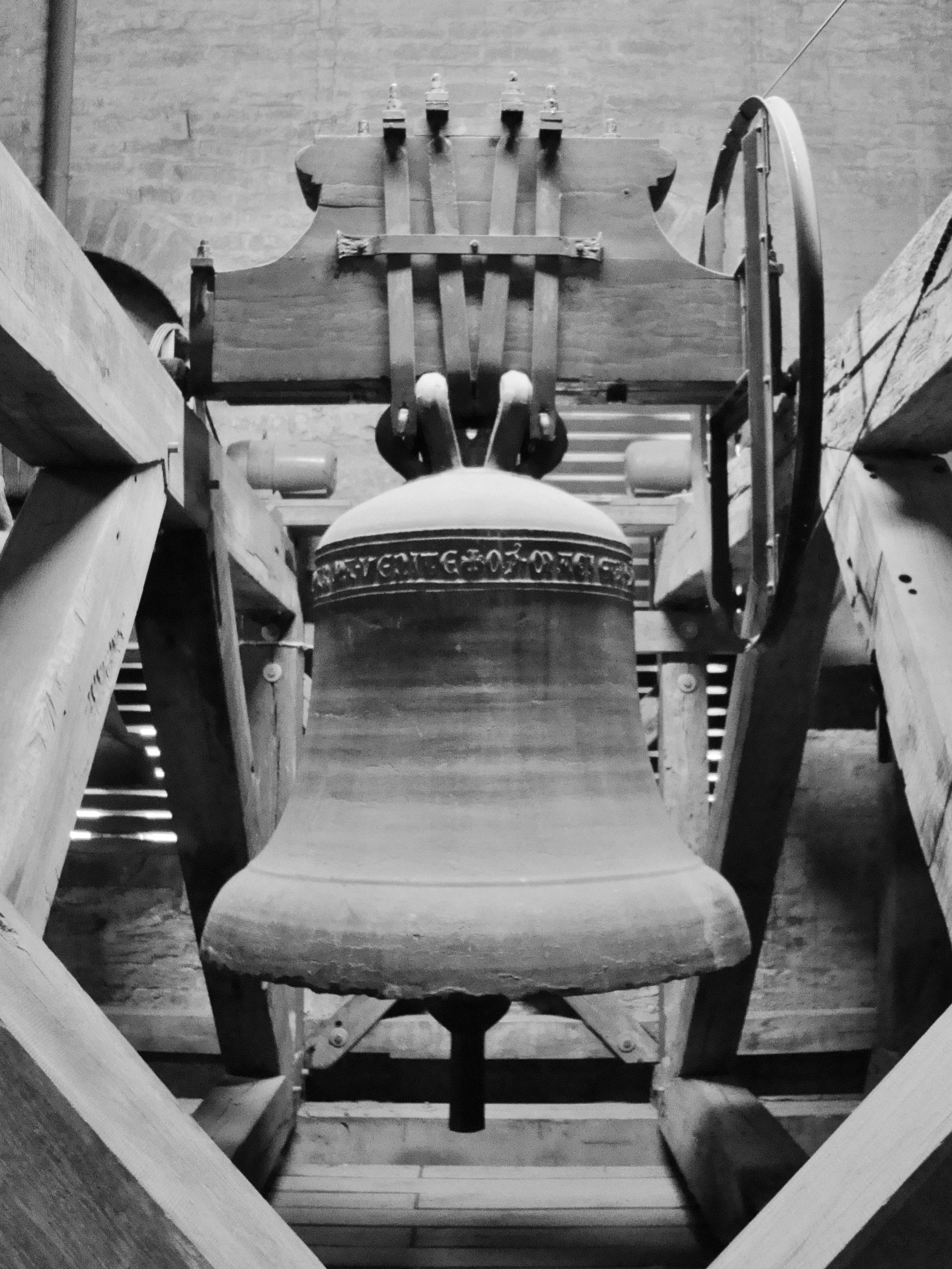
The Sturmglocke, or storm bell, of St. Patroklus in Soest, Germany, dated to the 13th century. Sturmglocke is one of the German names for an alarm bell. Photo: Andreas Dziewior, CC BY 3.0, via Wikimedia Commons
