
When German requisition teams came looking for bronze during the Second World War, the Marinelli family in Agnone had a problem: their foundry had spent centuries making church bells, and bronze was suddenly war material.
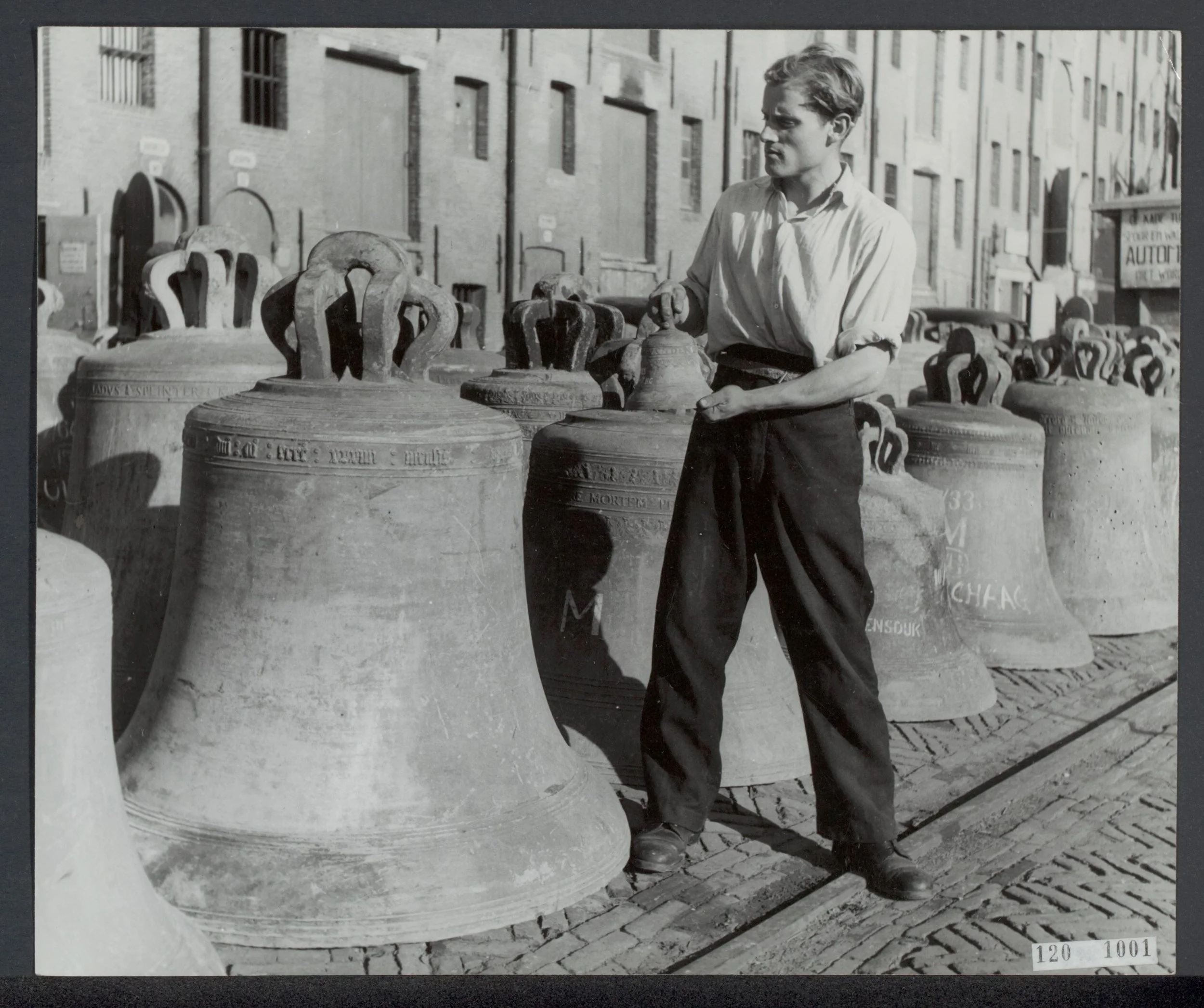
Church bells taken for the German war industry during the Second World War, found undamaged in the Netherlands and waiting to go back to their owners, October 1945.
Photo: Theo van Haren Noman / Anefo, Nationaal Archief, CC0, via Wikimedia Commons
The Pontifical Marinelli Foundry traces its bellmaking tradition back roughly a thousand years. Family accounts say historic bells were hidden rather than surrendered for melting. That choice makes sense in a town where a bell was never just scrap metal. A church knew the voice of its own bell, sometimes for generations, and replacing it meant losing part of the town's memory.
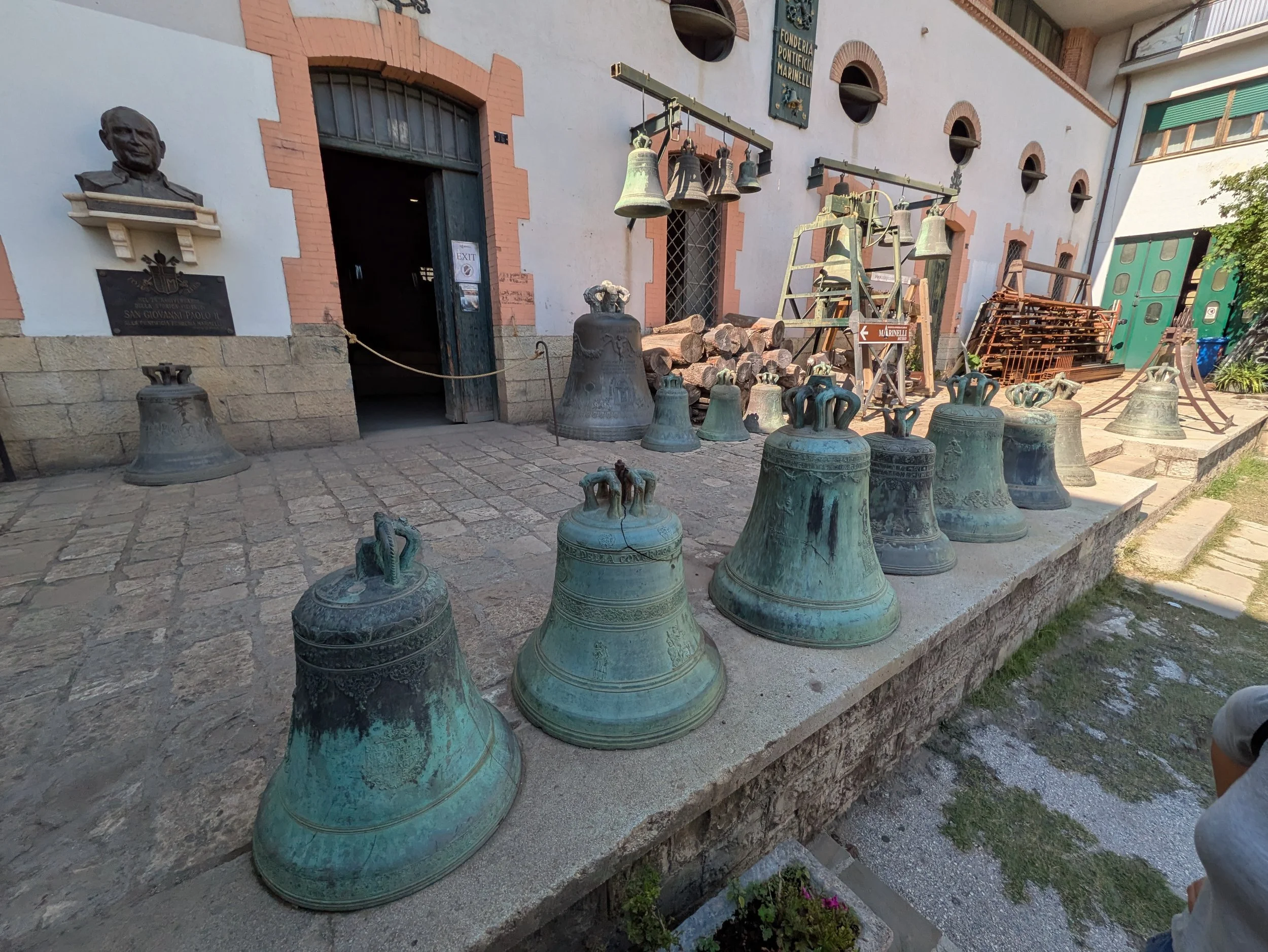
Bells on display outside the Pontifical Marinelli Foundry in Agnone, Molise, in August 2025.
Photo: Accurimbono, CC BY-SA 4.0, via Wikimedia Commons
The foundry survived the war and still casts bells in Agnone using traditional moulding methods. What survived with it was more than a business. Bellfounding is one of those trades where the object can outlive the person who made it by centuries, so every casting enters a chain the founder knows he will never see the end of.
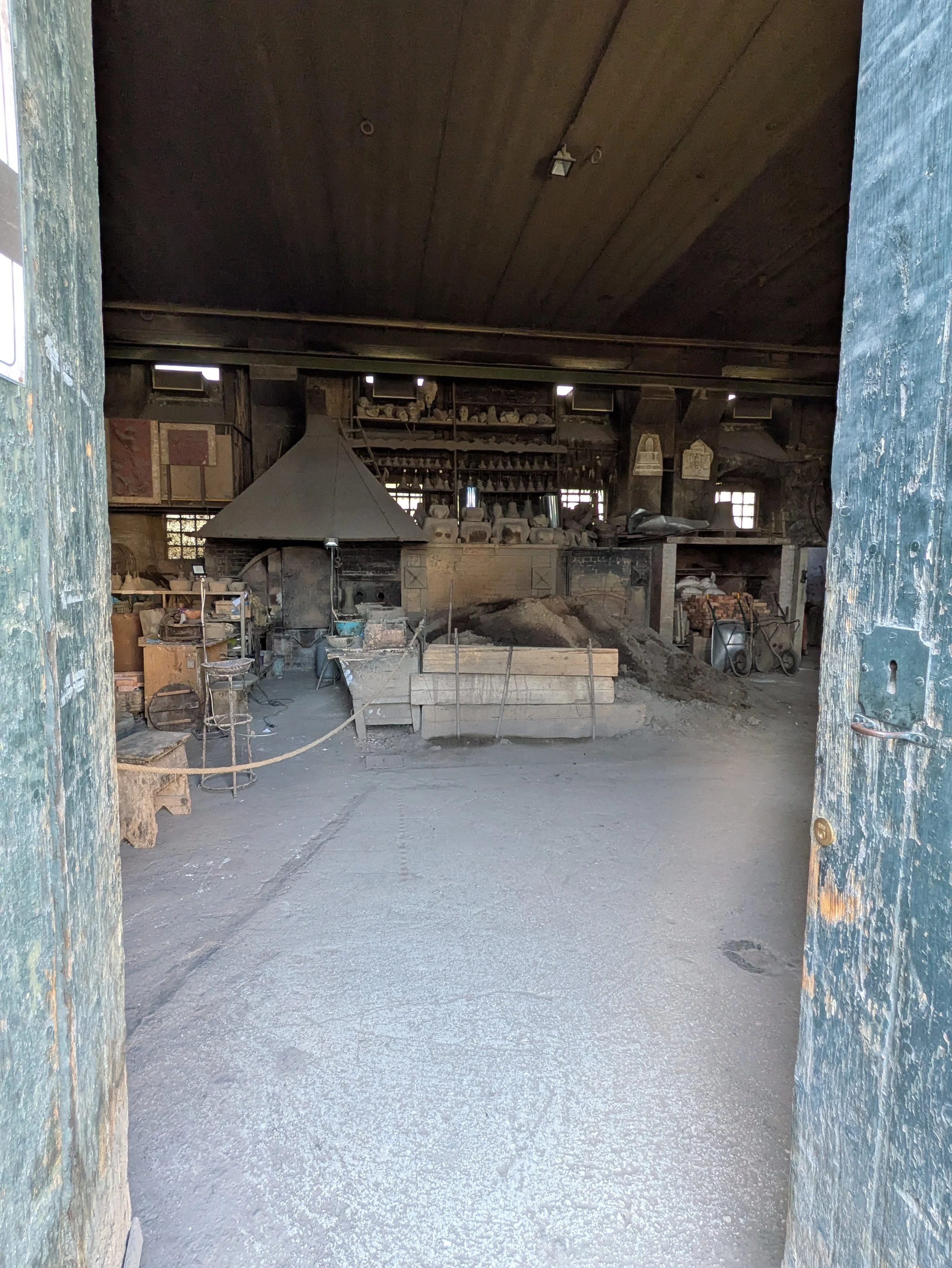
Inside the workshop of the Pontifical Marinelli Foundry in Agnone, August 2025.
Photo: Accurimbono, CC BY-SA 4.0, via Wikimedia Commons
