
For centuries, Europeans climbed into bell towers during storms because they believed a consecrated bell could help drive dangerous weather away.
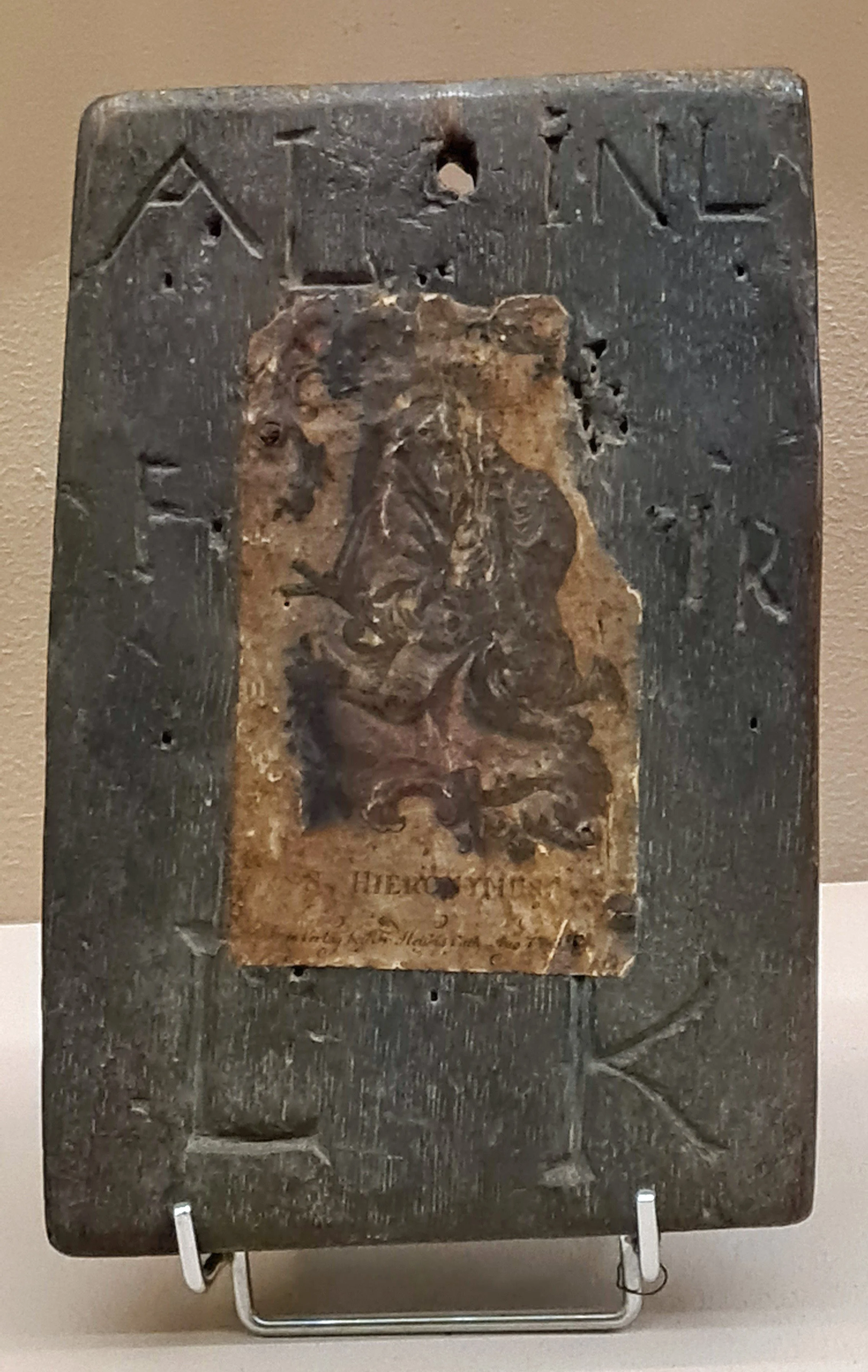
A storm tablet, called a Rumelbrett in Alsatian, from the 18th century, now in the Musée Alsacien in Strasbourg. The wooden board, with a pious print of Saint Jerome pasted on its face, passed from family to family. Whoever held it was responsible for ringing the church bells to turn away lightning and to warn the farmers out in the fields. Photo: Ji-Elle, CC BY-SA 4.0, via Wikimedia Commons
The belief was built into the religious language around bells. Blessing rites asked for protection from lightning, storms, and hostile spiritual forces, while inscriptions sometimes described the bell as one that scattered clouds or drove away tempests.
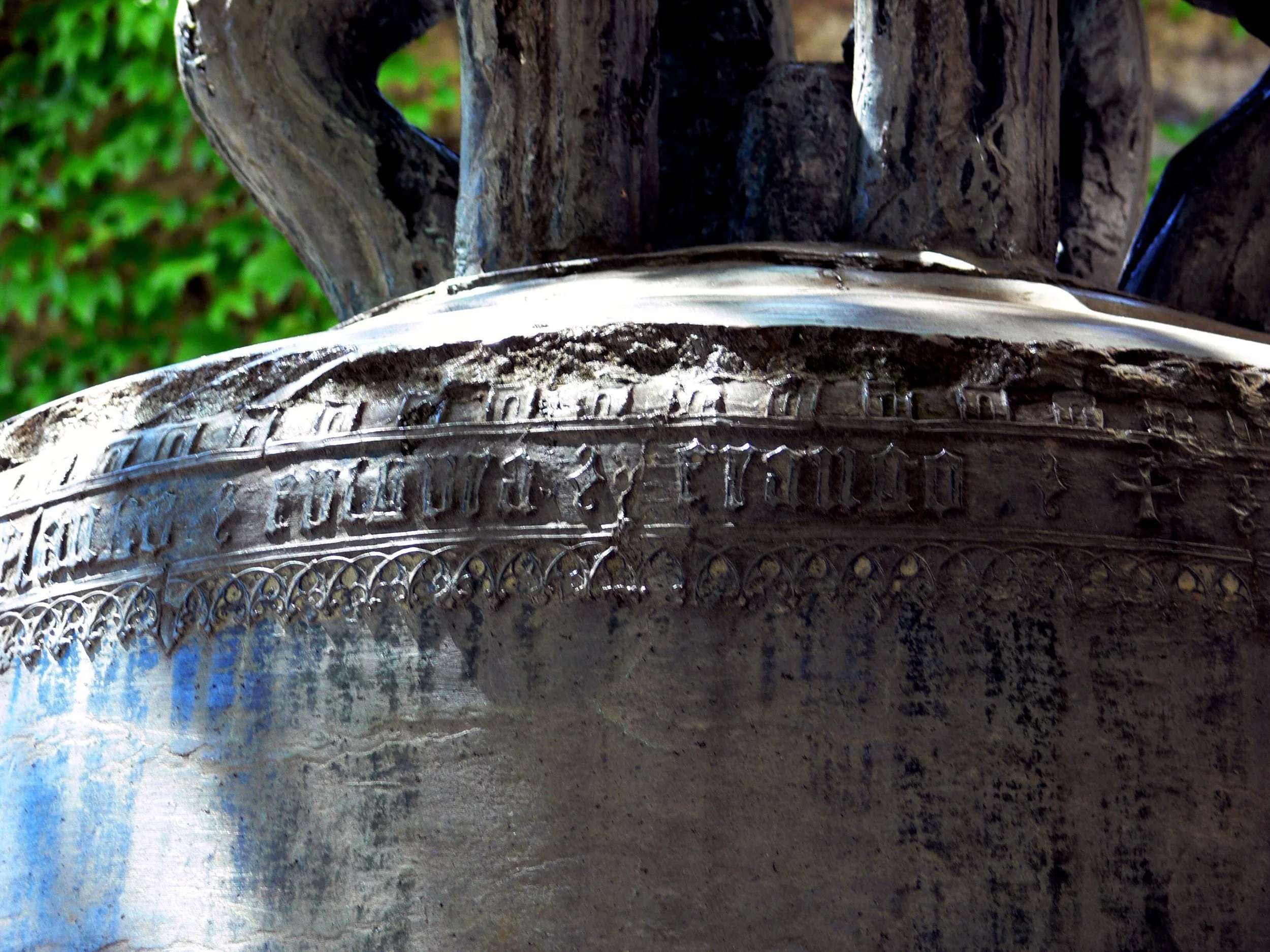
The upper inscription of the great bell of Schaffhausen Minster in Switzerland, cast in Basel in 1486, photographed in May 2009. The Latin words “vivos voco, mortuos plango, fulgura frango” mean “I call the living, I mourn the dead, I break the lightning.” The 4,500 kg bell rang in the minster tower until 1898 and now stands outside beside the south transept. Friedrich Schiller found the inscription in Johann Georg Krünitz’s encyclopedia and used it as the motto of his 1798 poem “Das Lied von der Glocke.” Photo: Andreas Praefcke, Public domain, via Wikimedia Commons
There was an obvious physical problem. A bell tower is one of the worst places to stand during lightning, especially before lightning conductors became common. Bell ringers were injured and killed while performing a practice meant to protect the parish.
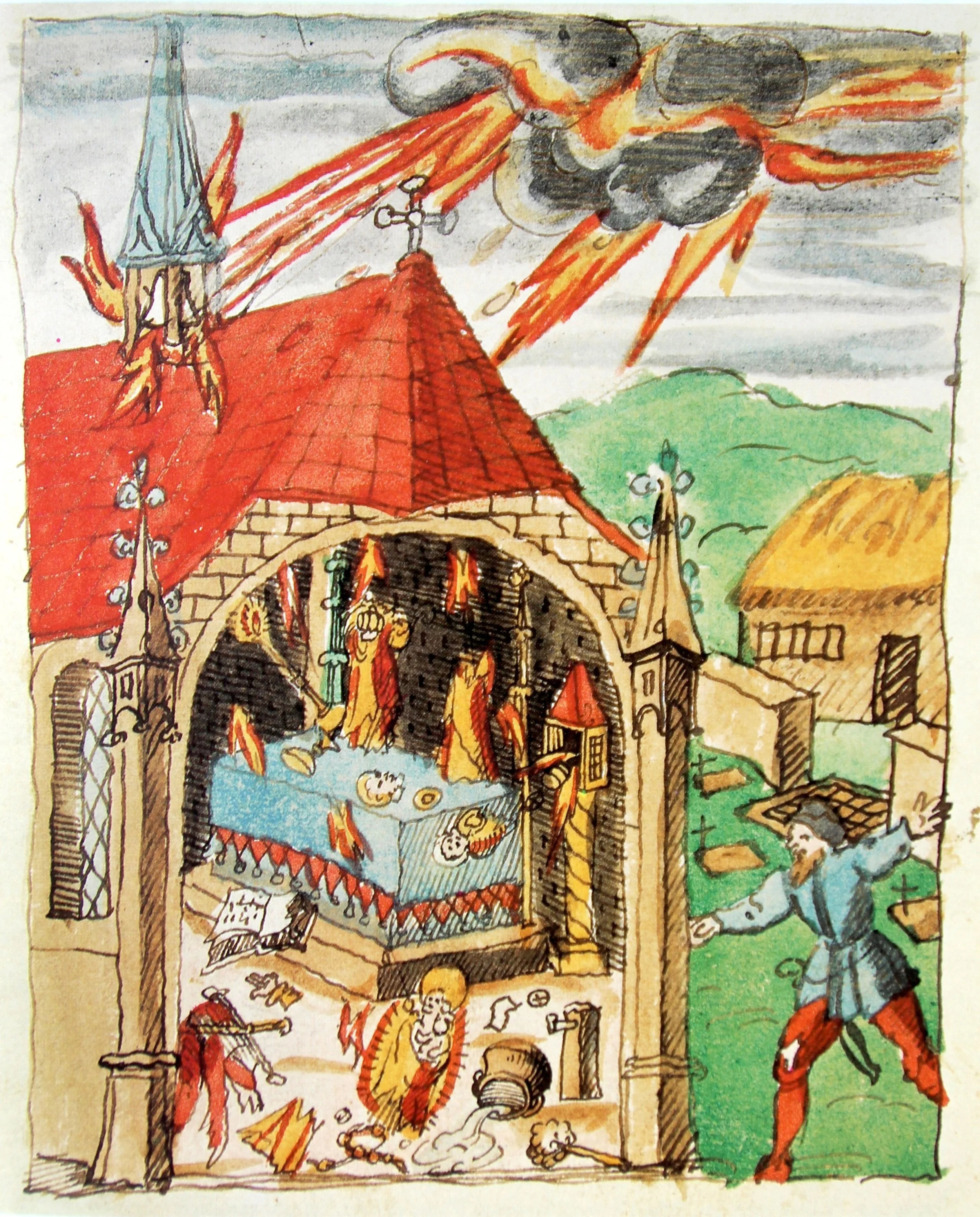
Lightning strikes the church at Bischofszell on 15 June 1571, in a colored illustration from the Wickiana. Fire bursts from the spire and through the interior around the altar while a man outside throws up his arms. The Zurich clergyman Johann Jakob Wick collected reports of comets, earthquakes, floods, and other unusual events from 1559 to 1588, and his contemporaries probably read many of them as signs of the Last Judgment. The collection fills 24 folio volumes and is held by the Zentralbibliothek Zürich. Image: Johann Jakob Wick (Wickiana), Public domain, via Wikimedia Commons
The custom sits at the point where folk religion, official ritual, and practical fear overlap. People were not ringing because thunder sounded mysterious. They believed a blessed object had been given a public duty, and storms were part of that duty.

Title page of “Trostgründe für den Landmann bey Abschaffung des Wetterläutens” (Consolations for the Countryman on the Abolition of Storm Ringing), printed in Innsbruck in 1786 with the permission of the authorities. Its Tyrolean author, Johann Nepomuk von Laicharding, wrote to rural people upset that the ruler had stopped the ringing during thunderstorms. He assured them that the bishop’s blessing of their bells had lost none of its power, but argued that the sound of even the largest bell had no effect on storm clouds, and he added advice on protection from lightning. He also cited a count that over the previous 33 years lightning had struck 386 church towers while bells were being rung, killing 103 people in the bell chambers. Image: Johann Nepomuk von Laicharding (author), Public domain, via Bayerische Staatsbibliothek and Wikimedia Commons
