
Medieval town bells did not only summon worshippers. They also regulated commerce.
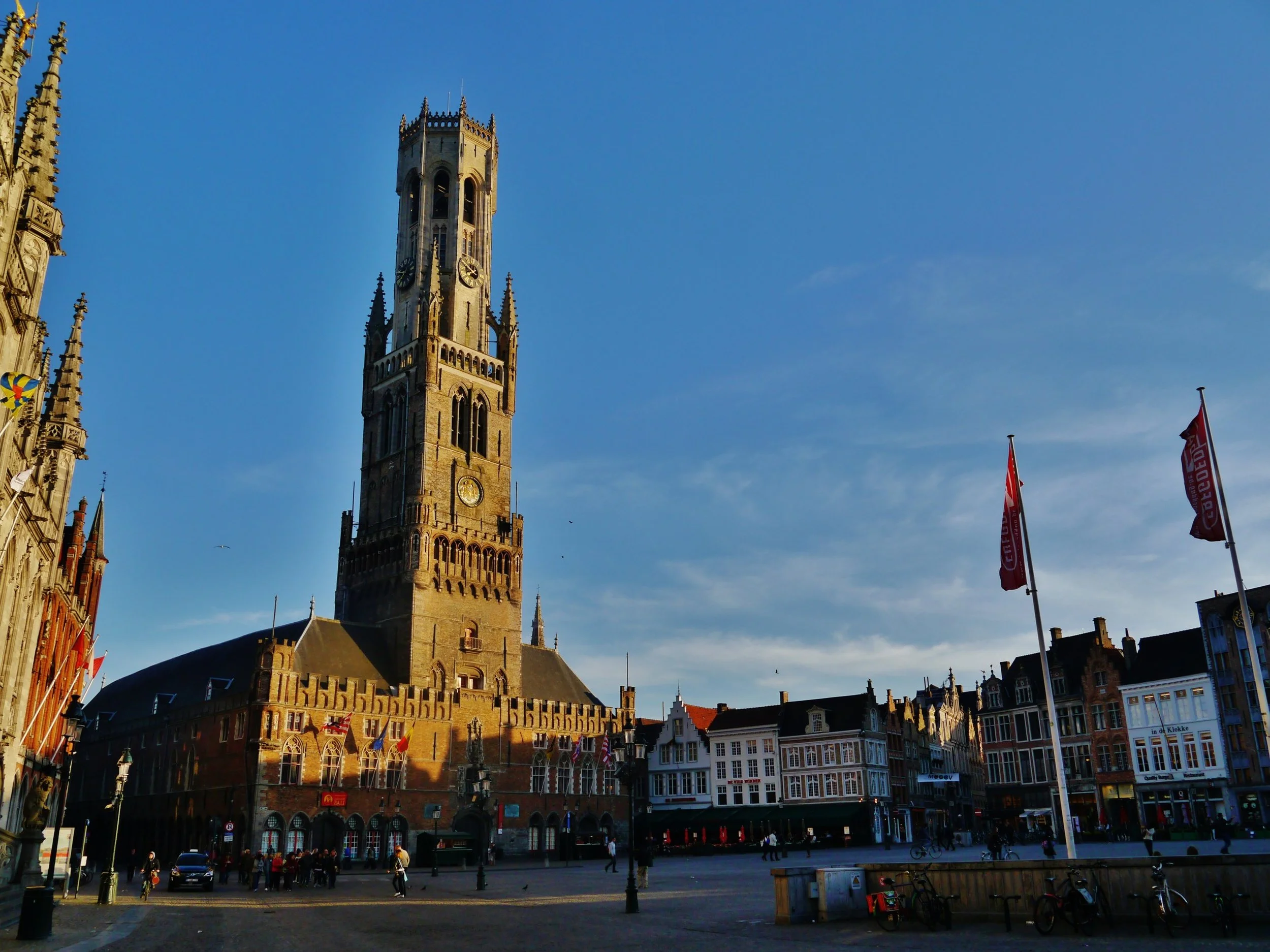
The Belfry of Bruges rising over the Markt, the city’s market square, photographed in April 2016. The tower was added to the square around 1240, when Bruges was an important center of the Flemish cloth industry. Its bells regulated the lives of the people of the city, announcing the time, fire alarms, work hours, and social, political, and religious events. The former market hall stands to the sides and back of the tower, which is why the belfry is also called the Halletoren, the tower of the halls. Photo: Zairon, CC BY-SA 4.0, via Wikimedia Commons
In major trading centers, civic bells marked work hours, market activity, public meetings, and the opening or closing of parts of the commercial day. The exact rules differed from city to city, but the principle was simple: one audible signal gave hundreds of sellers and buyers the same clock.
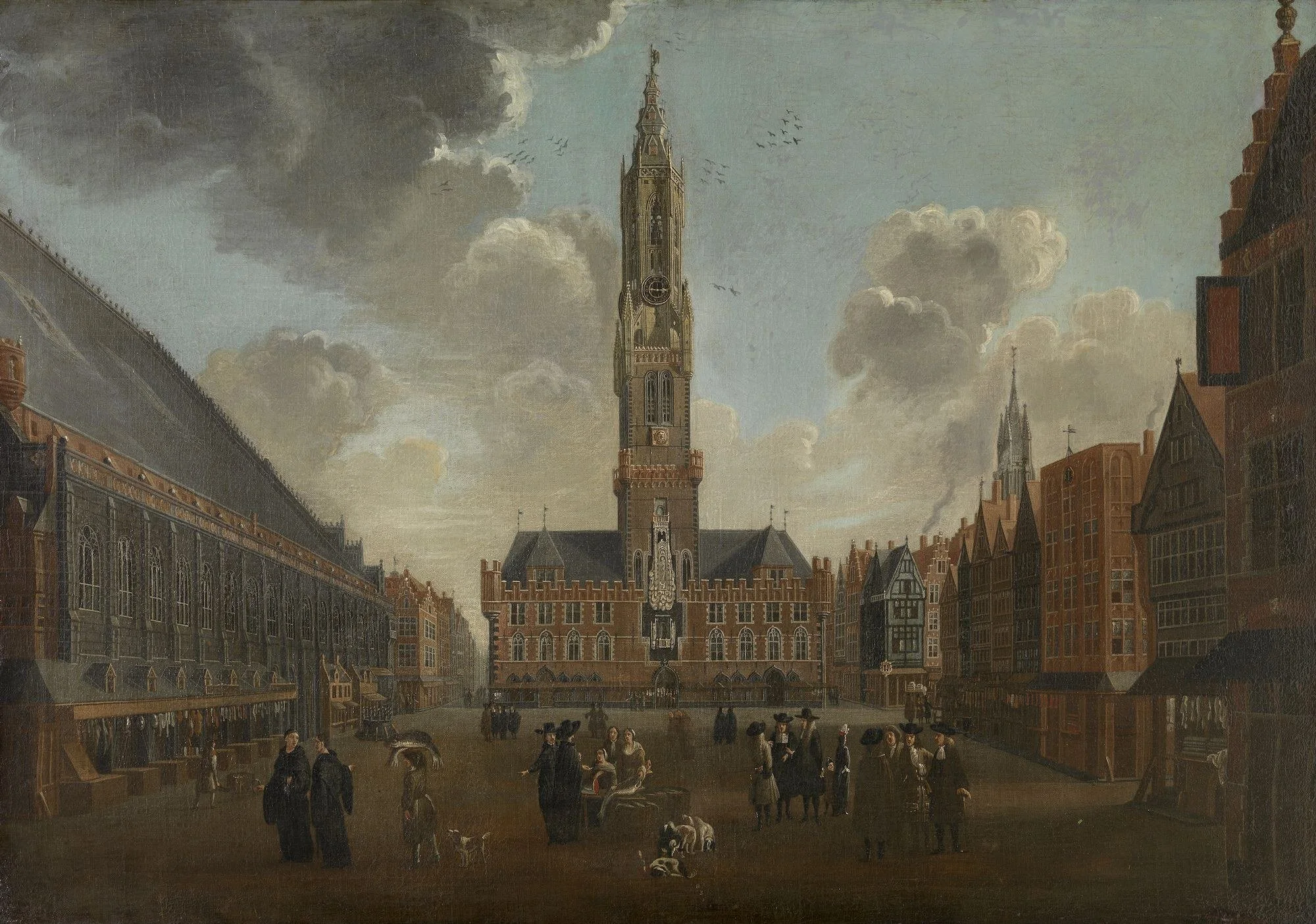
The Markt in Bruges, painted by Jan Baptist van Meunincxhove between about 1691 and 1700. The belfry still carries the wooden spire that burned in 1741 and was never replaced, which lowered the tower from 102 meters to its present 83. Van Meunincxhove, a painter active in Bruges, made two sets of views of the city center, one in 1672 and one in the 1690s. From 1604, the city’s annual accounts record a carillonneur employed to play songs from the belfry on Sundays, holidays, and market days. Image: Jan Baptist van Meunincxhove, Public domain, via Wikimedia Commons (Musea Brugge)
That mattered in a world without wristwatches and synchronized phones. A merchant could not claim his own version of the hour when the belfry had just announced it to the square.
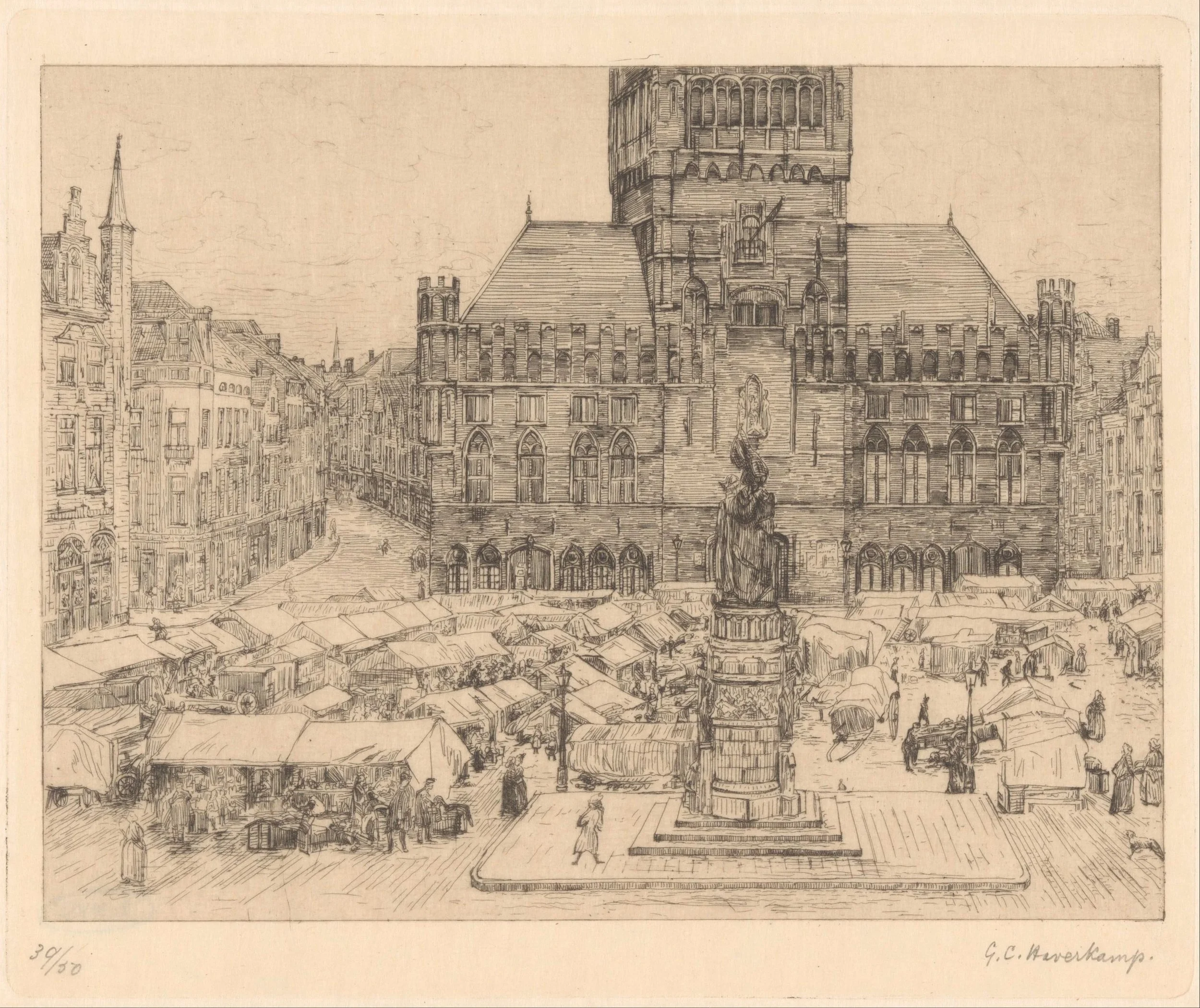
Market stalls fill the Markt of Bruges beneath the belfry in this etching by Gerrit Haverkamp, made between 1882 and 1925. In the foreground stands the statue of Jan Breydel and Pieter de Coninck. The print, number 39 of an edition of 50, has been in the Rijksmuseum in Amsterdam since 1943. The square beside the belfry still hosts a market every Wednesday. Image: Gerrit Haverkamp, Public domain (CC0), via Rijksmuseum and Wikimedia Commons
The best surviving examples are the municipal belfries of the Low Countries. Their clocks and bells grew alongside urban trade because commerce needed shared time just as much as monasteries needed hours of prayer.
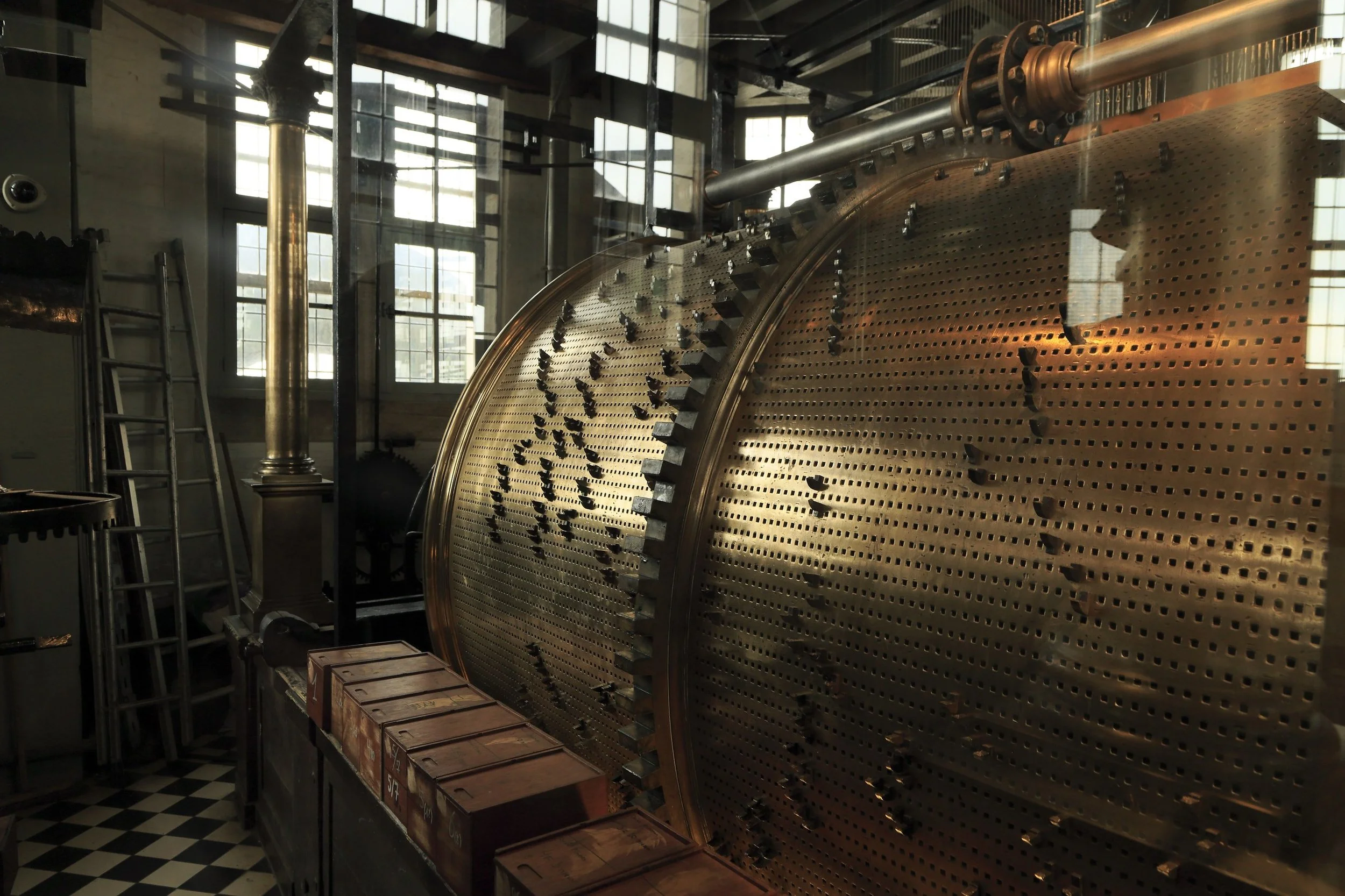
The carillon drum inside the Belfry of Bruges, photographed in 2018. The drum is set off by the hour strike, and its movable pegs can be rearranged to program melodies within the range of the carillon. The bells announced the time, alarms, and work hours, and eventually a mechanism ensured that certain bells sounded regularly, for example to mark the hour. The belfry now holds 47 bells weighing about 27.5 tonnes together, and the bourdon that strikes the hours weighs 11,000 pounds. Since 1999 the tower has been part of the UNESCO World Heritage listing that now covers 56 belfries in Belgium and France, towers that UNESCO describes as symbols of the power of the aldermen and the prosperity of the towns. Photo: Falk2, CC BY-SA 4.0, via Wikimedia Commons
The bell made time public before accurate time became private.
