
Maria Dolens was cast from the bronze of First World War cannon so the metal of battle could be made to speak for peace.
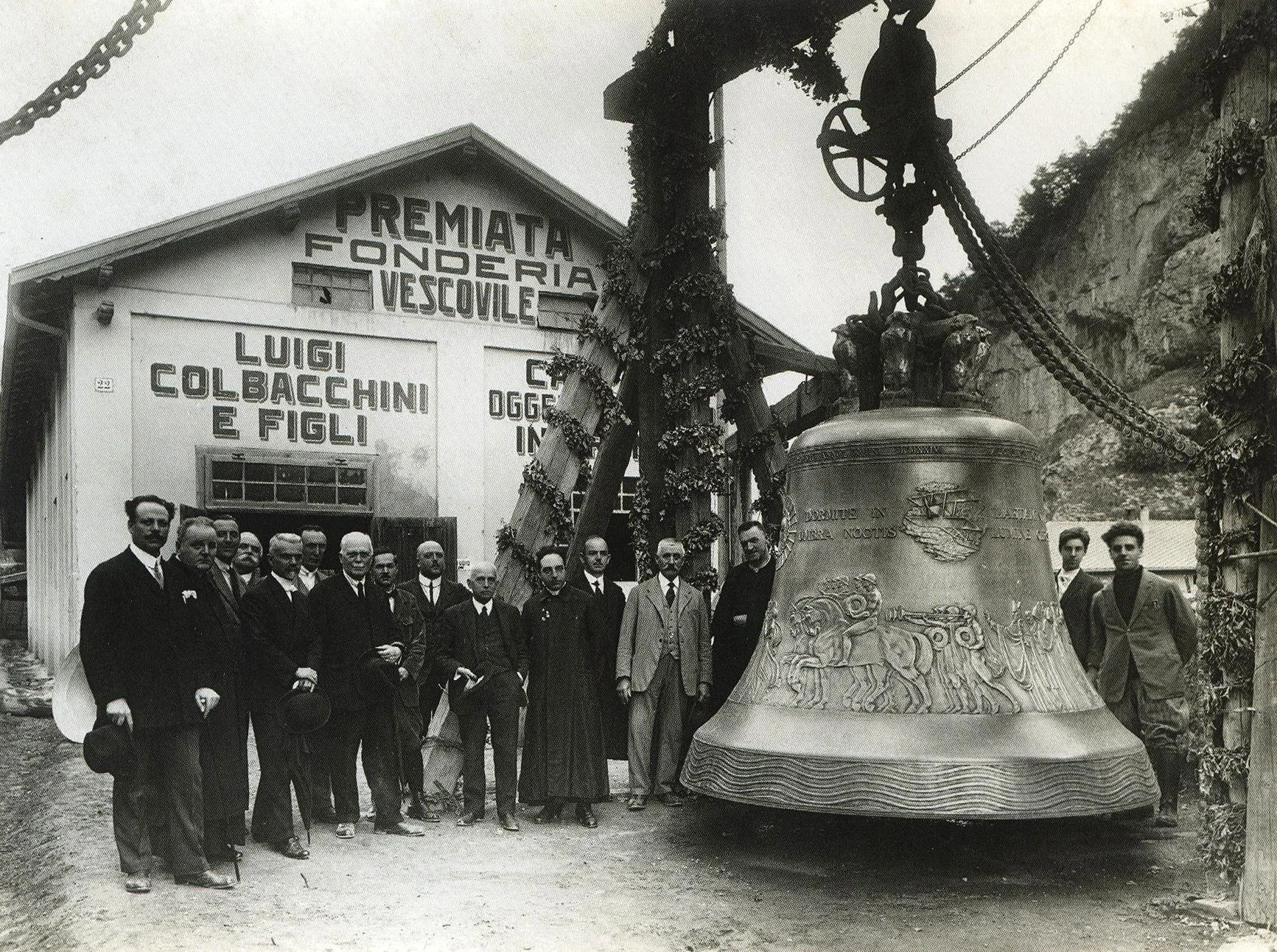
The first Maria Dolens at the Colbacchini foundry in Trento, where it was cast in October 1924, photographed by Sergio Perdomi. The bronze came from cannon supplied by nations that fought in the First World War. Photo: Sergio Perdomi, Public domain, via Wikimedia Commons
The first bell was cast in 1924 and inaugurated at Rovereto in 1925. It did not produce the tone its creators wanted, so it was recast in 1939. A serious crack later silenced that second bell, and Maria Dolens was cast again in 1964.
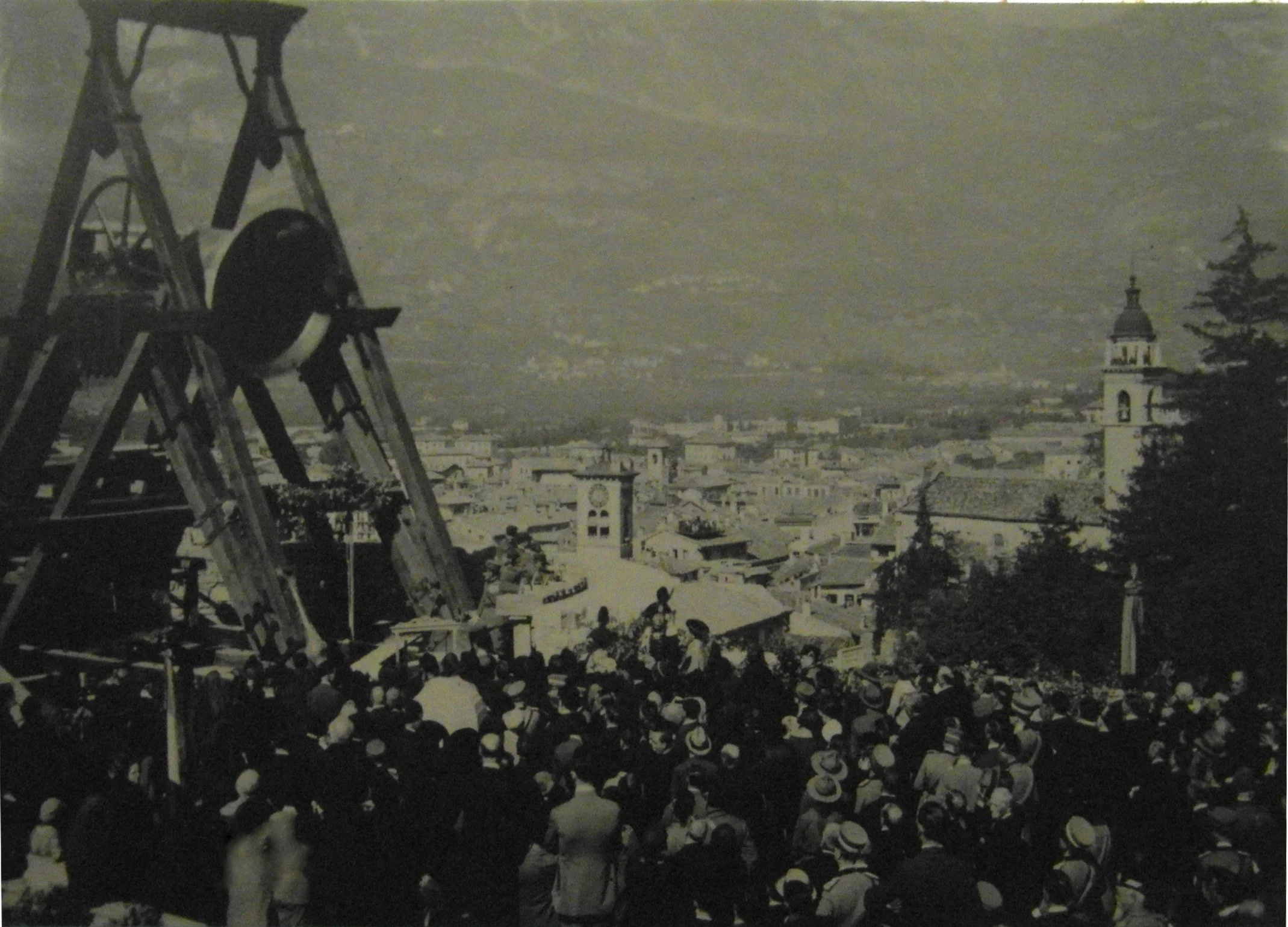
Crowds gather at the castle of Rovereto for the inauguration of the first bell on 4 November 1925. King Victor Emmanuel III attended the ceremony. Photo: Llorenzi, CC BY-SA 4.0, via Wikimedia Commons
The current bell weighs about 22.6 tonnes and is one of the world's largest swinging bells. Its purpose has stayed consistent through all three lives: commemorate the dead of war and call for reconciliation between nations.
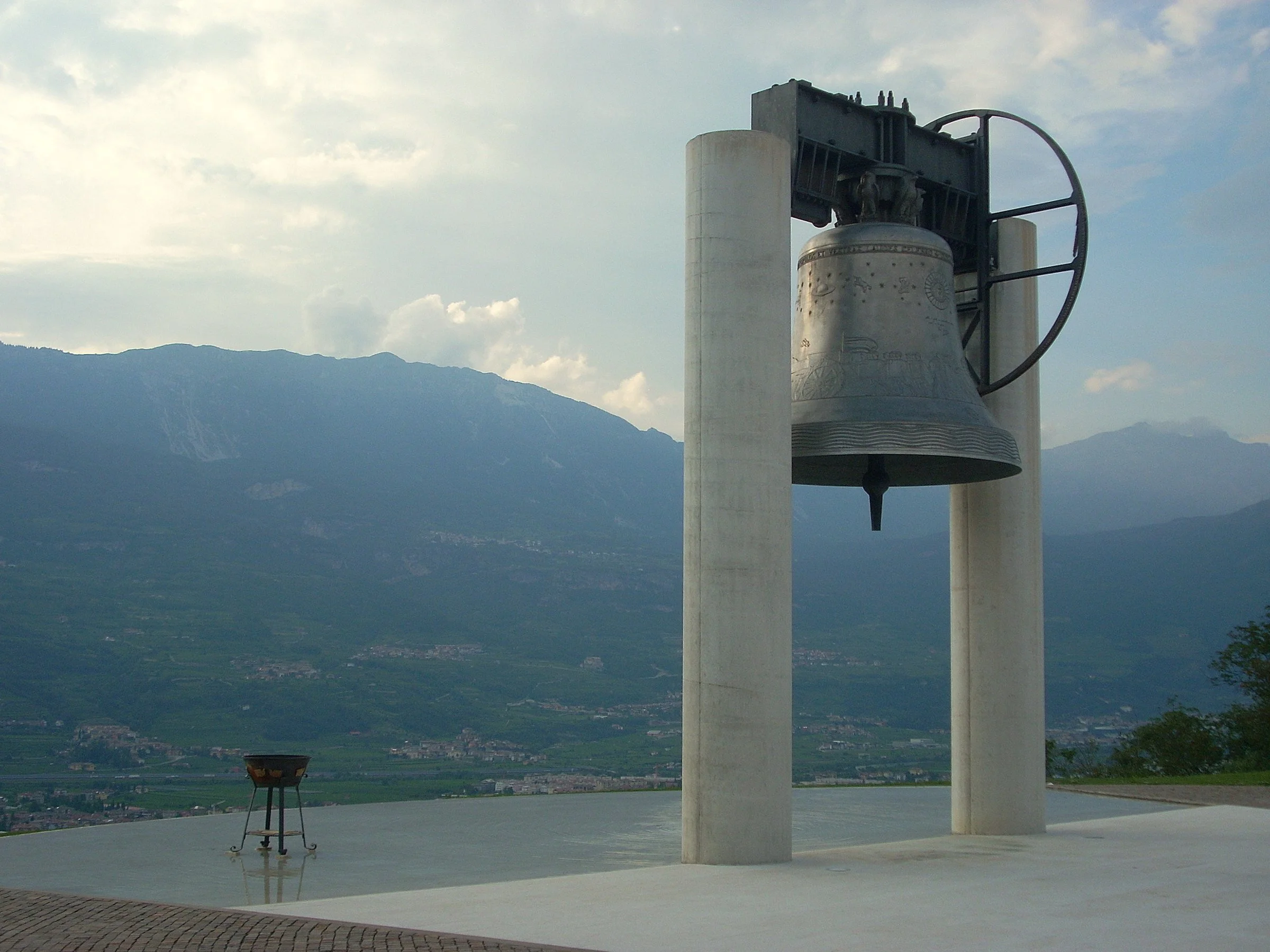
The current Maria Dolens hangs between two concrete pillars on the Colle di Miravalle above Rovereto, where it tolls every evening in memory of the fallen. Photo: Gio 2000, CC BY-SA 3.0, via Wikimedia Commons
The recastings make the object more interesting, not less. A peace monument built from weapons was itself repeatedly broken down and remade until the sound matched the intention.
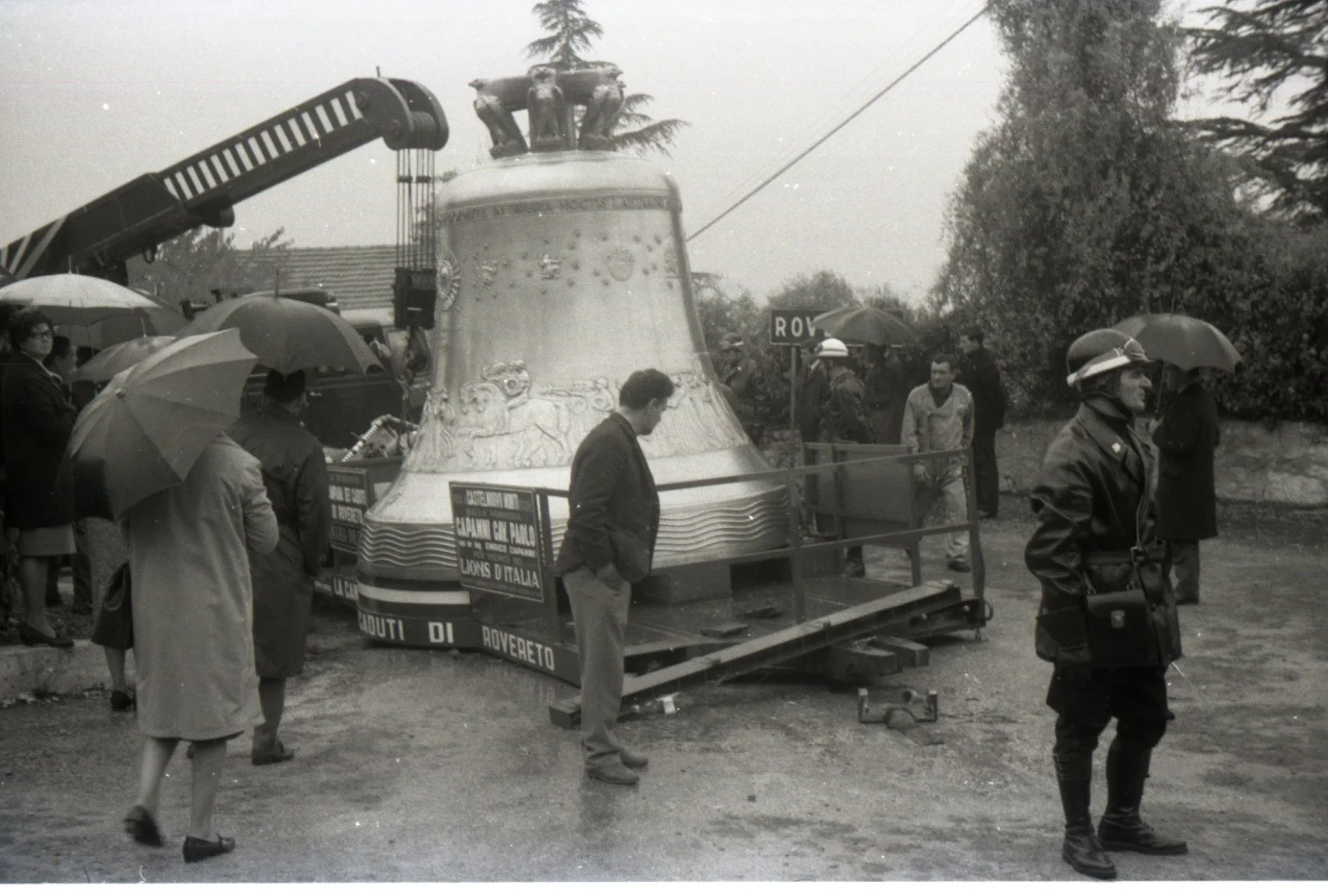
The bell cast in 1964 by the Capanni foundry of Reggio Emilia is moved along Viale Schio in Rovereto. Pope Paul VI blessed it in St. Peter's Square on 31 October 1965 before it was installed on the Colle di Miravalle. Photo: Adone virgilio, CC BY-SA 3.0, via Wikimedia Commons
Even the symbol had to be worked on.
