
The old Irish name for the round tower is cloigtheach: bell house.
That is the strongest clue to what these tall stone cylinders were built to do. Most surviving examples date from roughly the tenth through twelfth centuries and stood at important ecclesiastical sites. Their upper levels had openings suited to projecting the sound of bells across the surrounding landscape.
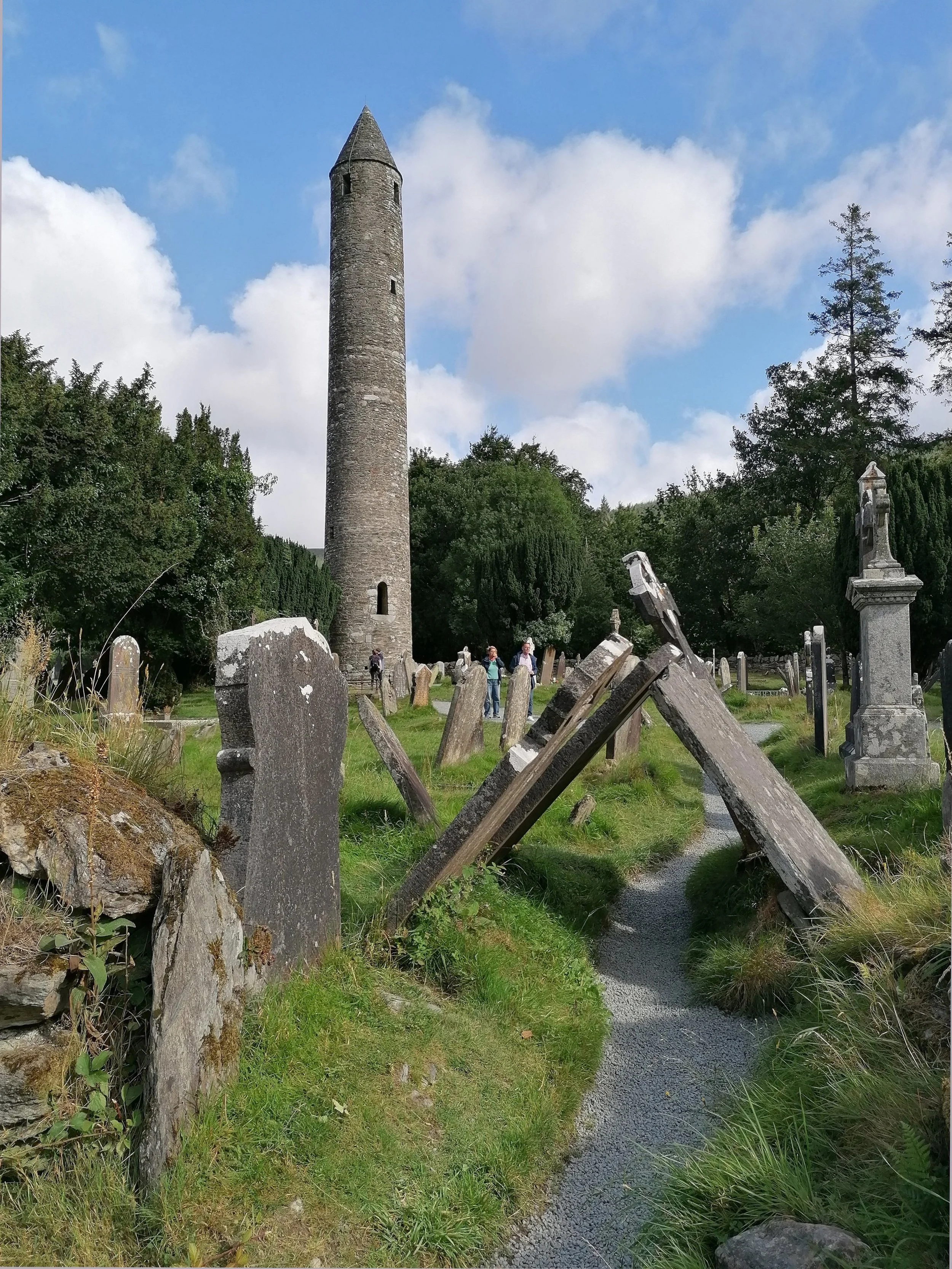
The round tower at Glendalough, County Wicklow, seen from the graveyard of the early medieval monastic site in August 2025. The tower is about 30 metres high. Its top storey has four windows facing the cardinal points, just below a conical cap that was rebuilt in 1876 using the original stones. Photo: Karlunun, CC0, via Wikimedia Commons
People did use some towers to store valuables, and historical accounts show that people sometimes sought refuge in them during attacks. That does not make them purpose-built fortresses. The high doorway slowed entry, but the towers lacked the defensive features of proper strongholds, and attackers could trap people inside.
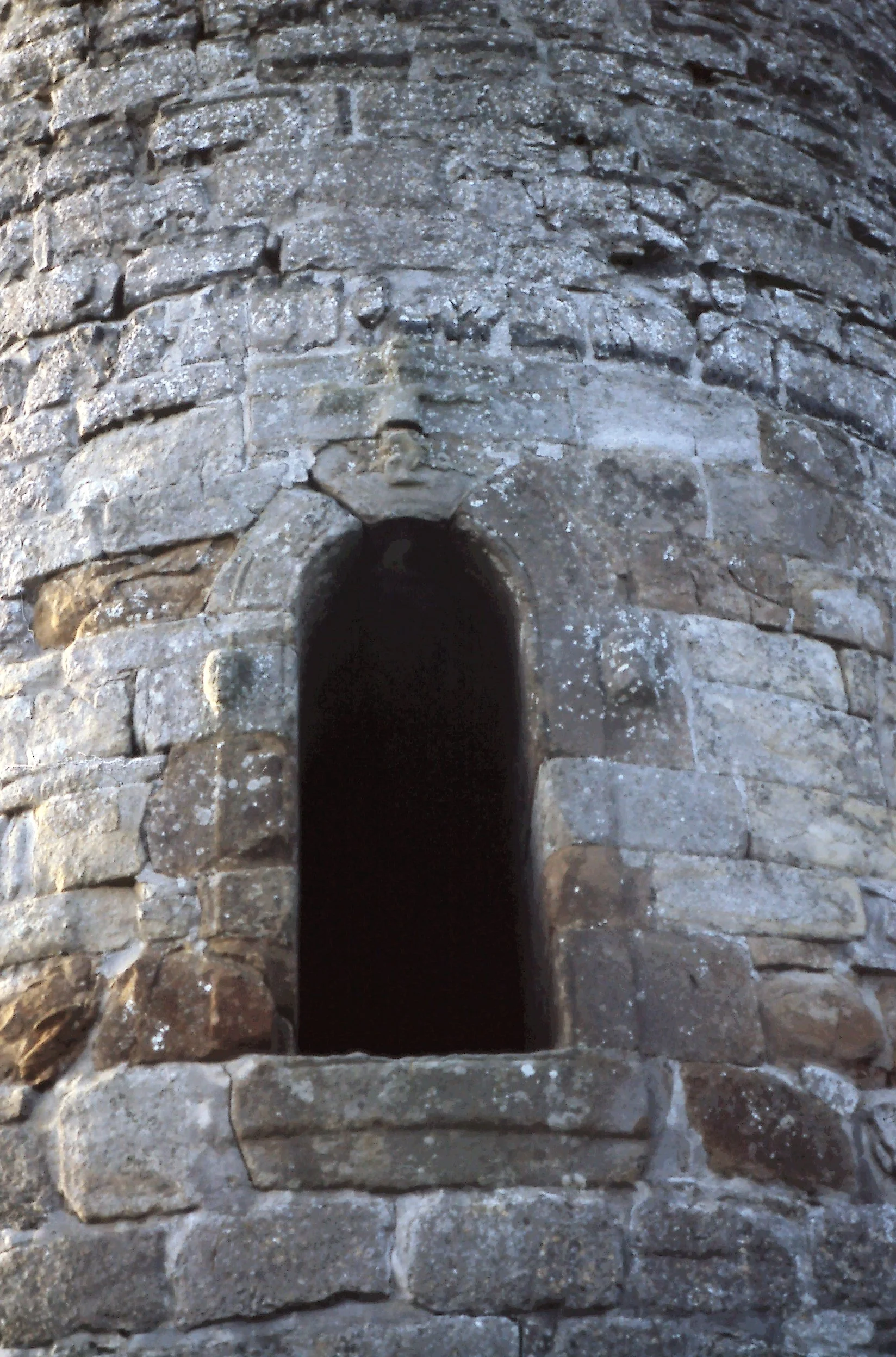
The doorway of the 10th century round tower at Donaghmore, County Meath, set about 3 metres above the ground. A carved Romanesque head sits above the round-headed opening. The Office of Public Works notes the tower was where the settlement’s riches were stored in times of attack. Photo: Wanfried-Dublin, CC BY 4.0, via Wikimedia Commons
The bell function came first. In a heavily wooded landscape, the tower also acted as a visual marker for a church or monastery.
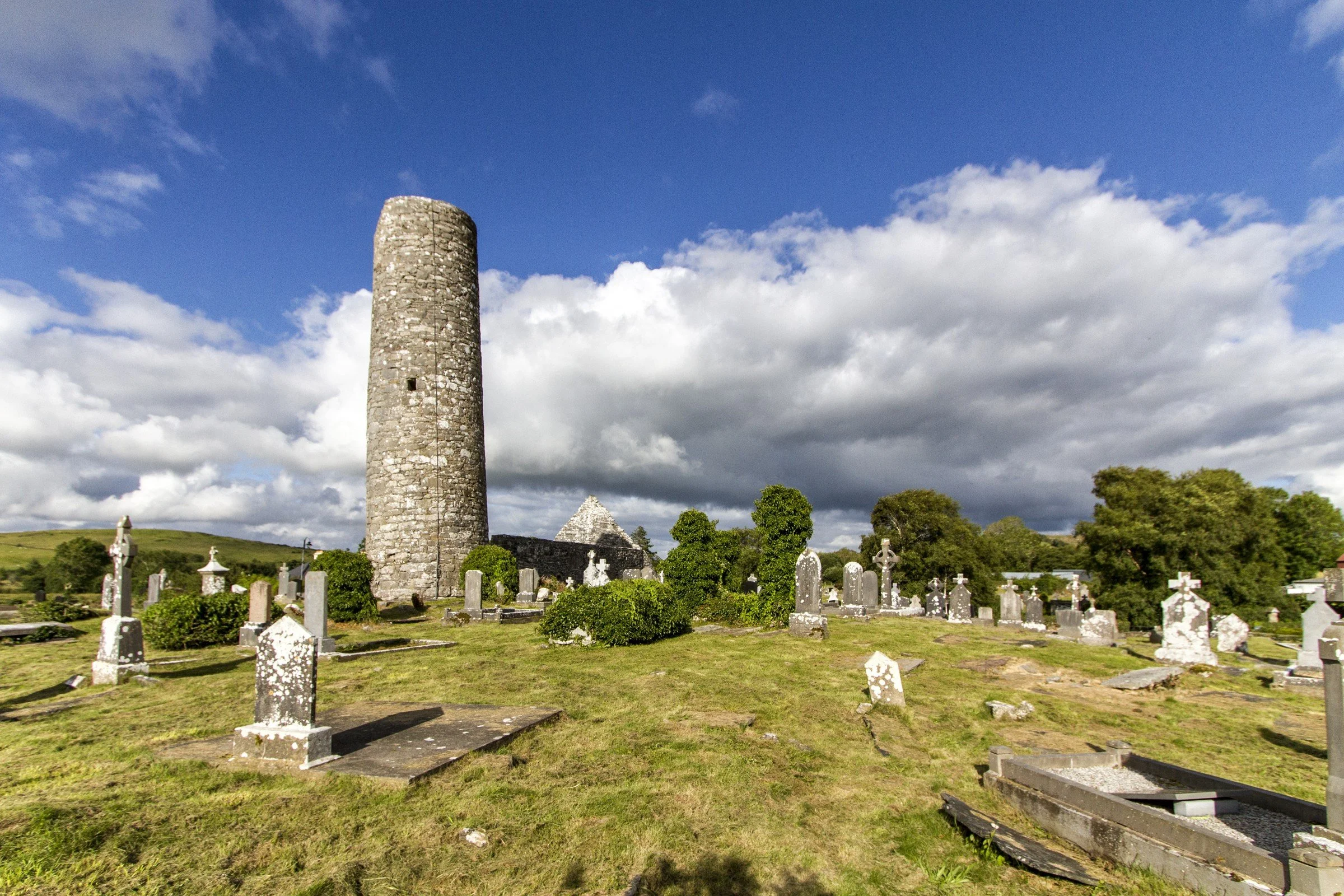
The round tower at Aghagower, near Westport, County Mayo, stands beside the church and graveyard of an early medieval monastic site in the centre of the village. Photo: Linda Mc Nulty, CC BY-SA 4.0, via Wikimedia Commons
Their survival has encouraged centuries of wild theories. The medieval name is much less mysterious and much more useful.
