
The same bell could serve church and democracy in the early United States without anybody finding the arrangement unusual.
In 1802 Paul Revere & Son cast a bell for the Congregational meetinghouse in Castine, Maine. The building hosted worship, but like many New England meetinghouses it also handled town business and civic gatherings. Smithsonian historians note that when the Revere bell sounded, townspeople might be hearing a call to prayer or a call to vote.
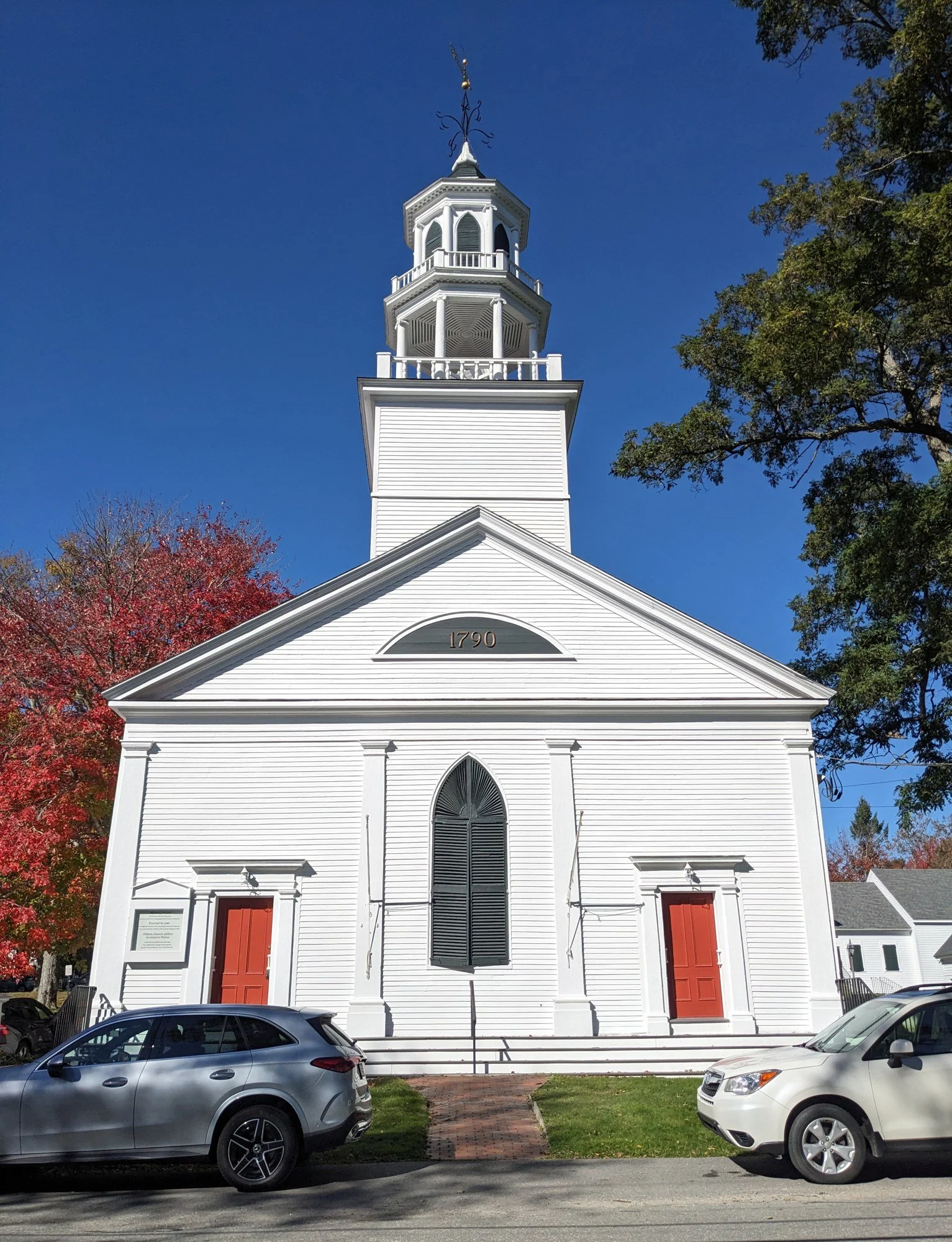
The meetinghouse on the town common in Castine, Maine, built in 1790 as a Congregational meetinghouse and remodeled in 1831. It is now the Unitarian Universalist church. Paul Revere's 1802 bell hung in its steeple until 1831. Photo: Mark Landon, CC BY 4.0, via Wikimedia Commons
That overlap tells you more about the early republic than a generic story about election-day bells. Sacred and civic life often shared the same building, the same taxpayers, and the same public signal.
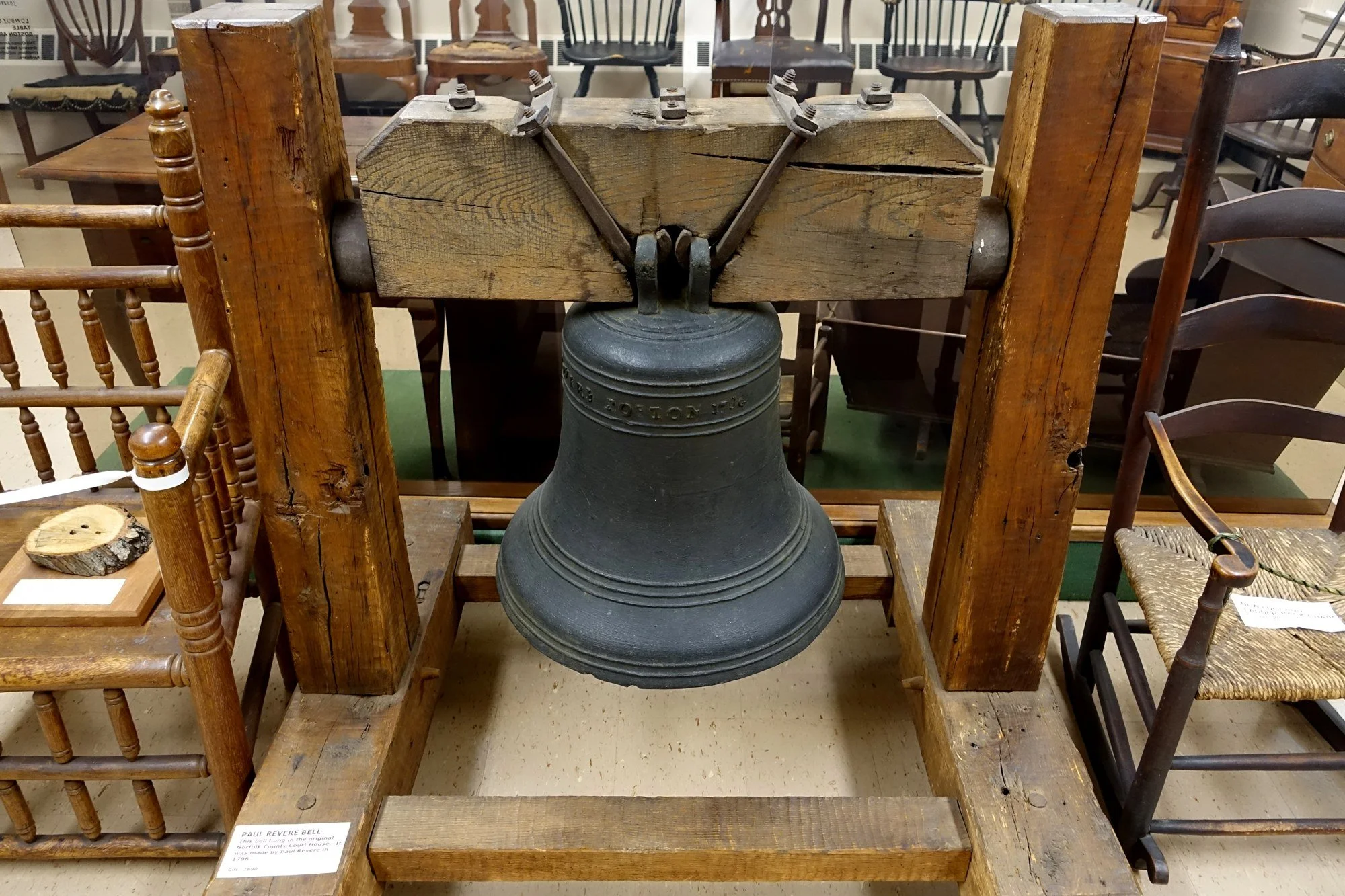
A Paul Revere bell made in 1796 that came from the Norfolk County Court House, now in the collection of the Dedham Historical Society in Dedham, Massachusetts. Photo: Daderot, CC0, via Wikimedia Commons
The Castine bell later spent more than a century regulating work at a Massachusetts mill before entering the Smithsonian collection. One object moved from church to civic life to industrial timekeeping without changing what made it useful: everybody nearby could hear it.
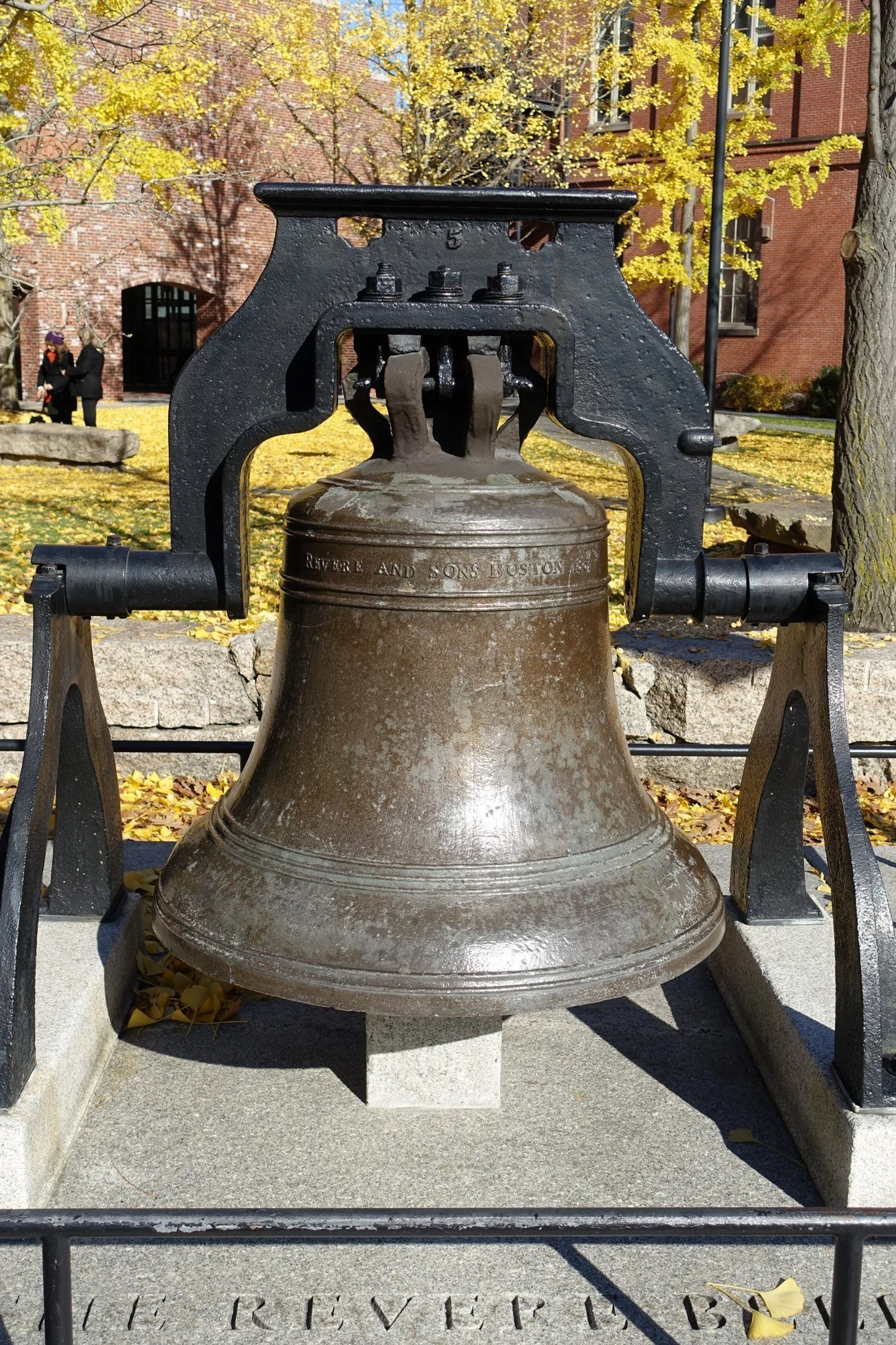
A bell marked "Revere and Sons, Boston," cast in 1801, on display in Salem, Massachusetts. It came from the same Boston foundry one year before the Castine bell. Photo: Daderot, CC0, via Wikimedia Commons
