
The carillon turned a civic bell tower into a public musical instrument.
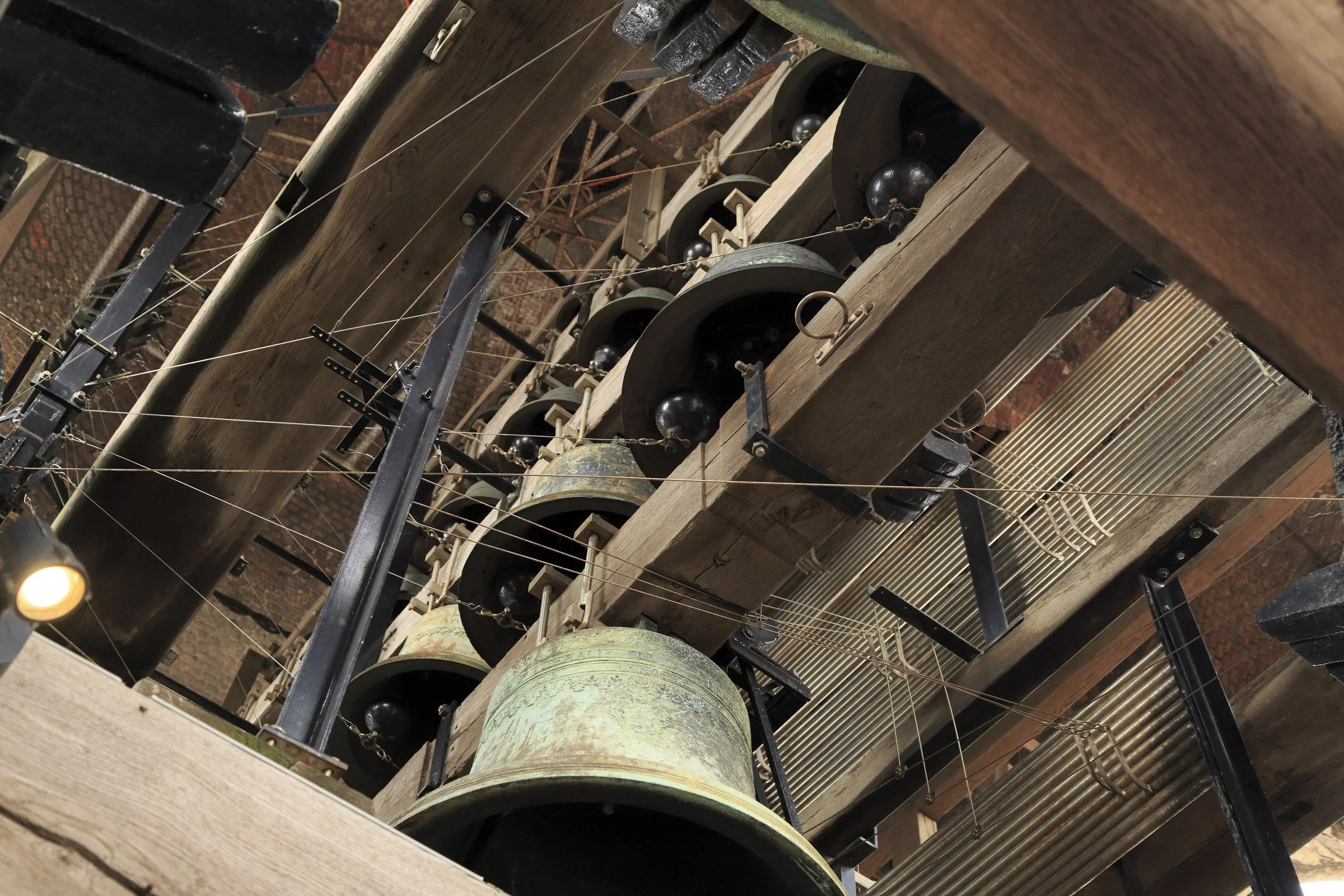
Carillon bells above the viewing level of the Belfry of Bruges, Belgium, photographed in 2018. Carillon bells hang fixed in place and do not swing. Wires link them to the playing console below. Photo: Falk2, CC BY-SA 4.0, via Wikimedia Commons
In the Low Countries, towers that already held clocks, alarms, and work bells gradually acquired chromatic sets large enough to play melodies. By the seventeenth century, founders such as the Hemony brothers were producing carillons whose tuning made serious musical performance possible.
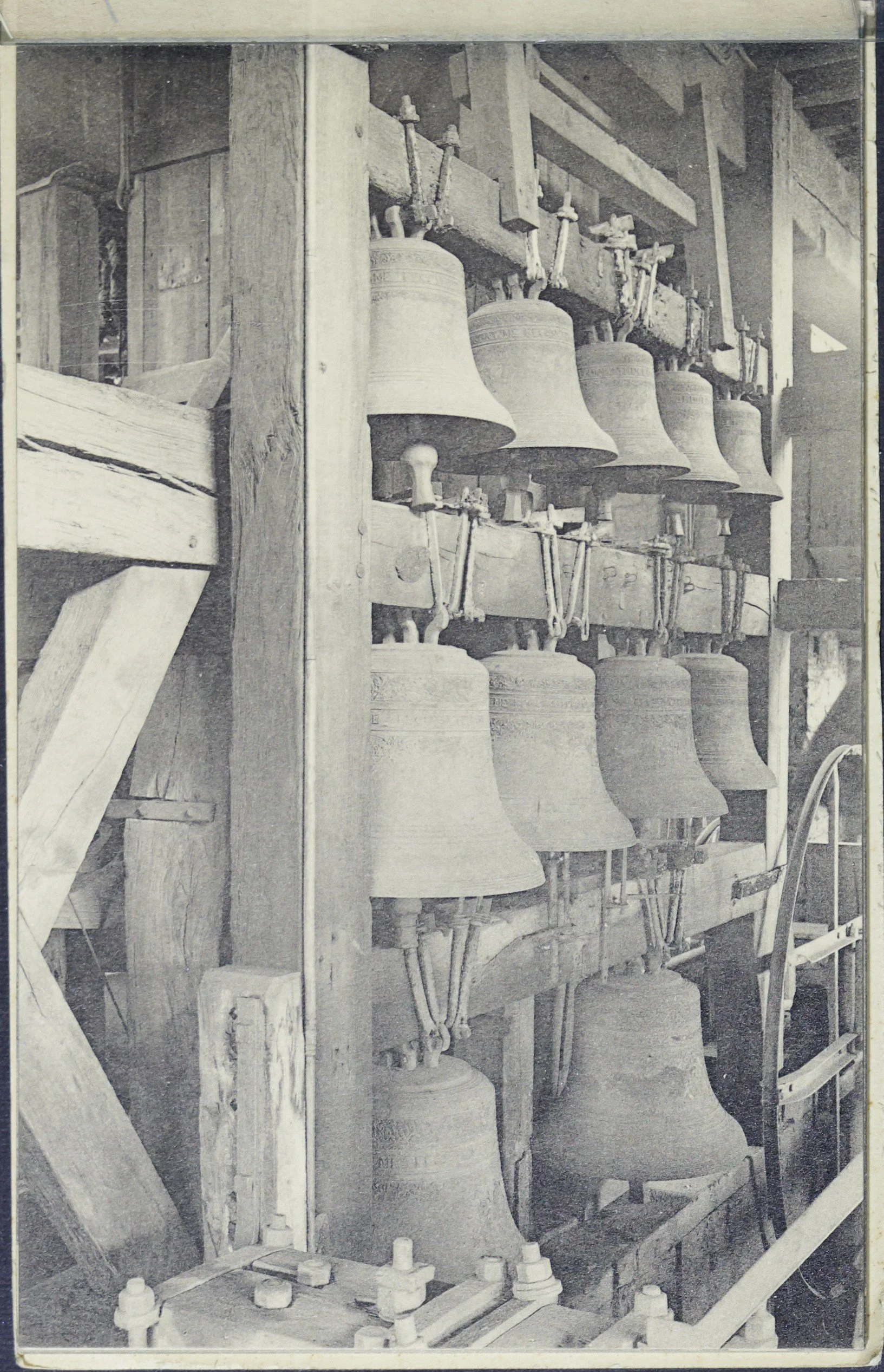
A postcard from Antwerp, Belgium, published by Flandria, showing some of the 26 bells of a carillon that church authorities ordered from the Hemony founders in 1654. The postcard describes the set as no longer in use. Its publication date is unknown. Photo: Unknown author, Public domain, via Wikimedia Commons
The audience did not need a ticket. Music from a belfry spilled into markets, streets, courtyards, and open windows. The performance belonged to whoever happened to be within range.
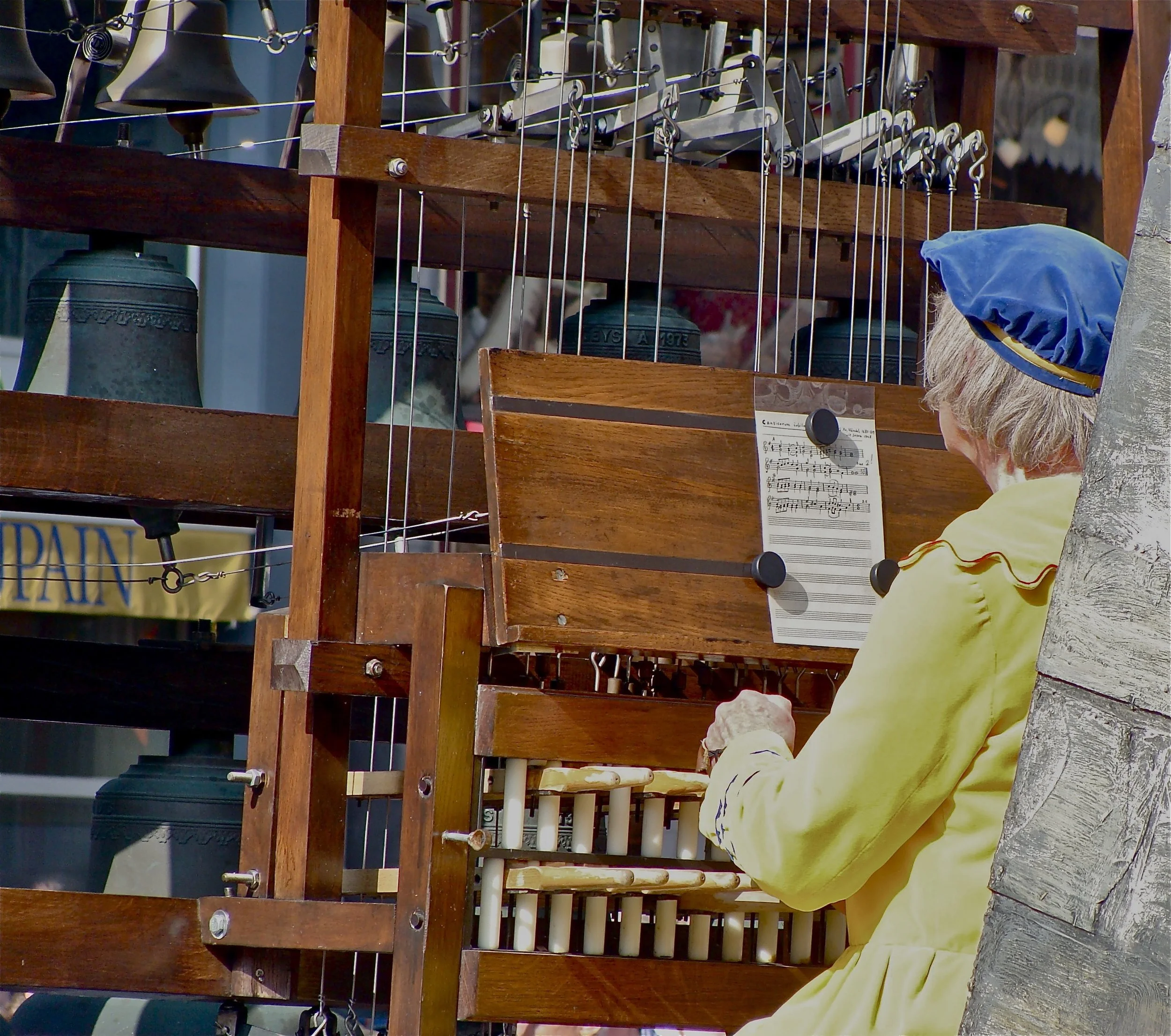
A carillon player performs during the Procession of the Holy Blood in Bruges, Belgium, in 2009. On the music stand is a carillon arrangement of the March from Handel's oratorio Saul. Photo: Jebulon, CC BY-SA 3.0, via Wikimedia Commons
That is a different relationship with a tower than hearing an alarm or the hour. The listener did not have to do anything. The city was simply playing music above daily life.
Carillons still work that way. They are among the few concert instruments designed around the assumption that most of the audience will never enter the building that contains them.
