
The First World War turned church bells into strategic material on an industrial scale.
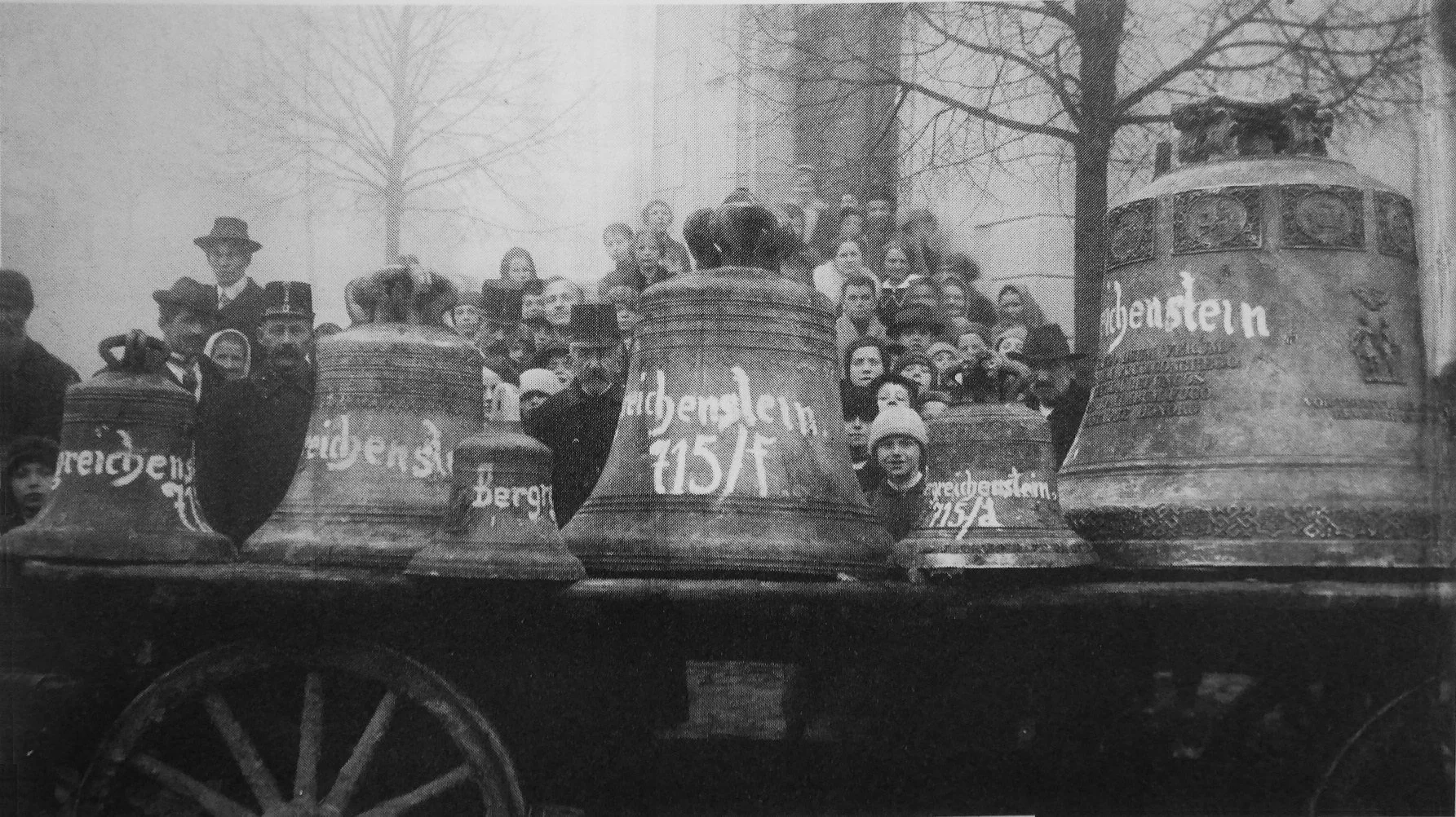
Bells confiscated for the war effort after being taken down from the tower of the Church of St. Margaret in Kašperské Hory, Bohemia, in November 1916. They had been cast in Wiener Neustadt, near Vienna, in 1864. Photo: Karl Lutz, Public domain, via Wikimedia Commons
Germany and Austria-Hungary organized major requisition programs, classifying bells by age and cultural value before sending large numbers to be melted for military use. Other bell losses occurred across the combatant countries as governments hunted for copper and tin.
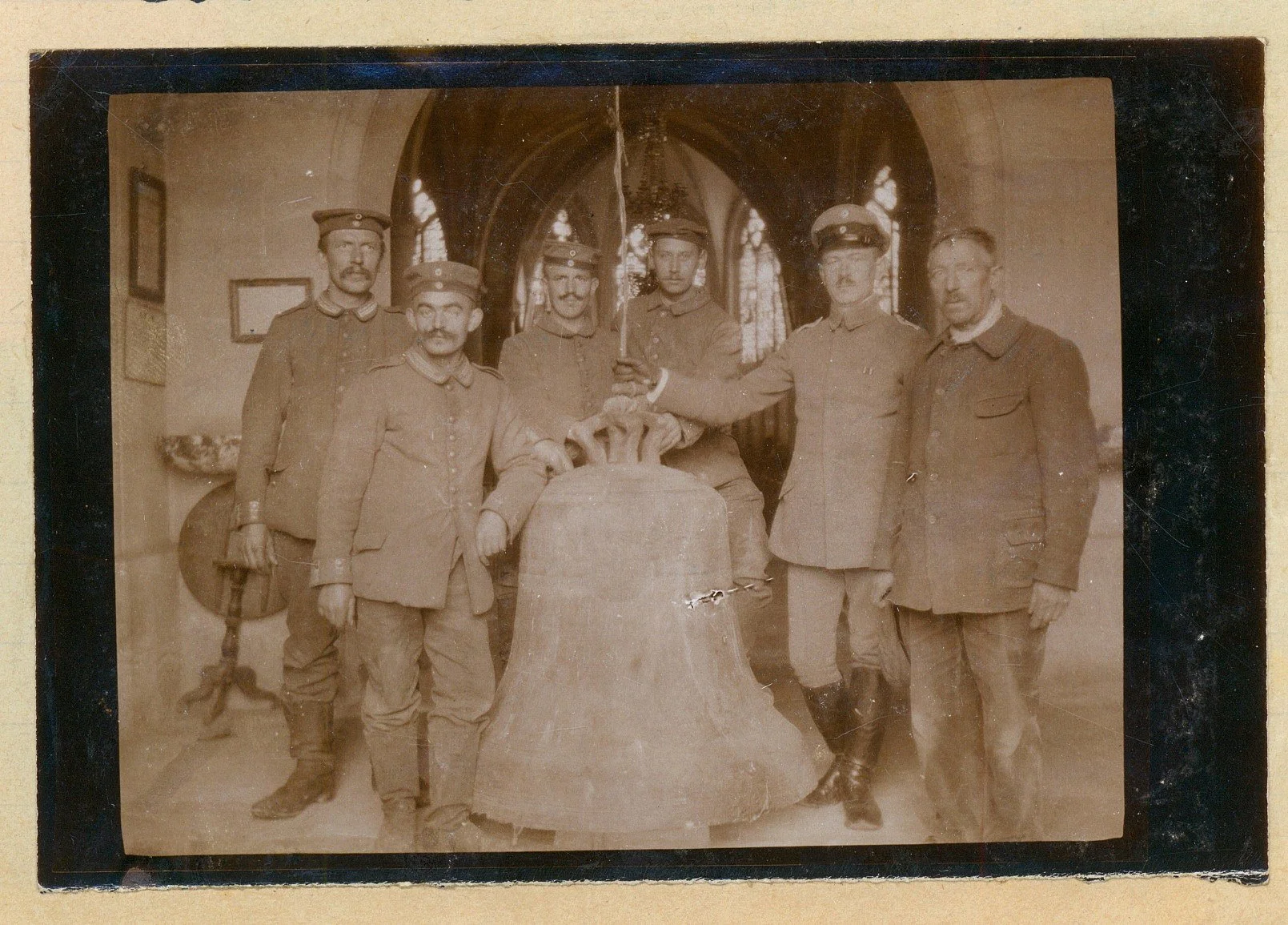
German soldiers with a bell during its removal from a church in December 1916. The photograph comes from the war diary of the German army's Mobile Etappen-Kommandantur 84 at Sissonne. Photo: Landesarchiv Baden-Württemberg, Generallandesarchiv Karlsruhe 456 F 109 Nr. 94, CC BY 4.0, via Wikimedia Commons
The most historically valuable examples sometimes received exemptions, but age did not guarantee safety. Parishes watched bells that had marked local life for centuries disappear into a national war economy.
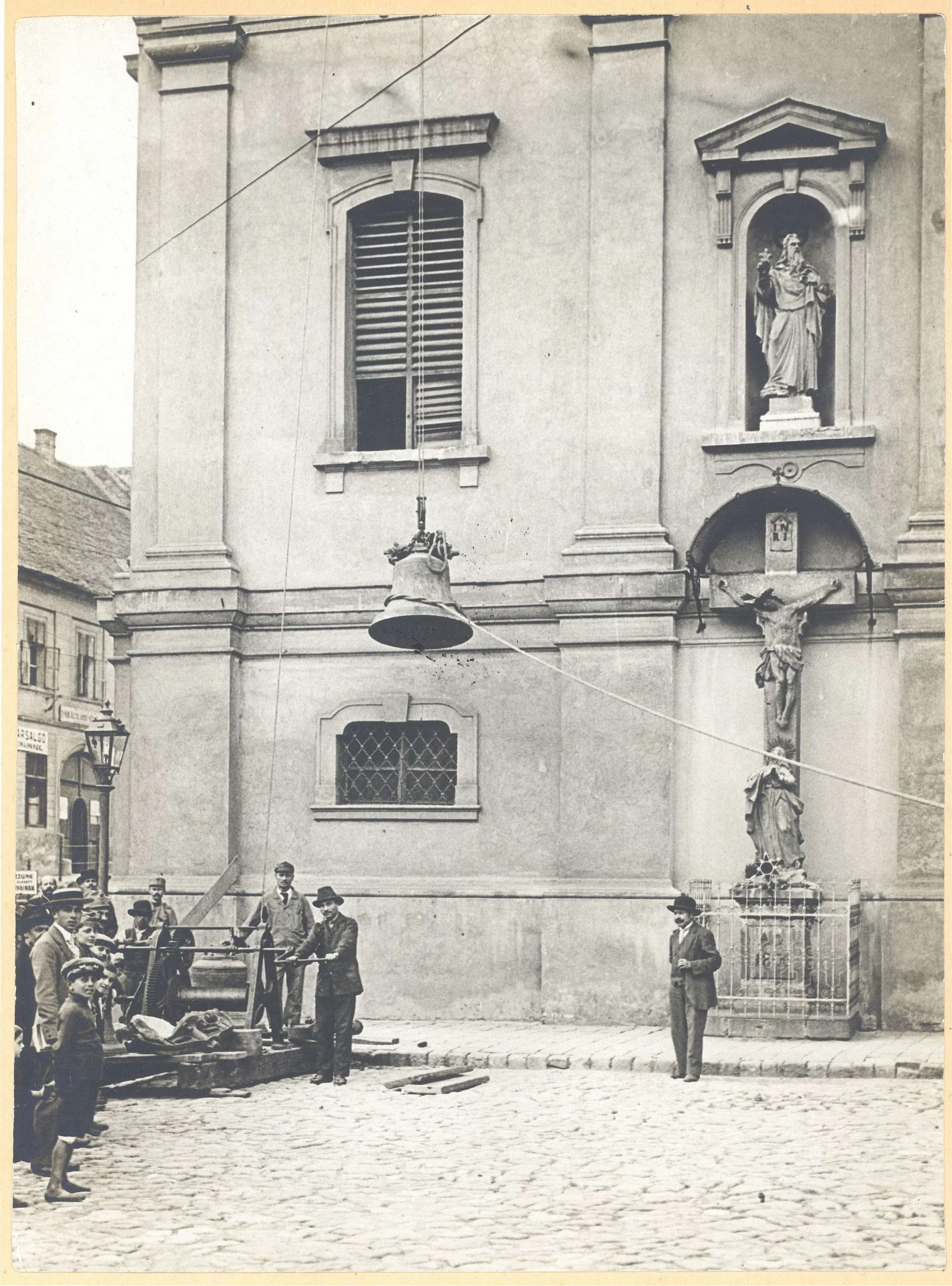
Requisition of the bells of St. Catherine's Church in Tabán, Budapest, in 1916. Four larger 18th-century bells were removed from the tower and taken away to be melted for military use. Photo: János Müllner, Public domain, via Wikimedia Commons
Replacement campaigns began after the armistice, which is why so many European churches contain twentieth-century bells in medieval towers. The architecture can make the soundscape seem ancient even when the bronze is only a century old.
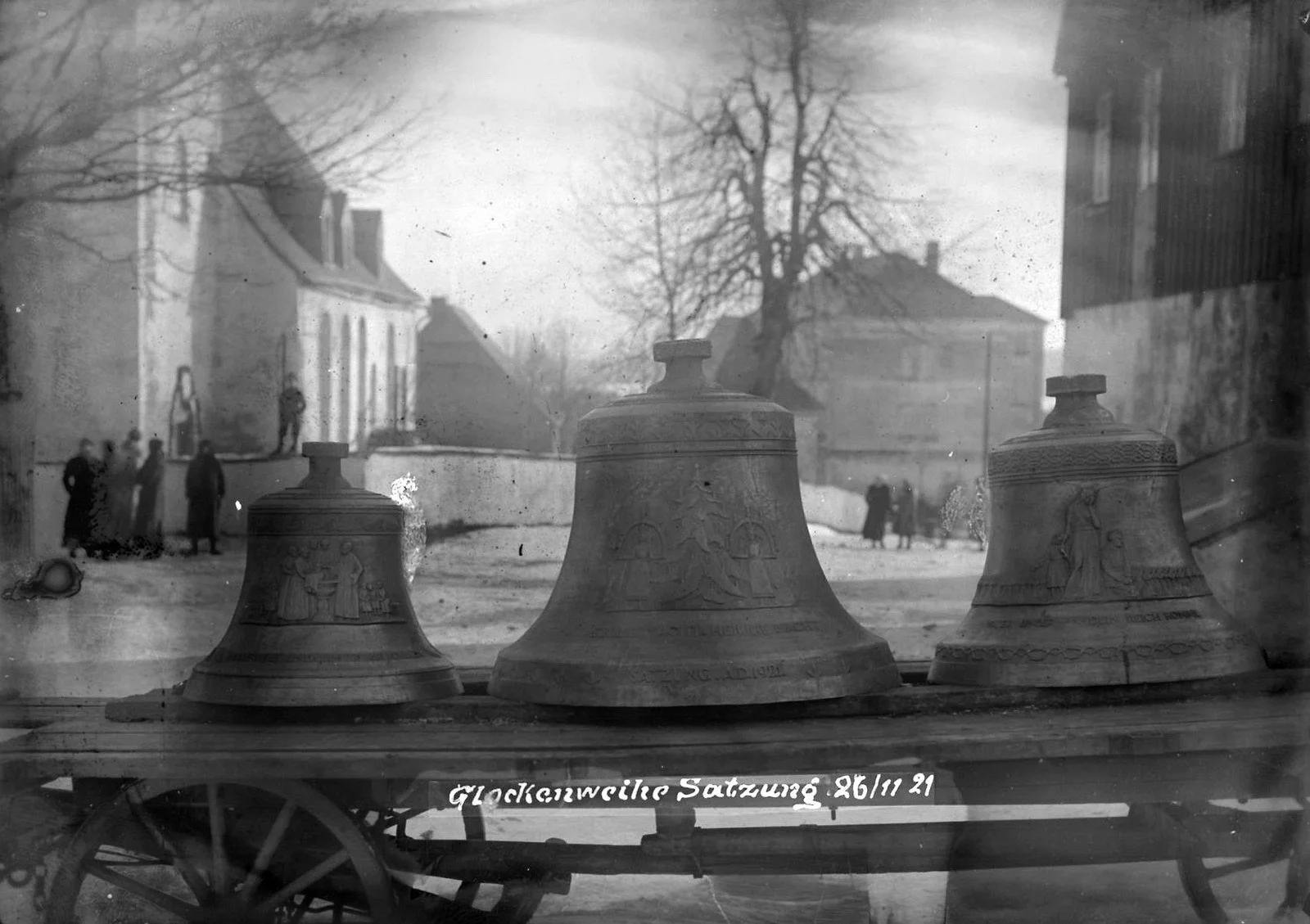
Three new bells from the Bruno Pietzel foundry at their consecration in Satzung, Saxony, on 26 November 1921. The village church had surrendered its two larger bells in June 1917, and they were melted down for the war. Photo: Hermann Krauße, CC0, via Wikimedia Commons (Deutsche Fotothek)
War changed the bells people heard long after the fighting stopped.
