
Long-distance warning systems existed before telegraphs, but they did not rely on bells alone.

Culmstock Beacon in the Blackdown Hills, Devon, England. The stone hut is a Victorian rebuild of an Elizabethan fire beacon, one of a chain built to warn of naval invasion. Photo: Stevekeiretsu, CC BY-SA 4.0, via Wikimedia Commons
Beacons, watchtowers, church towers, horns, and bells could all be linked into local alarm networks depending on the landscape. A watcher on high ground saw smoke, sails, or approaching troops, sent the agreed signal, and another point repeated it.
Bells were especially useful near settlements because the signal did not require people to be looking in the right direction. Once a tower joined the alarm, the warning could spread through streets and fields immediately.
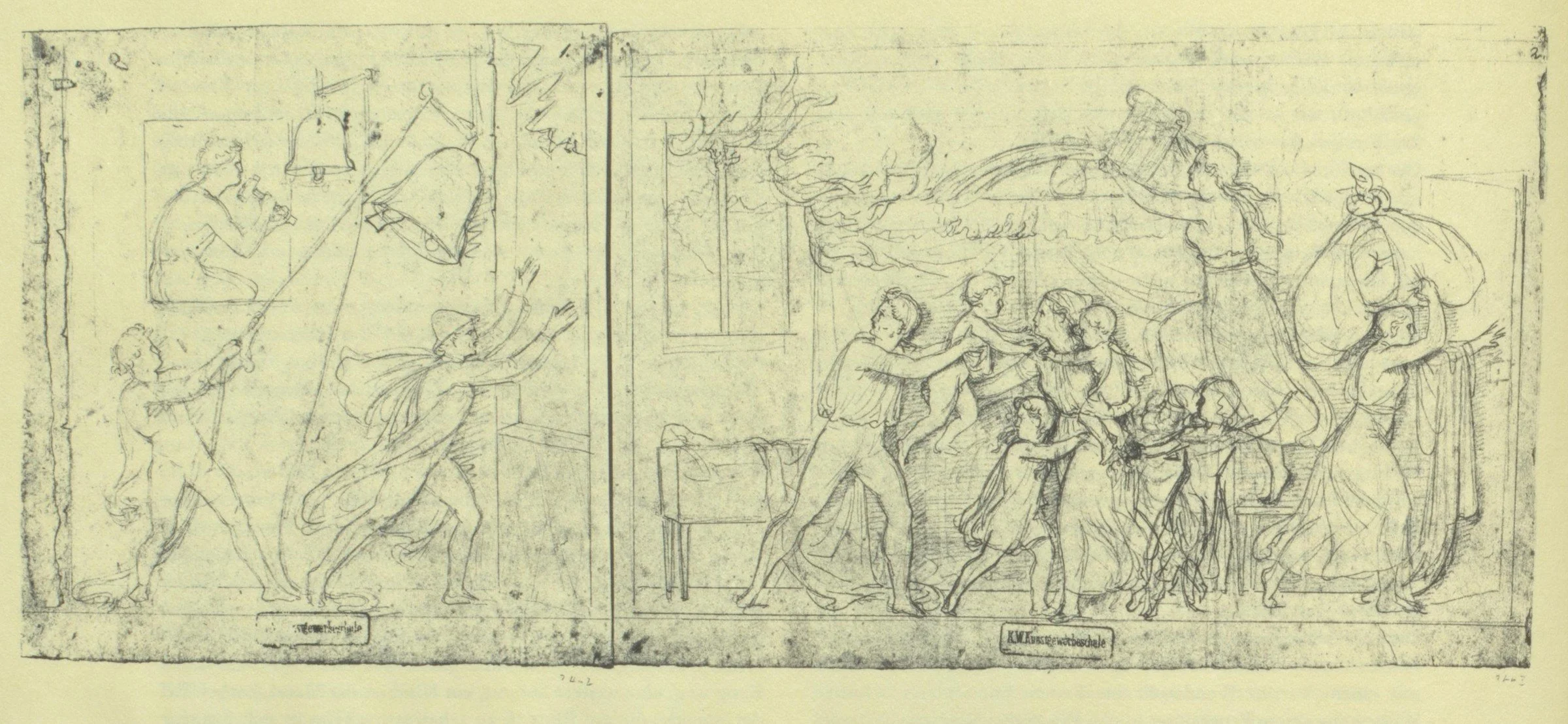
Sturmläuten (sounding the alarm bell) and the rescue of the family, two scenes from Conrad Weitbrecht’s cycle “Der Dorfbrand” (The Village Fire), from 1830. Photo: Conrad Weitbrecht, Public domain, via Wikimedia Commons
That makes the bell tower part of a larger communications problem rather than a magical medieval telephone line. Height extended vision. Bronze extended sound. Repetition extended the warning.

The 13th century storm bell (Sturmglocke) of St. Patroklus in Soest, Germany. Photo: Andreasdziewior, CC BY 3.0, via Wikimedia Commons
The technology was simple enough to survive for centuries because it did not need much infrastructure beyond people who knew what the signal meant.
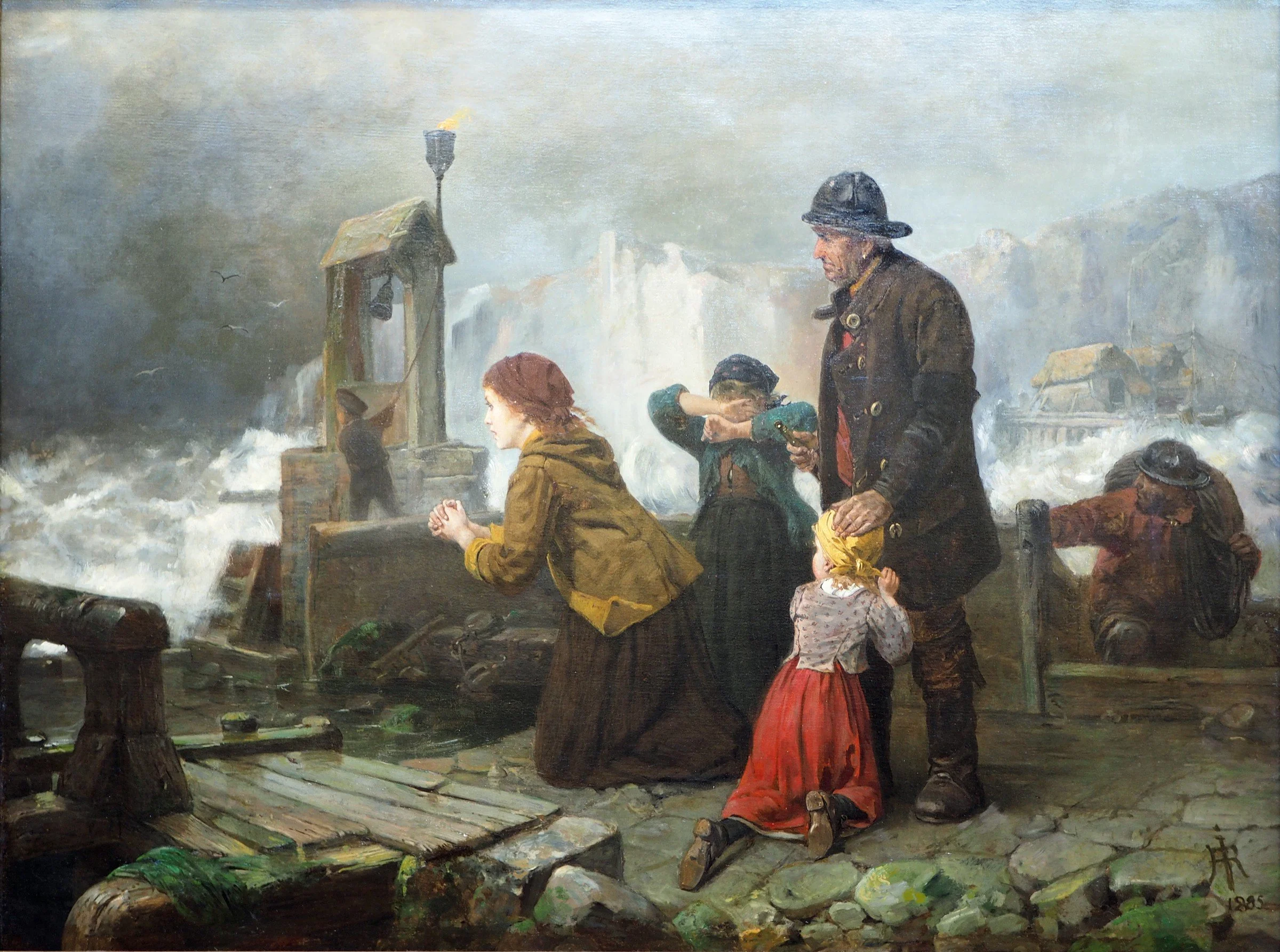
Sturmläuten auf Helgoland (Sounding the alarm bell on Heligoland), oil on canvas by Rudolf Jordan, 1885. Dr. Axe-Stiftung, shown at the Albert-König-Museum. Photo: Rudolf Jordan, Public domain, via Wikimedia Commons
