
Bell towers worked because people learned patterns, not because every message needed its own bell.
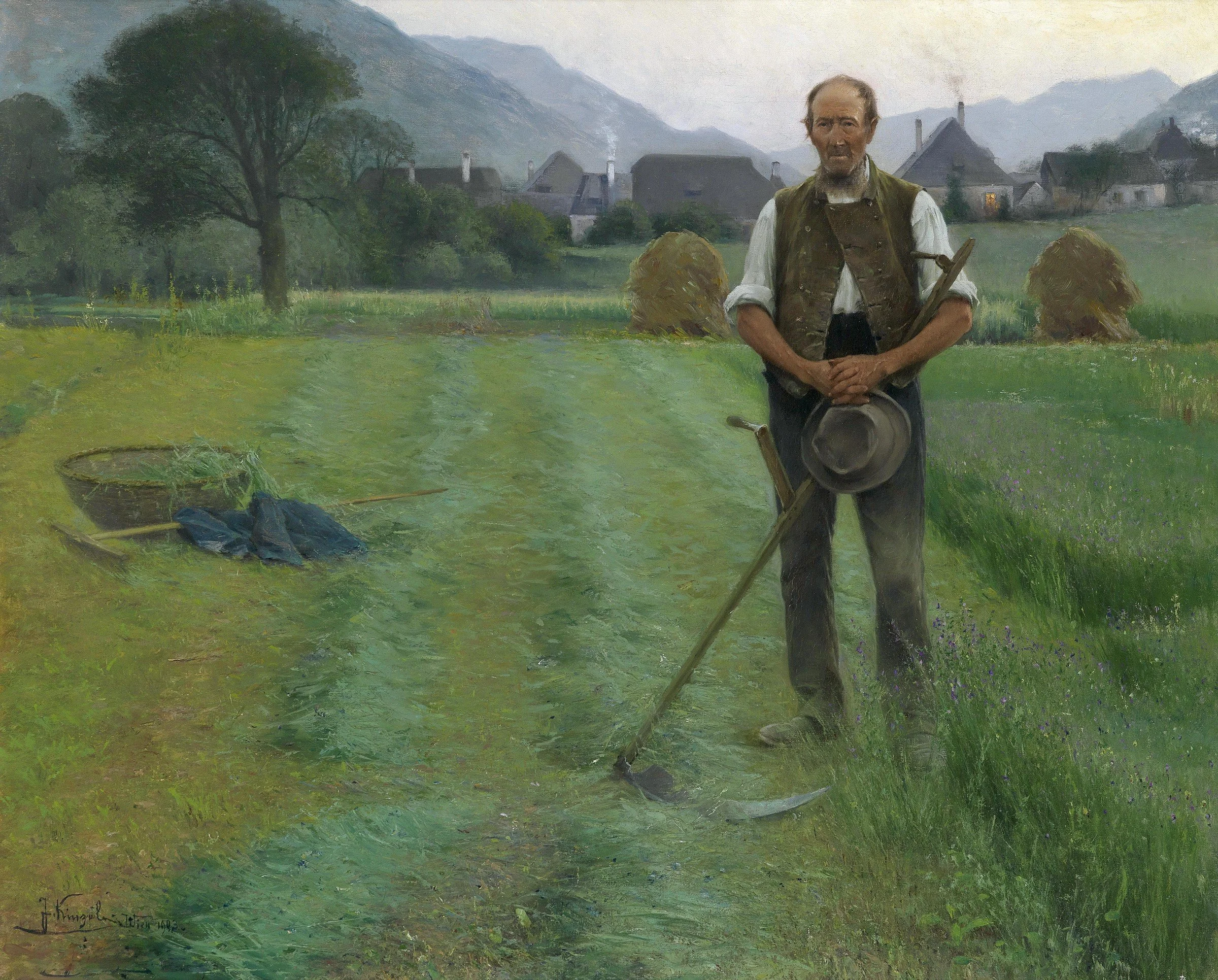
Abendläuten (Evening bell ringing), a painting by Josef Kinzel, 1903. A haymaker stands in the field with his scythe and his hat in his hands. Photo: Josef Kinzel, Public domain, via Wikimedia Commons
A measured devotional signal could mark prayer. A rapid alarm could mean fire or invasion. A slow toll might announce death. Clock bells gave the hour, while civic bells summoned councils or markets.
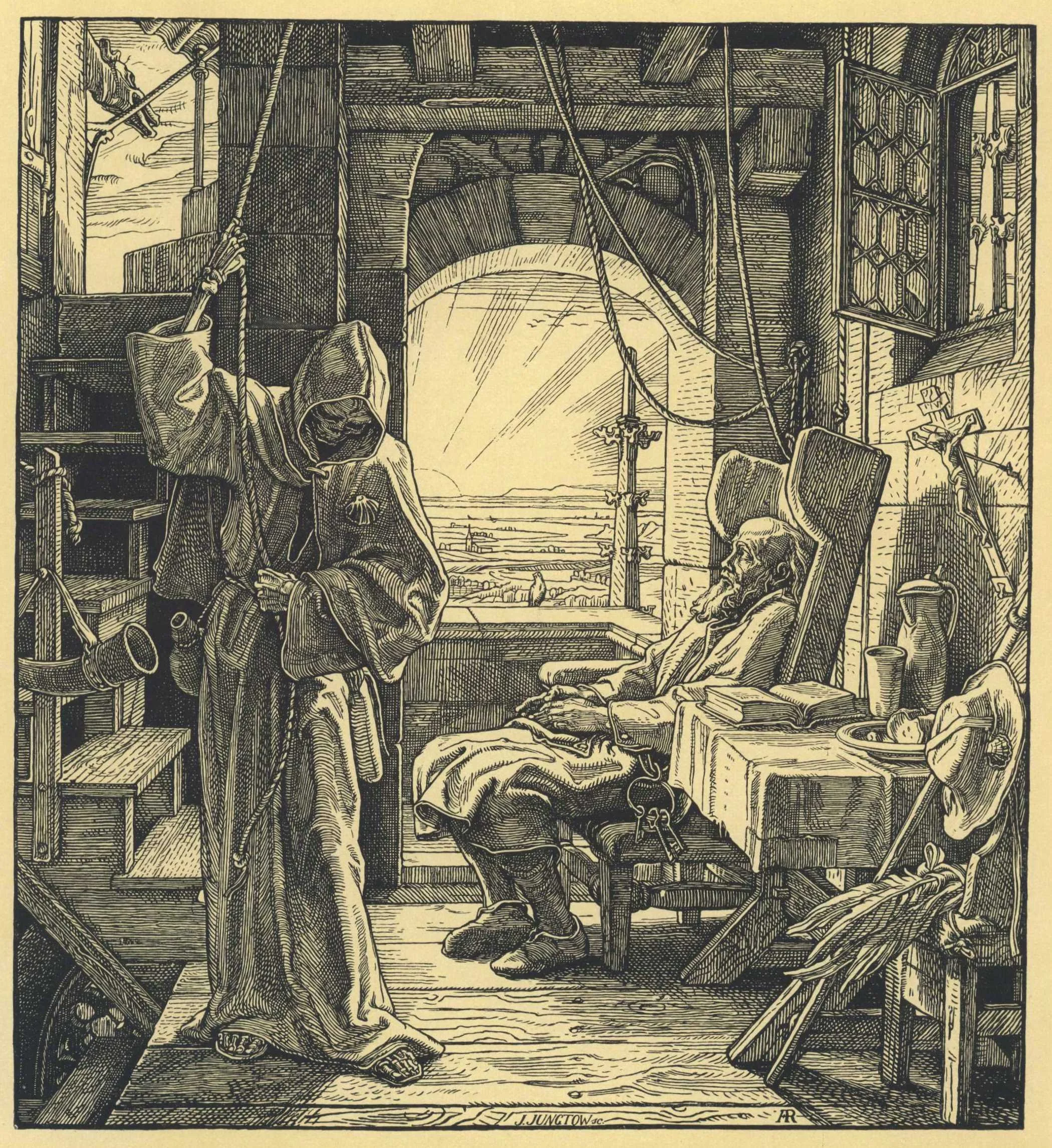
Der Tod als Freund (Death as a Friend) by Alfred Rethel, 1851. In a high tower room, the old tower keeper has died in his armchair with his hands folded in prayer. He had often marked a death in the town with the sound of his bell, and now Death performs that service for him. Photo: Alfred Rethel, Public domain, via Wikimedia Commons
The hardware overlapped. The meaning lived in rhythm, repetition, timing, and local custom.
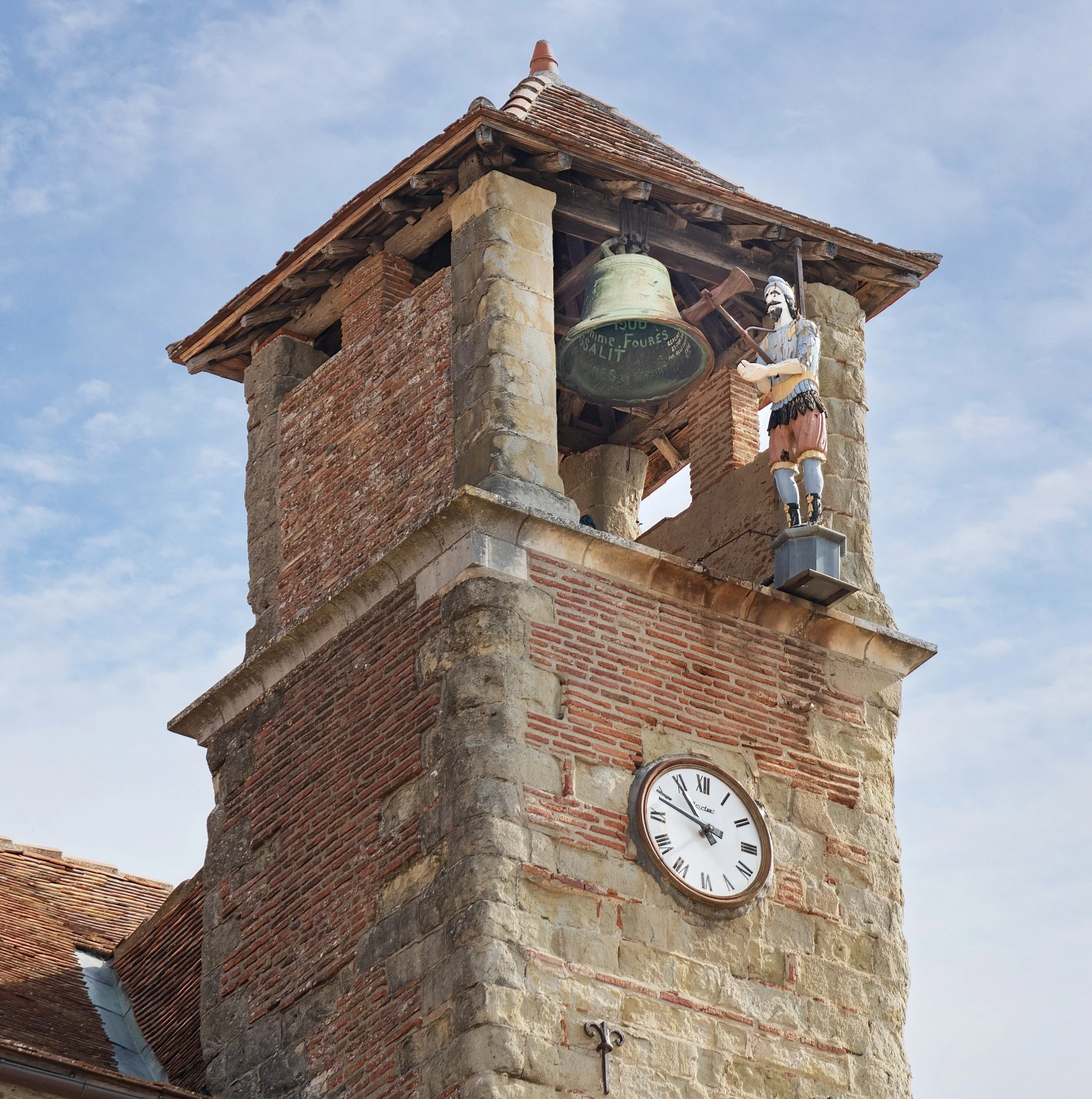
The jacquemart (bell striker) on the clock tower of the Cathédrale Saint-Alain de Lavaur, France. Photo: Didier Descouens, CC BY-SA 4.0, via Wikimedia Commons
That makes a historical bell tower easier to understand if you think of it as a small vocabulary rather than a single sound. People who grew up within range knew the difference between ordinary time and emergency because they had heard the patterns since childhood.
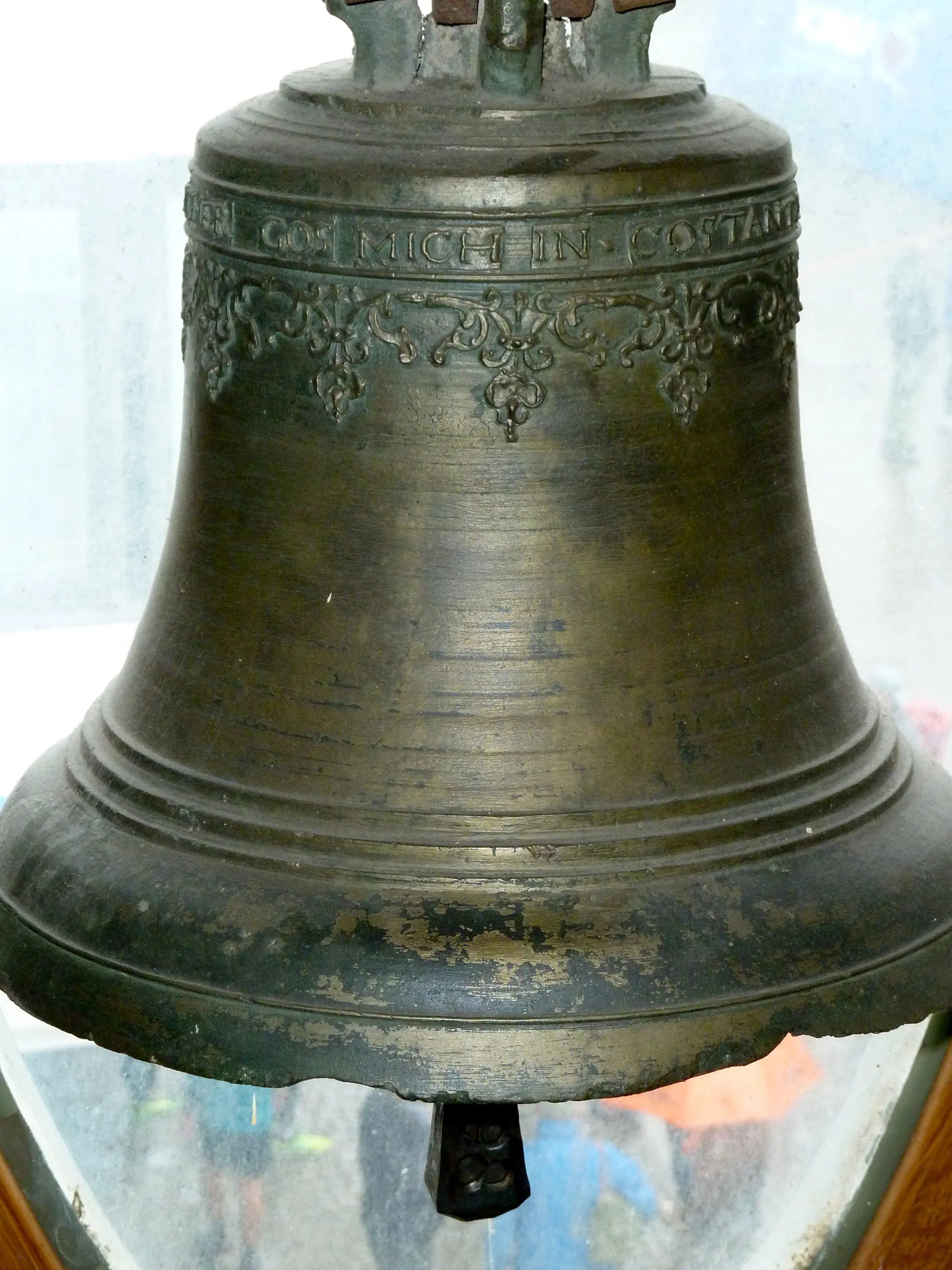
The market bell (Marktglocke) of the Greth in Überlingen, Germany. Its inscription reads “Leonhart Rosenlecher gos mich in Constantz anno 1655” (Leonhart Rosenlecher cast me in Konstanz in 1655). Photo: Ameichle, CC BY-SA 4.0, via Wikimedia Commons
A visitor might only hear bells. A resident heard instructions.
