
On July 20, 1378, a man named Nardo di Camaldoli entered Santa Maria del Carmine in Florence and began ringing the bells.
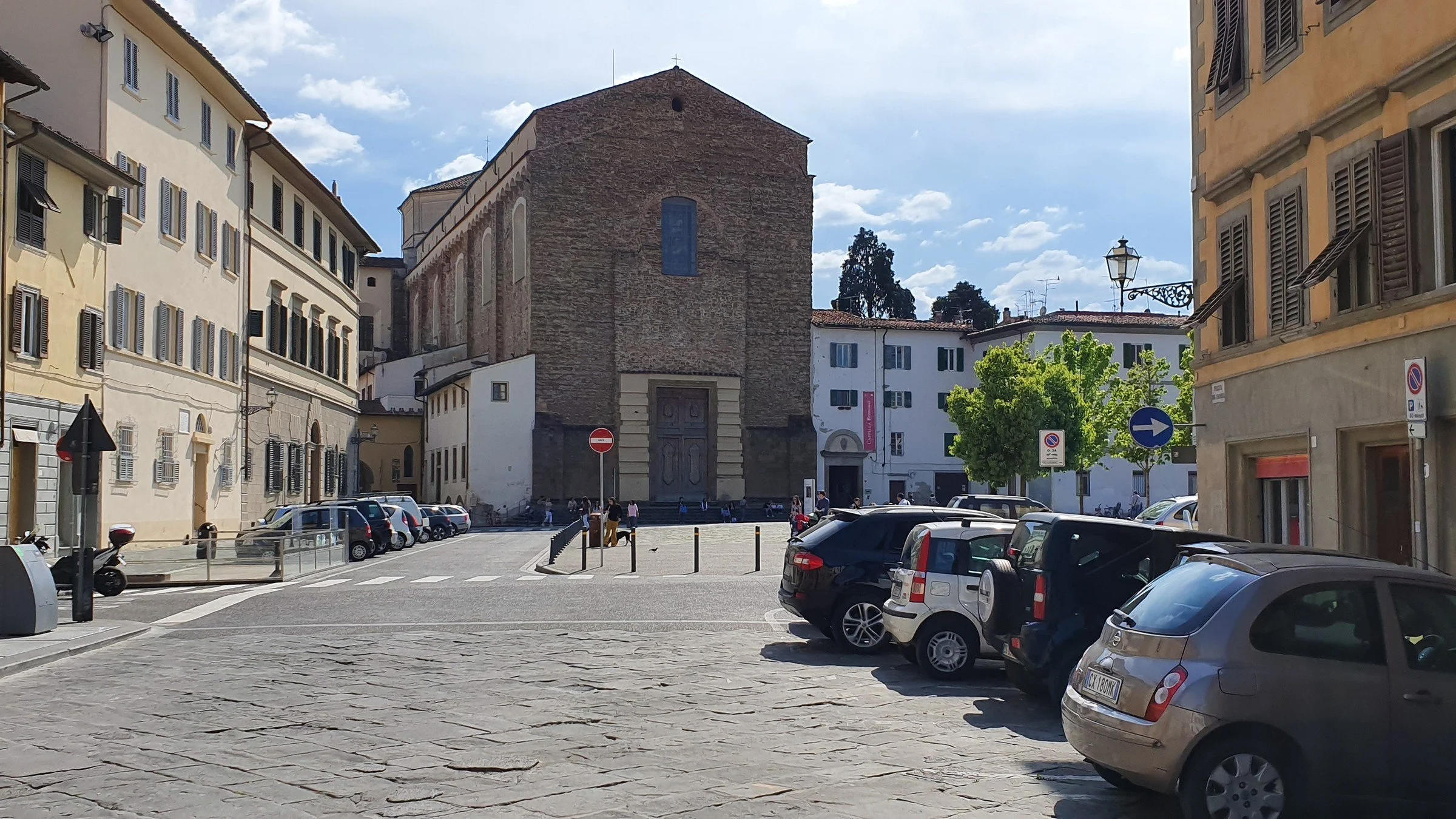
The bare stone front of Santa Maria del Carmine in Florence, photographed in April 2019. Photo: Yair Haklai, CC BY-SA 4.0, via Wikimedia Commons
San Frediano answered. Then another church. Then another. Contemporary accounts describe a relay of eight bell towers spreading through the city as workers and their allies poured into the streets. The uprising became known as the Ciompi Revolt.
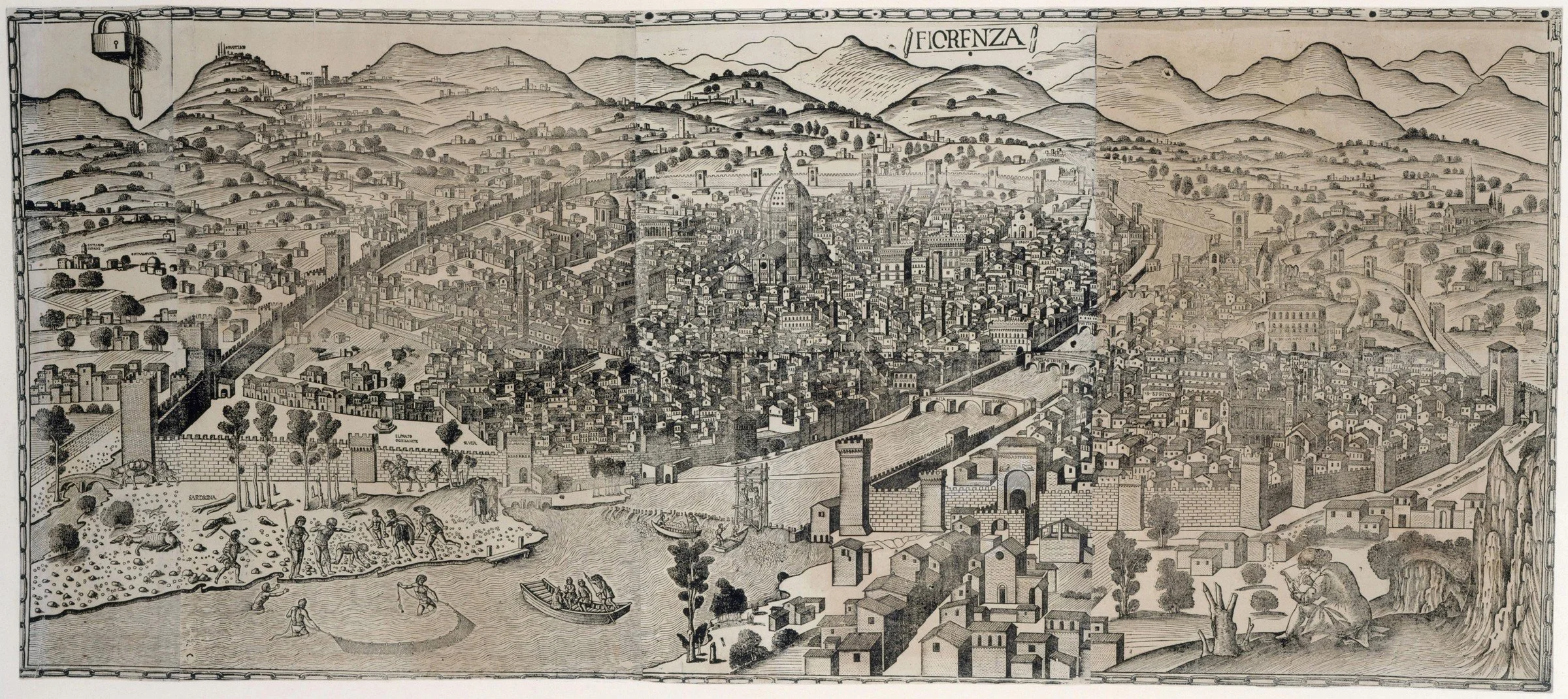
Florence packed with towers and church buildings inside its walls, in the large woodcut view of the city known as the Chain Map (Kettenplan), made around 1500 to 1510 after Francesco Rosselli. It is held by the Kupferstichkabinett in Berlin. Photo: After Francesco Rosselli, possibly Lucantonio degli Uberti, Public domain, via Kupferstichkabinett Berlin and Wikimedia Commons
Florence already lived inside a carefully managed system of civic and religious ringing. Courts, councils, monasteries, and churches all had established acoustic roles. The revolt hijacked that system.
When the Ciompi later entered the Palazzo della Signoria, they rang the commune’s great bell to mark their victory. Six weeks later the government used communal ringing to summon the forces that crushed them.
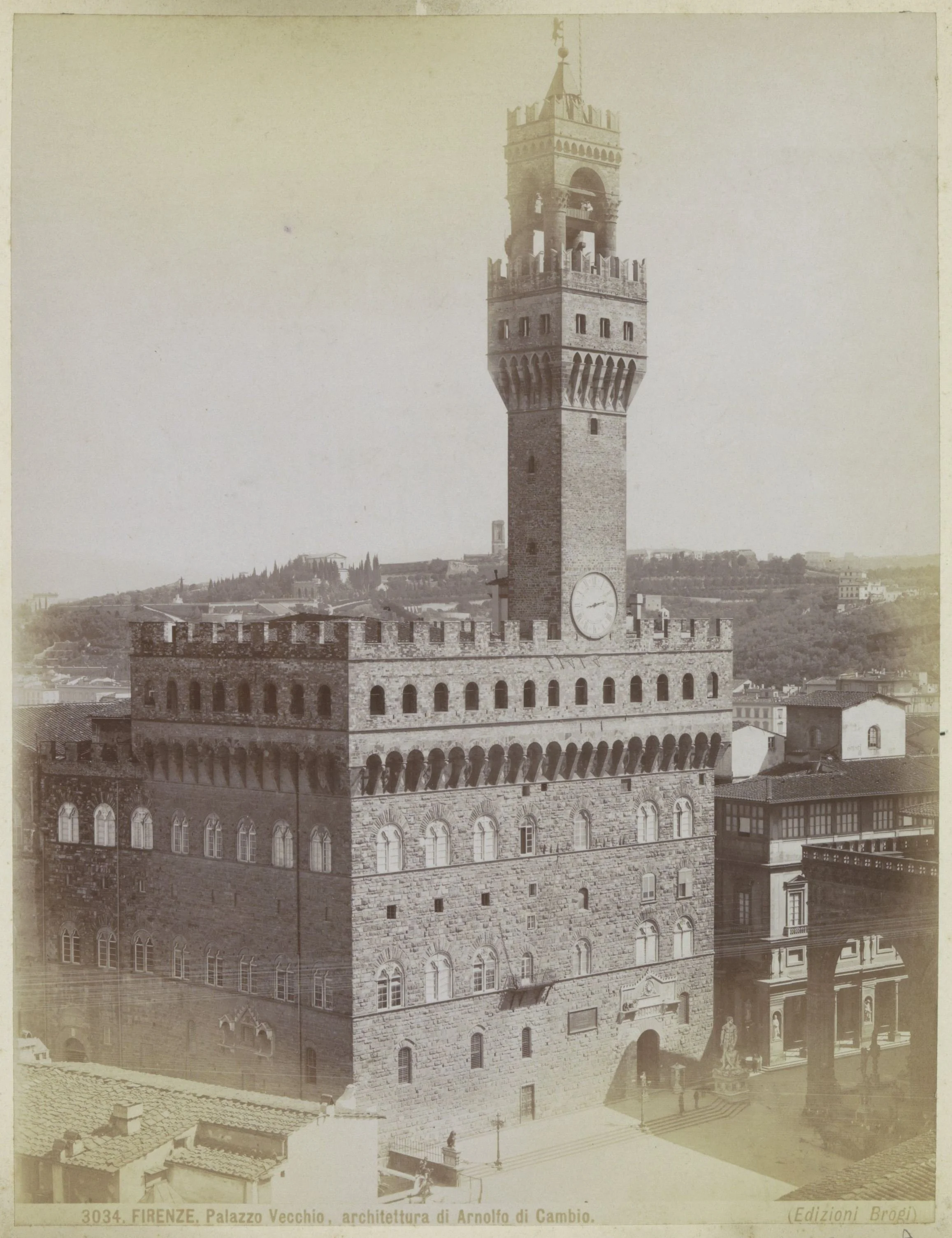
Palazzo Vecchio in Florence and its tower, in an albumen print by the Brogi studio from around 1870 to 1900. The label reads “3034. FIRENZE. Palazzo Vecchio, architettura di Arnolfo di Cambio.” Photo: Brogi, Public domain (CC0), via Rijksmuseum and Wikimedia Commons
The bells did not cause the revolt. They made organization audible at city scale, and both sides understood exactly what that was worth.
