
For decades, Philadelphia’s famous cracked bell was simply the State House bell.
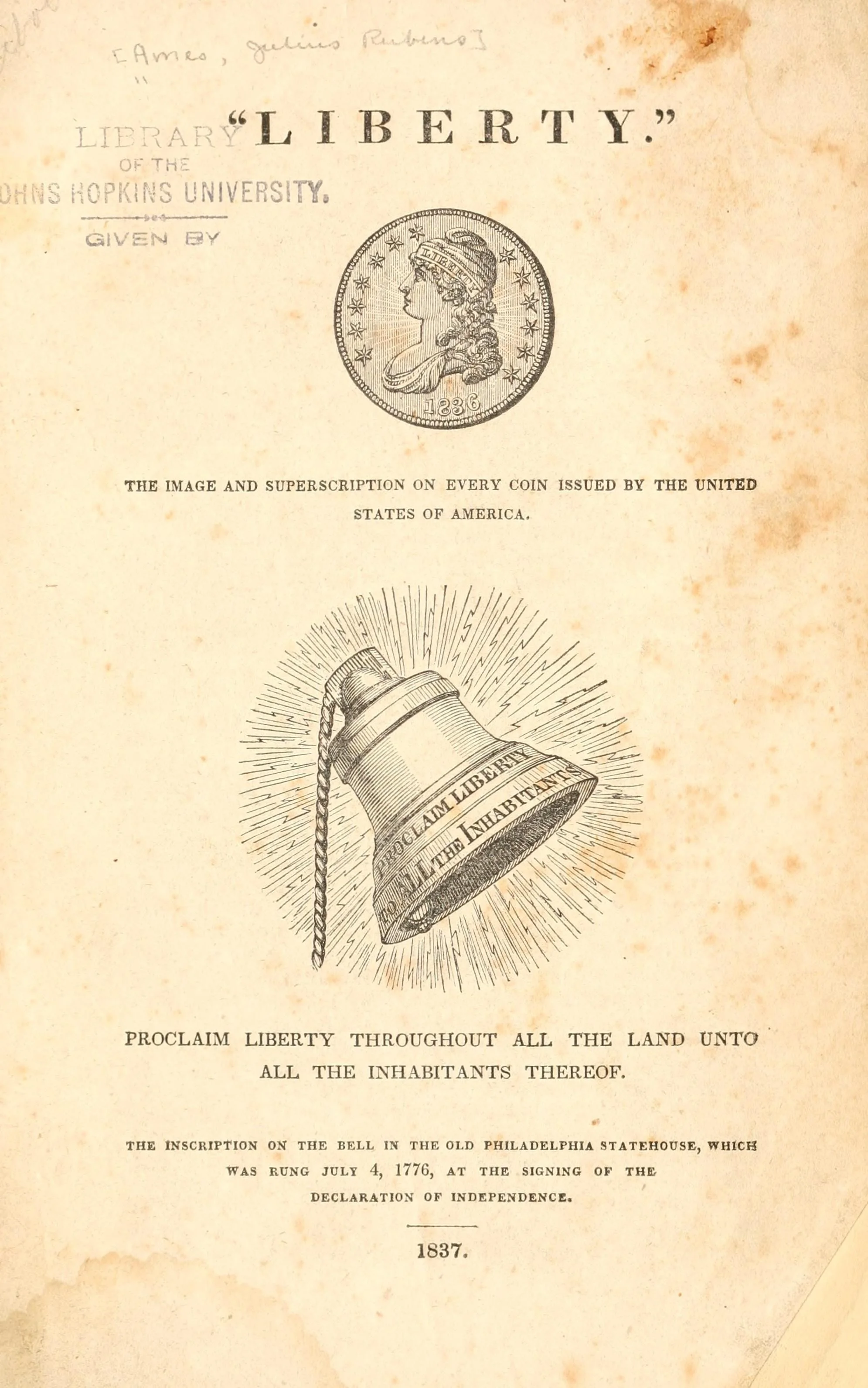
The title page of “Liberty,” published in New York by the American Anti-Slavery Society in 1837, shows a bell cast with the words “Proclaim Liberty” above the line “Proclaim liberty throughout all the land unto all the inhabitants thereof.” The page calls it “the inscription on the bell in the old Philadelphia Statehouse.” Photo: Julius Rubens Ames, Public domain, via Johns Hopkins University Sheridan Libraries, Internet Archive and Wikimedia Commons
Its transformation into the Liberty Bell began in the 1830s, when abolitionists focused on the inscription from Leviticus: “Proclaim LIBERTY Throughout all the Land unto all the Inhabitants Thereof.” Anti-slavery publications adopted the bell as an image and a name, turning an old civic object into an argument about the contradiction between American liberty and slavery.
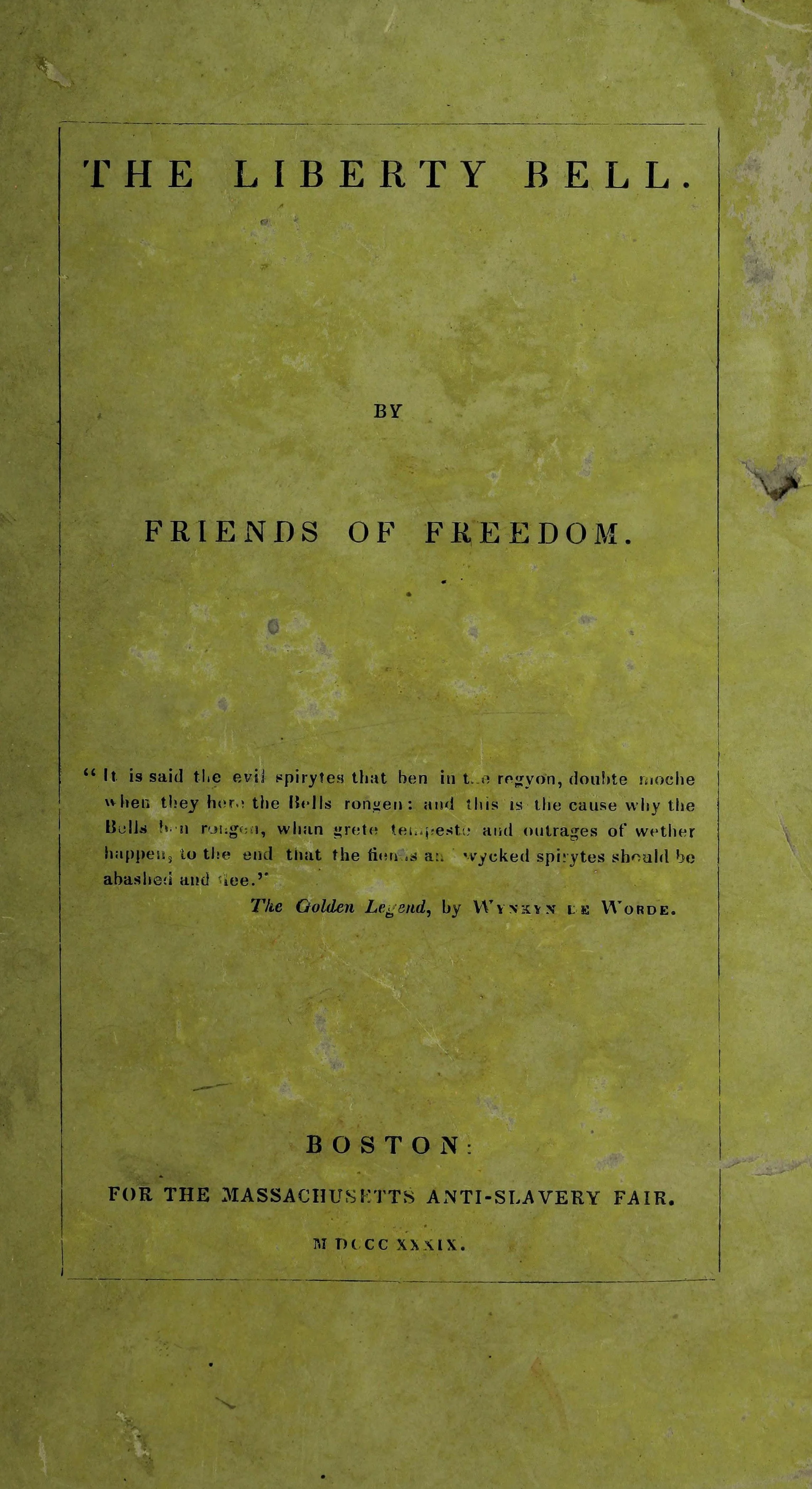
The cover of The Liberty Bell, an anti-slavery gift book “by Friends of Freedom,” printed in Boston “for the Massachusetts Anti-Slavery Fair” in 1839. Photo: Unknown author, Public domain, via Harold B. Lee Library, Brigham Young University, Internet Archive and Wikimedia Commons
Later movements reused the symbol. Women’s suffrage activists, civil rights leaders, and other reformers treated the inscription as a promise that had not been fully kept.
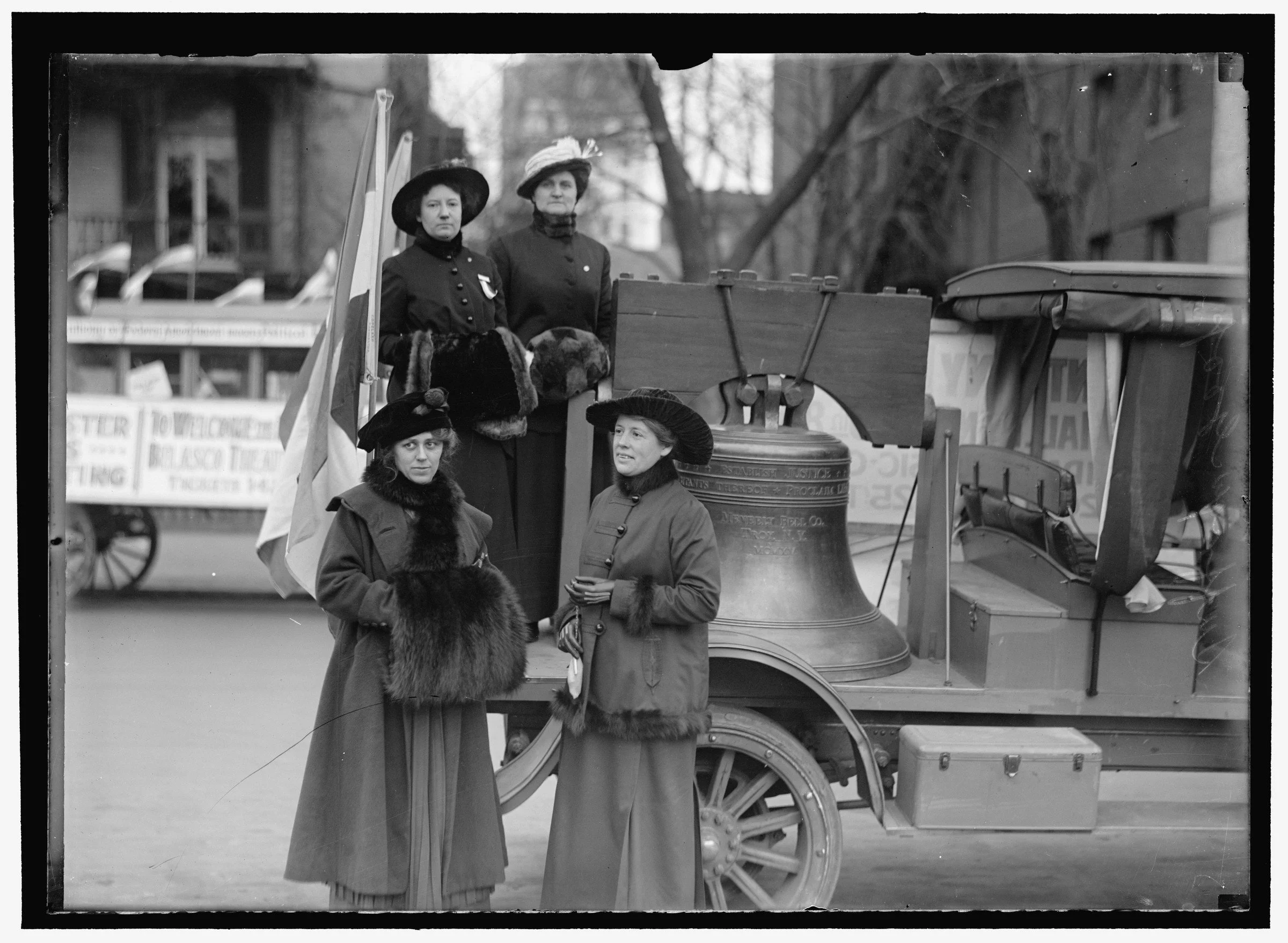
Four women stand beside the “Liberty Bell for Suffrage,” mounted on a truck in Washington, D.C., in 1916. The bell is cast with the words “Establish Justice” and marked “Meneely Bell Co. Troy, N.Y. MCMXV.” Photo: Harris & Ewing, Public domain, via Library of Congress and Wikimedia Commons
That history is more interesting than pretending the bell was born as a national icon in 1776. Symbols accumulate. The bronze stayed the same while generations changed what they demanded from the words cast into it.
