
Great Paul weighs 16.75 imperial tons, and St Paul’s Cathedral does not use it as an ordinary clock bell.
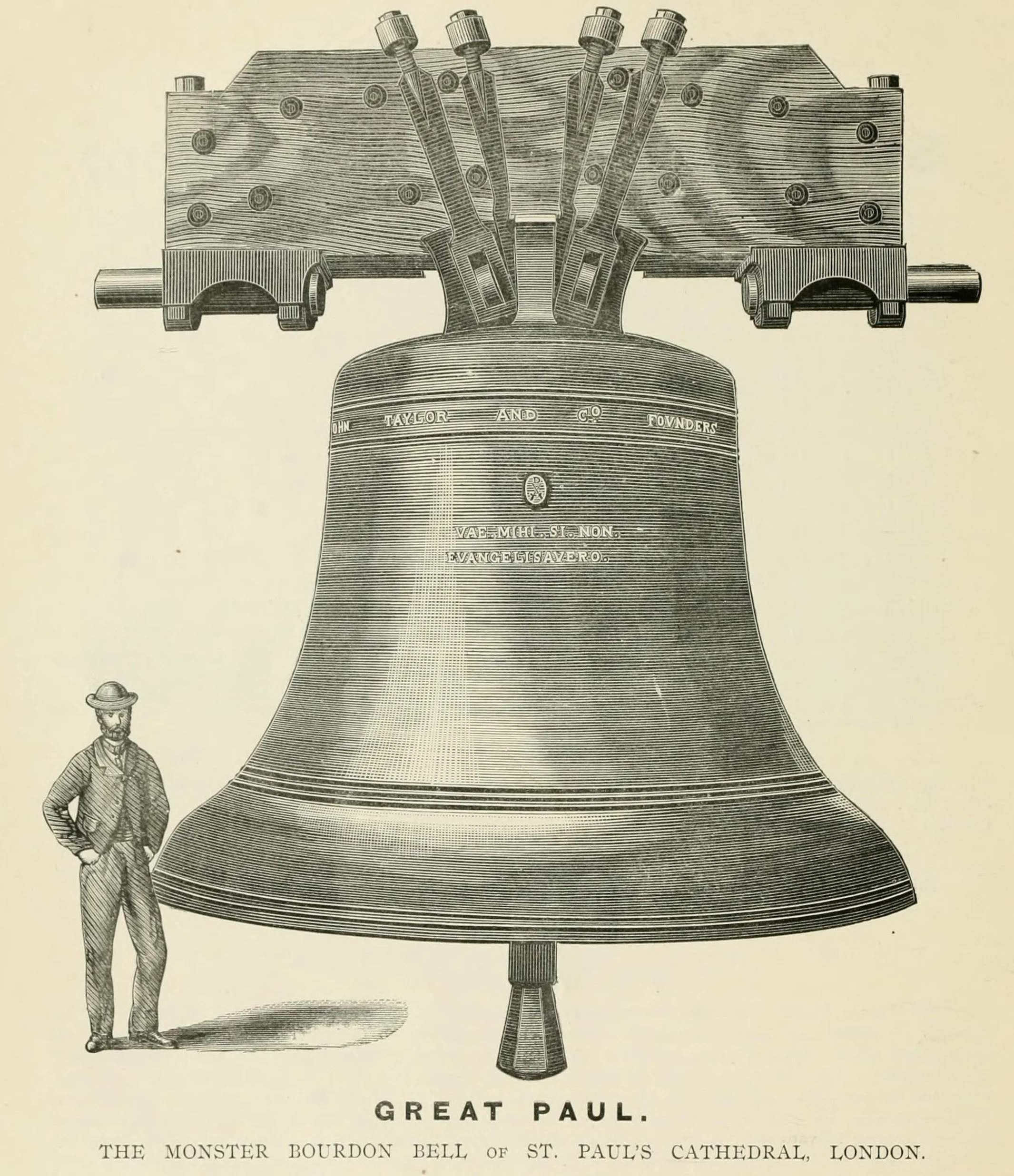
Great Paul as pictured in John Taylor & Co.’s 1894 bell catalogue, with a man drawn beside it for scale. The catalogue lists its weight as 16 tons 14 cwt 2 qrs 19 lbs and calls it the largest bell in the United Kingdom. It held that title in the British Isles until the Olympic Bell was cast for the 2012 London Olympics. Photo: John Taylor & Co., Public domain, via Internet Archive
John Taylor & Co. cast the enormous E-flat bell in 1881 for the cathedral’s southwest tower. For about thirty years an automatic mechanism chimed it daily, but that system eventually failed. Today Great Paul is rung manually for major services and occasions such as the Lord Mayor’s Show.
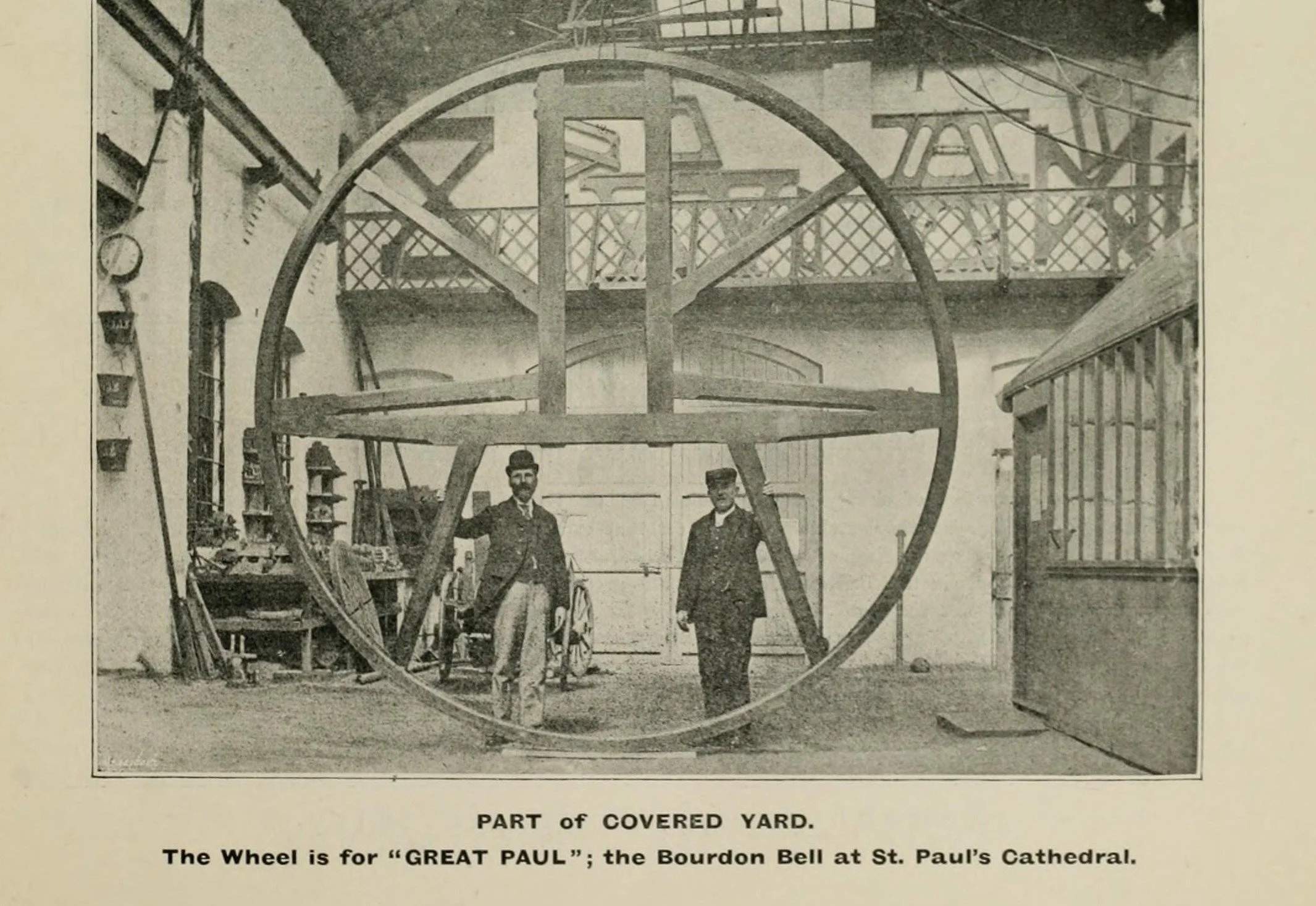
Two men stand inside a wheel made for Great Paul in the covered yard of the Taylor foundry in Loughborough, from the firm’s 1894 catalogue. When Great Paul rang in July 2021 during the London Festival of the Bells, it was its first ringing in two decades, and bell ringers swung it by hand. Photo: John Taylor & Co., Public domain, via Internet Archive
The hours and quarters come from three other bells in the same tower, including Great Tom. That distinction gets lost in simplified accounts because Great Paul is the bell people remember for its size.
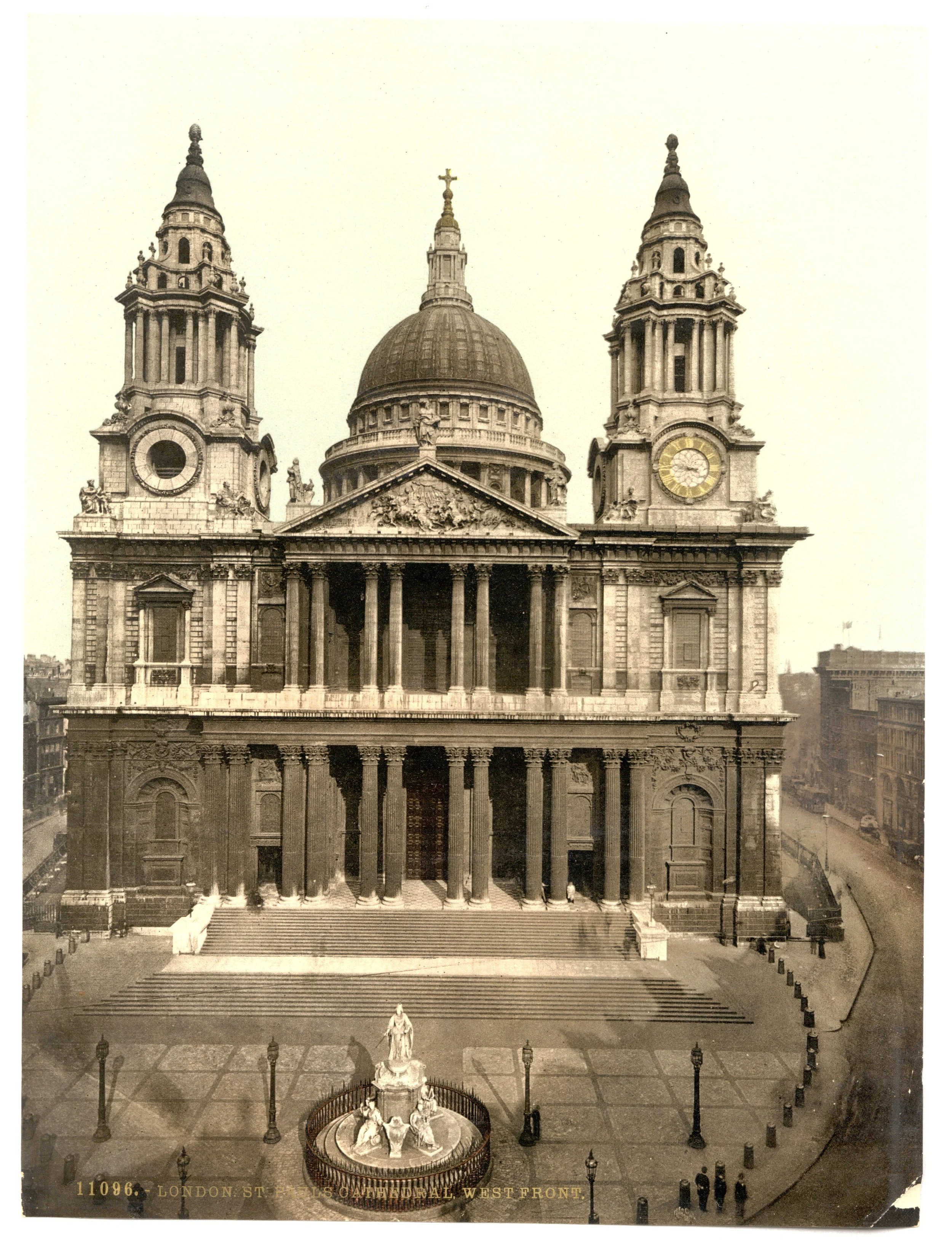
The west front of St Paul’s Cathedral in a photochrom print made between 1890 and 1900. Great Paul hangs in the southwest tower, the one with the clock on the right. That tower holds four bells. The other three are the clock bells, including Great Tom, which strikes the hour. The ring of 12 change ringing bells hangs in the northwest tower on the left. Photo: Detroit Publishing Co., Photochrom Print Collection, Public domain, via Library of Congress and Wikimedia Commons
The casting itself belonged to a bellfounding tradition Taylor’s traces back for centuries. A bell this large is less like making an oversized household object and more like casting a piece of architecture. Once it cools, there is no simple correction if the shape, thickness, or tone is wrong.
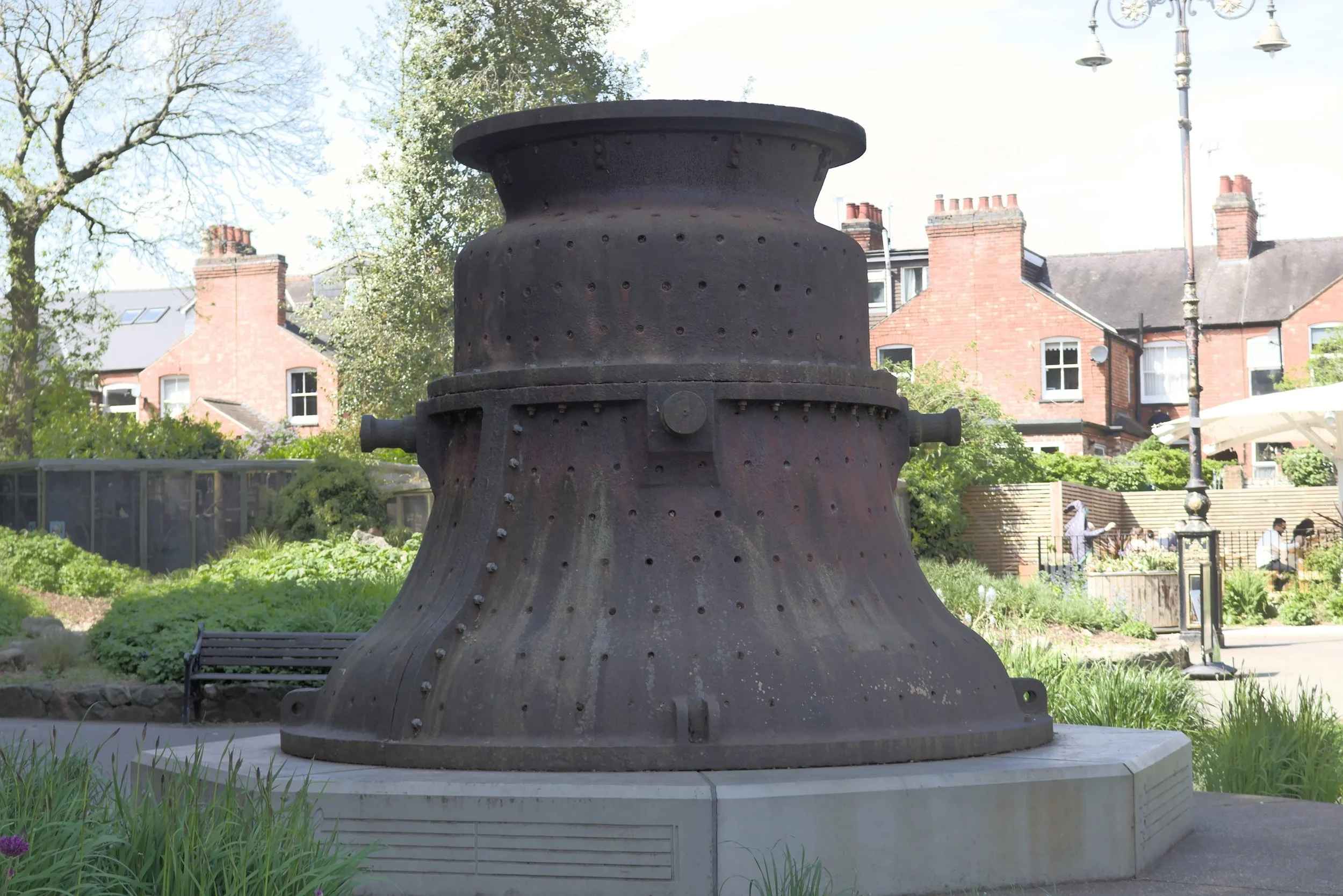
The cast iron case that held Great Paul’s mould, now on display in Queen’s Park, Loughborough. In a letter to The Times reprinted in Taylor’s 1894 catalogue, St Paul’s organist John Stainer wrote that three furnaces poured more than 20 tons of molten metal into the mould, which filled in four minutes. The case was built to withstand a pressure of 200 tons, and its upper portion alone weighed 14 tons. Photo: Aethonatic, CC0, via Wikimedia Commons
