
Aldbourne’s bell industry grew out of a trade that already knew furnaces, copper alloys, and precision metalwork: gunsmithing.

St Michael’s parish church in Aldbourne, Wiltshire, seen from the south in 2011. According to the Aldbourne Heritage Centre, the Corr family were gunsmiths who rented and later owned the Court House just north of the church. When demand for guns fell after the Civil War, they turned their furnace, forge, and supply of copper and tin to bellfounding. The foundry’s first recorded church bell was cast in 1694.
Photo: Rob Stallard, CC BY-SA 3.0, via Wikimedia Commons
The Corr family began experimenting with bells in the late seventeenth century. Local heritage records credit them with producing some of England’s earliest tuned handbell sets by controlling the clapper and adjusting the bells as a musical group rather than treating each one as a separate noisemaker.
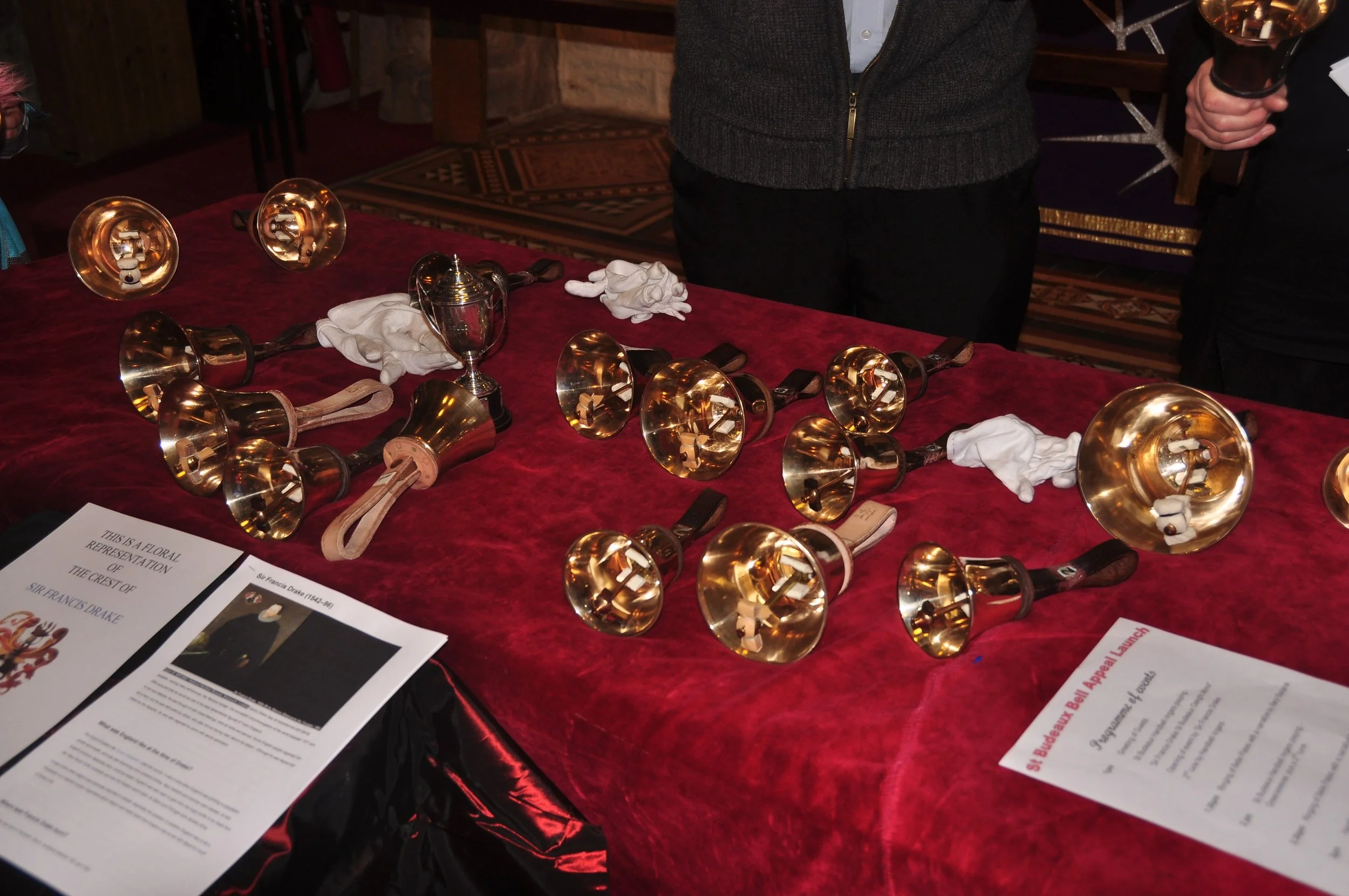
A set of handbells on display at St Budeaux Parish Church in Plymouth in 2013, each with a leather strap for holding it in the hand. The Aldbourne Heritage Centre credits the Corr family, who began experimenting with handbells in the 1670s, with turning bells into musical sets by adding bushes to control the swing of the clapper, leather clapper ends, and leather hand straps.
Photo: Nilfanion, CC BY-SA 4.0, via Wikimedia Commons
Later Aldbourne founders, especially the Wells family, refined the craft. Robert Wells is credited locally with developing a diatonic handbell scale that spread far beyond Wiltshire. The same workshops also cast church bells and smaller crotal bells.
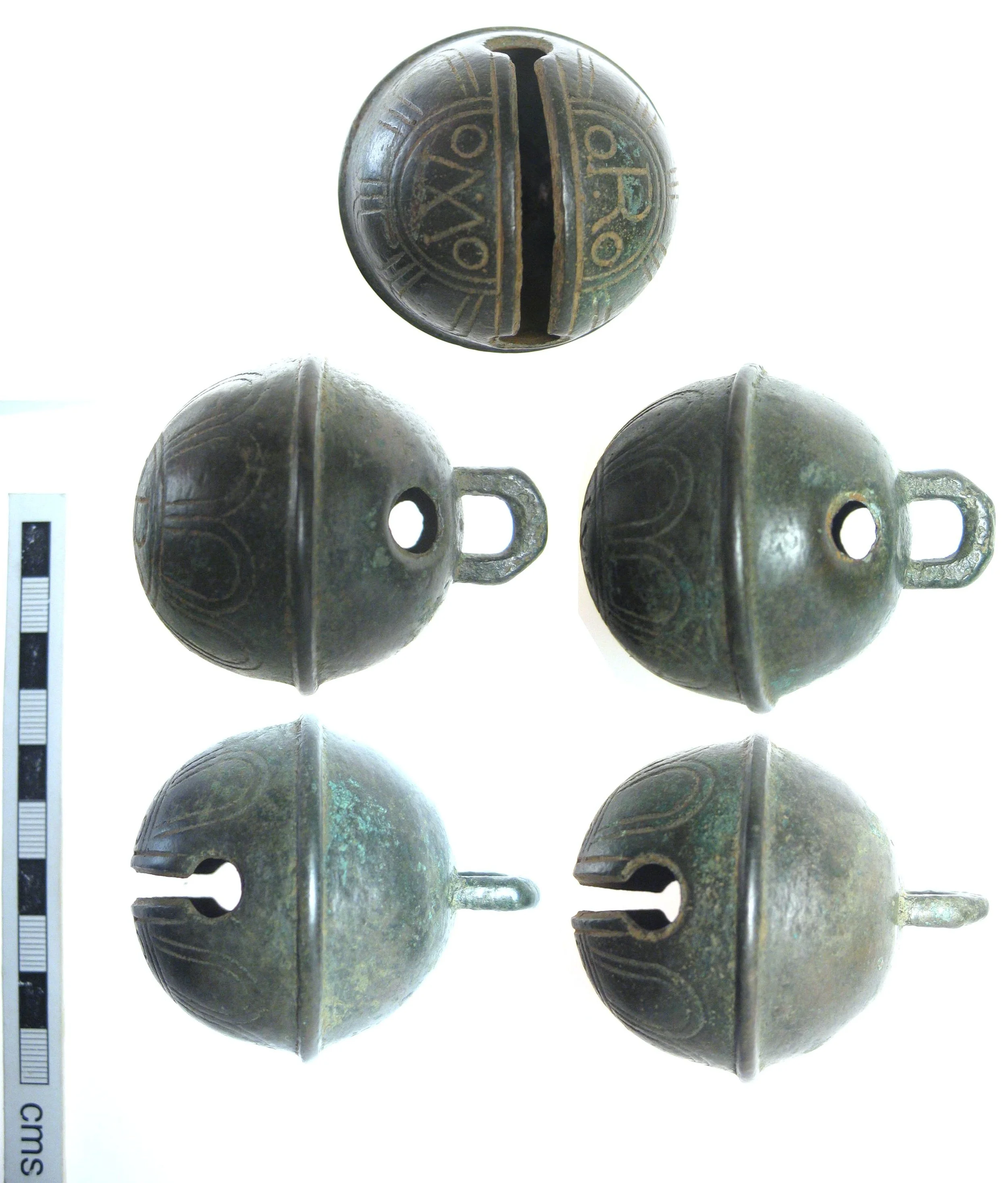
A copper alloy crotal bell recorded by the Portable Antiquities Scheme. The letters R and W on its base are the maker’s mark of Robert Wells of Aldbourne, and the record dates the bell to between 1755 and 1861, since his successors probably used the same initials. The Aldbourne Heritage Centre says Wells cast at least 86 church bells between 1760 and 1780, along with hundreds of handbells and crotal bells. A 1772 advertisement for his foundry in The Marlborough Journal offered “Hand-Bells prepared strictly in Tune, in any Key.”
Photo: Charlotte Burrill, Portable Antiquities Scheme, CC BY-SA 2.0, via Wikimedia Commons
Handbells are easy to overlook in a history dominated by giant towers, but tuning them forced founders to think in systems. One bell can be approximately right. A musical set exposes every mistake.
