
A fire alarm once meant somebody grabbed a bell rope and made the entire town listen.

A woodblock print by Tsukioka Yoshitoshi titled Shōchikubai Yushima no Kakegaku, after a kabuki play based on the story of Yaoya Oshichi, a greengrocer’s daughter in 17th-century Edo. It shows her climbing the ladder of a fire lookout tower as flames burn below. In the stage versions of her story, Oshichi climbs a fire tower to ring the alarm bell so the city gates will open for the man she loves, knowing that the penalty for a false fire alarm is death.
Photo: Tsukioka Yoshitoshi, Public domain, via National Diet Library and Wikimedia Commons
In dense wooden settlements, minutes mattered. Churches, meetinghouses, courthouses, and dedicated alarm towers all became part of local warning systems because a high bell could carry farther than a runner’s voice. The pattern had to sound different from ordinary ringing so people knew this was not worship, a funeral, or the hour.
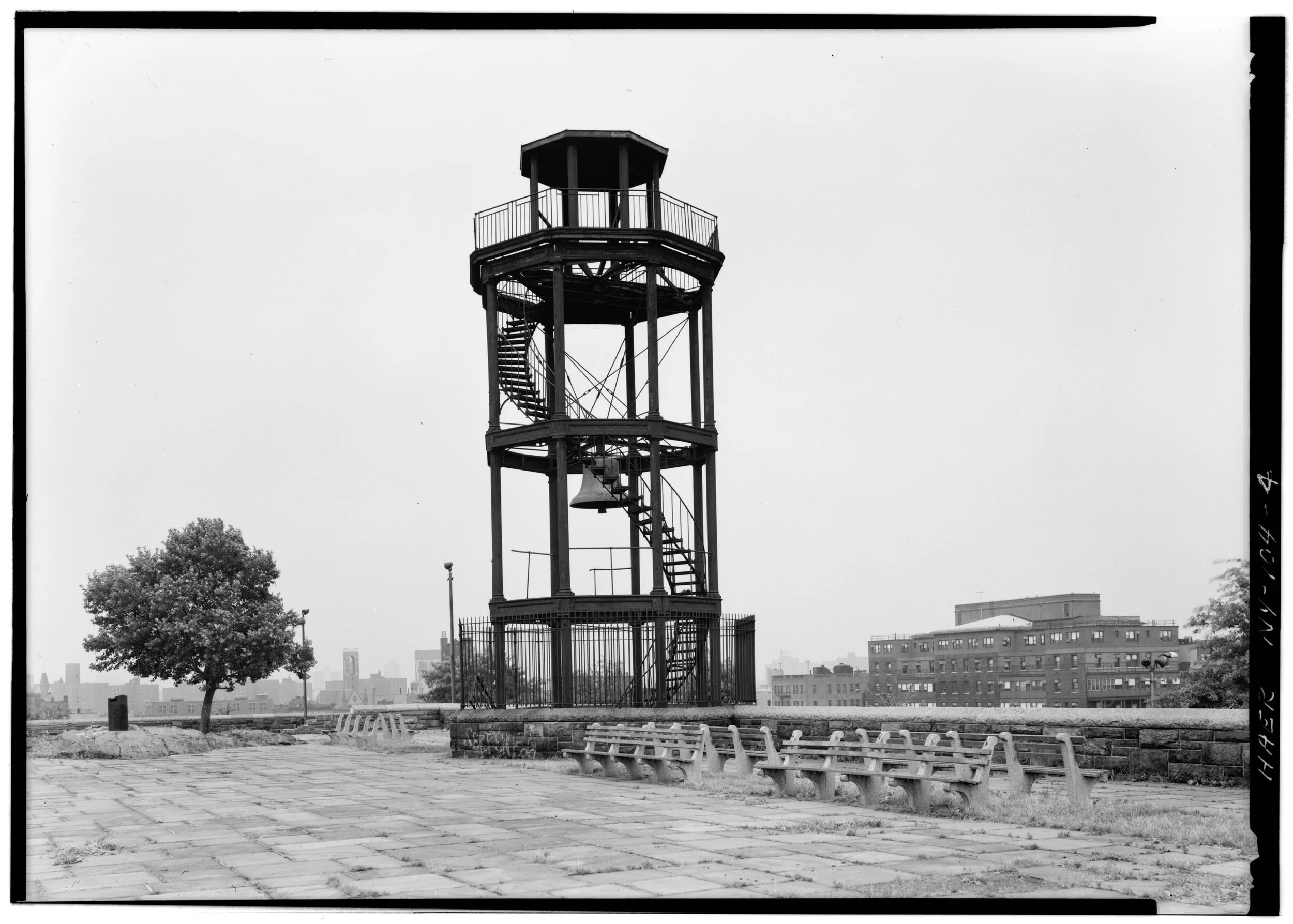
The Harlem Fire Watchtower in Marcus Garvey Park, formerly Mount Morris Park, in New York City, documented by the Historic American Engineering Record. After a devastating fire in 1835, the New York Fire Department built dedicated alarm towers across Manhattan, and watchmen directed fire companies with an alarm code of bells, flags, and lanterns that signaled the fire’s severity and numbered district. Built by Julius B. Kroehl to James Bogardus’s cast-iron design and completed in 1857, this 47-foot tower is the only survivor of a network that reached 11 towers at its peak.
Photo: Stephen Zane, Historic American Engineering Record, Public domain, via Library of Congress and Wikimedia Commons
The person in the tower mattered too. Watchmen in European belfries and American cities used height to spot smoke before people at street level could see the source. Once the bell started, bucket brigades and later organized fire companies knew where attention was needed.
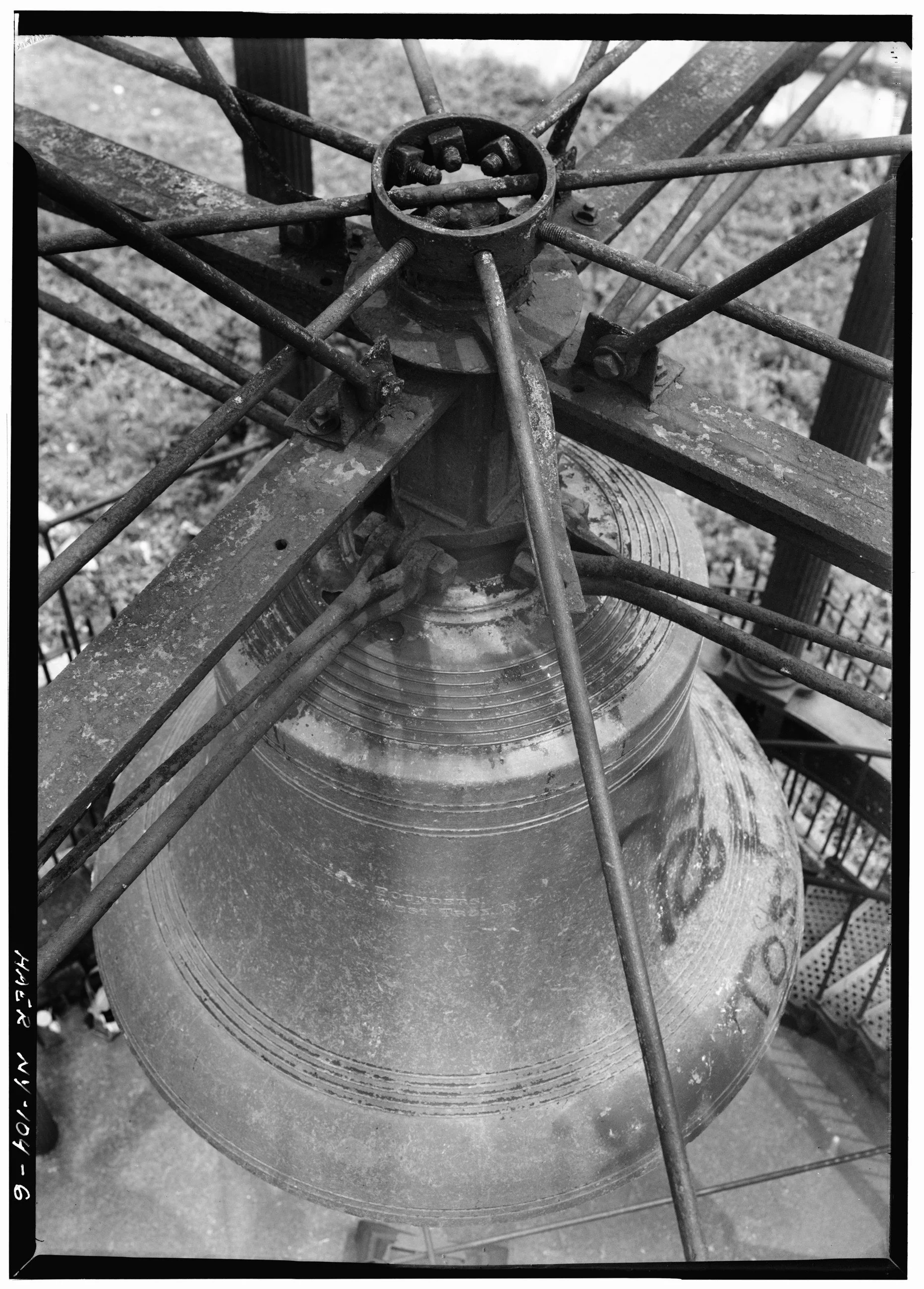
The alarm bell of the Harlem Fire Watchtower, seen from above. Watchmen originally struck the bell by pulling a lever on the observation deck, one tier above it. This bell was cast in 1865 by E.A. & G.R. Meneely of West Troy, New York, and replaced an earlier bell from Jones & Hitchcock of Troy that was probably damaged by improper striking.
Photo: Stephen Zane, Historic American Engineering Record, Public domain, via Library of Congress and Wikimedia Commons
Modern sirens eventually took over most of that work, but the basic system had already been solved: put the observer high, put the signal higher, and use a sound nobody can casually ignore.
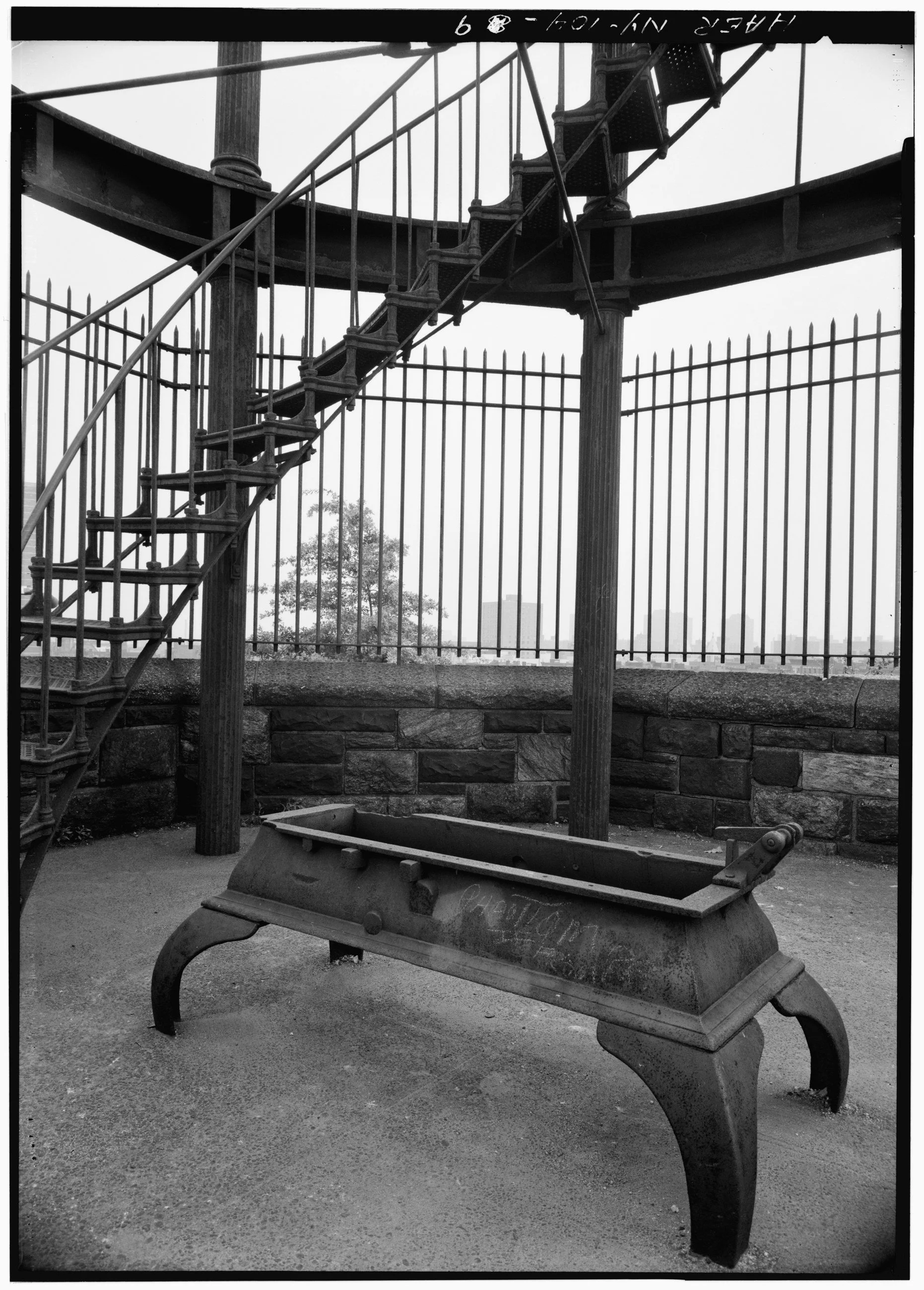
The automatic bellringer apparatus at the base of the Harlem Fire Watchtower. Some years after the tower opened, its bell was rung electromechanically, allowing remote operation. The tower network fell into disuse in the 1870s as the Fire Department installed telegraphic alarms on street corners and taller buildings blocked the old sightlines. At neighbors’ request the Harlem bell kept sounding for timekeeping and churchgoing until about 1909.
Photo: Stephen Zane, Historic American Engineering Record, Public domain, via Library of Congress and Wikimedia Commons
