
Ghent’s great alarm bell, Klokke Roeland, was more than a clock. It belonged to the city’s political independence.
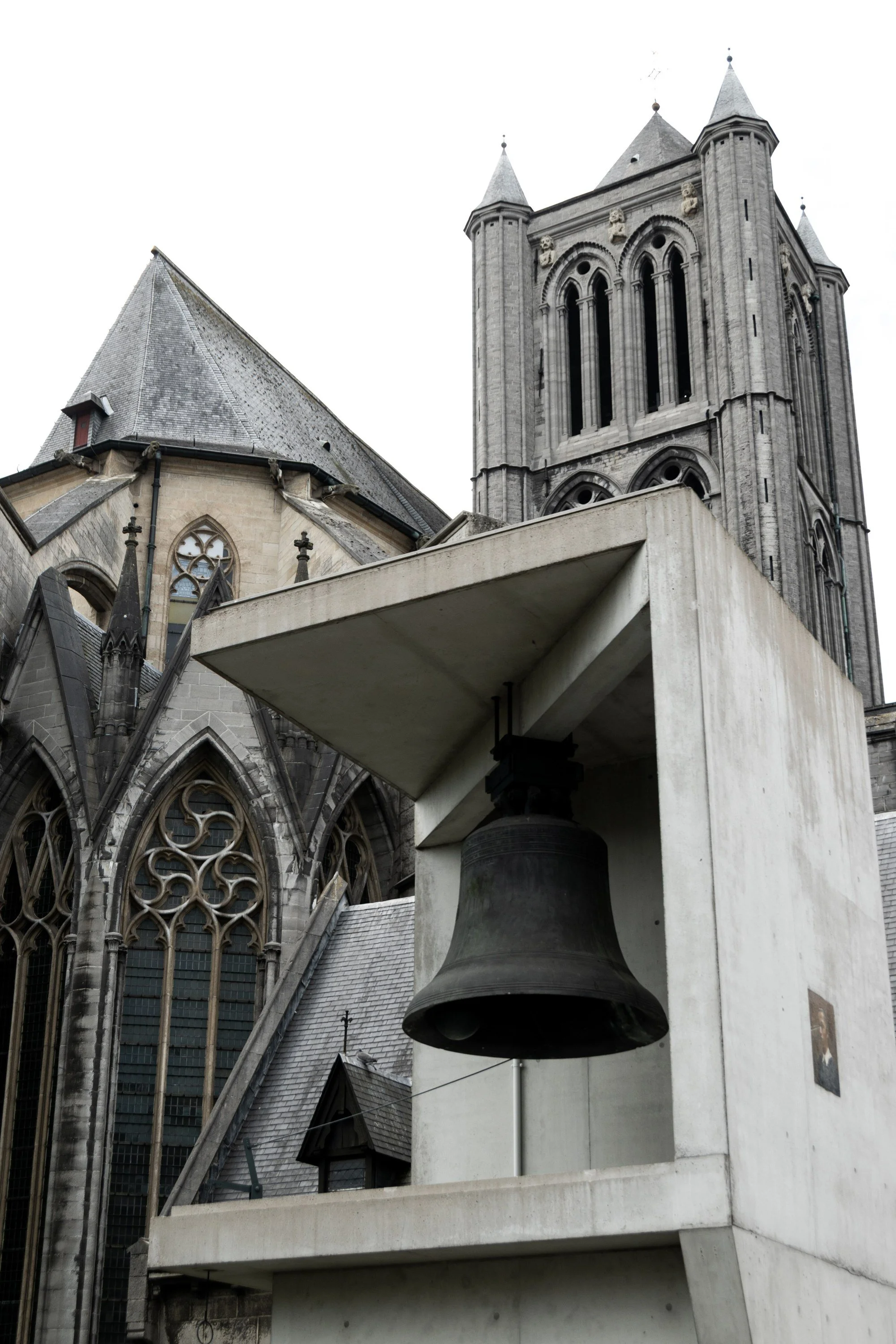
The bell known as the Triumphant, or Roeland, in its bell cote beside St Nicholas' Church in Ghent, photographed in 2025. Pieter Hemony cast it in 1660, and it carries the name of the first great alarm bell in the belfry. It cracked in 1914, was repaired in 2002, and now rings on special occasions. Photo: Julian Lupyan, CC0, via Wikimedia Commons
The bell was installed in the belfry in the fourteenth century and helped announce alarms, public time, and civic authority. The belfry also protected the charters that documented Ghent's privileges.
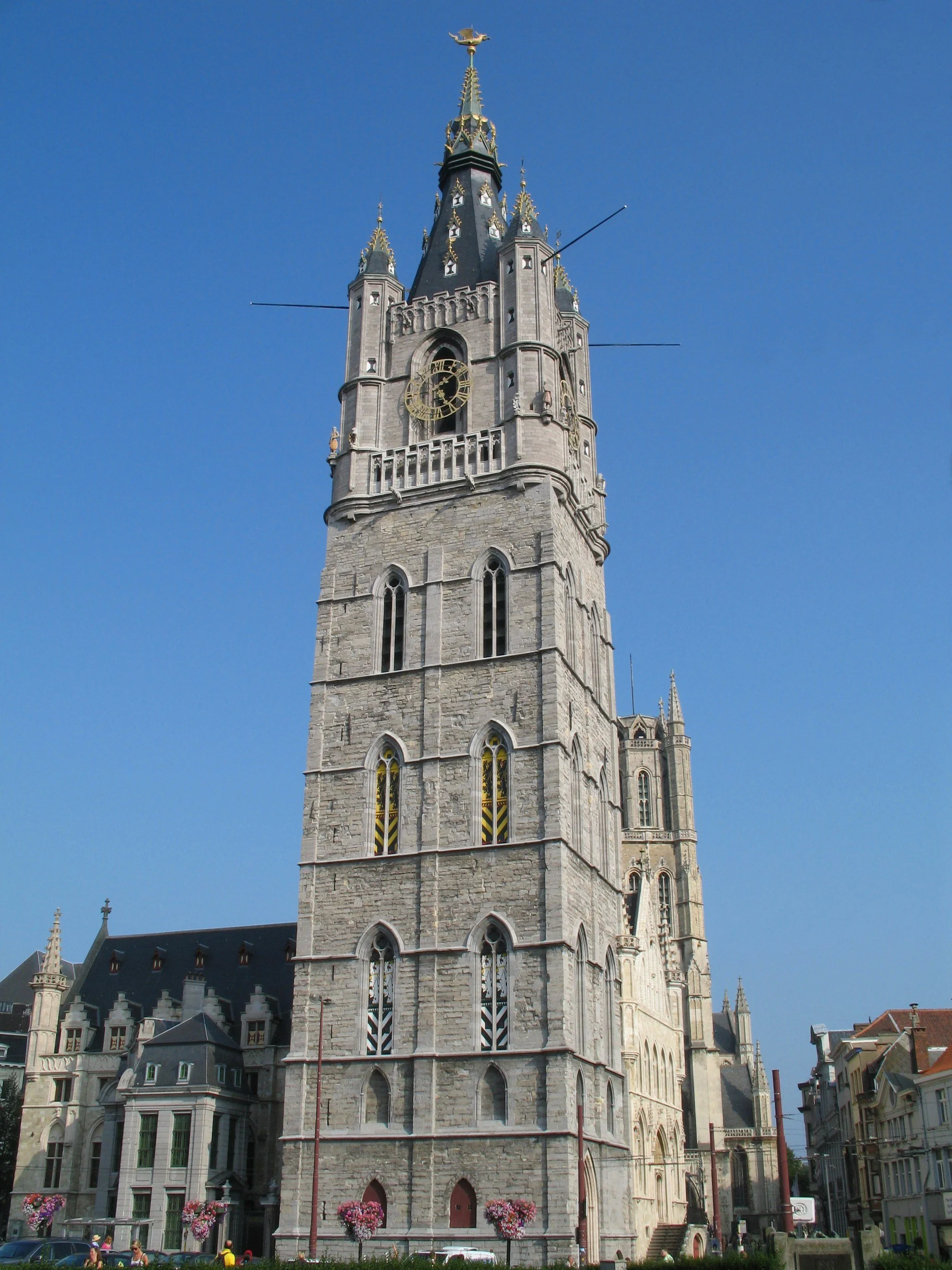
The Belfry of Ghent, photographed in 2008. Work on the tower began around 1313. From 1408 the city council kept Ghent's charters in a strongroom inside it called the secreet, in chests that only the bailiff and the city's two first aldermen could open. Photo: Marc Ryckaert, CC BY 3.0, via Wikimedia Commons
That symbolism became painfully literal in 1540. After Ghent rebelled against a tax imposed by Charles V, the emperor forced the city to submit. Its privileges were stripped, its charters surrendered, and Roeland was taken down from the belfry as part of the punishment.
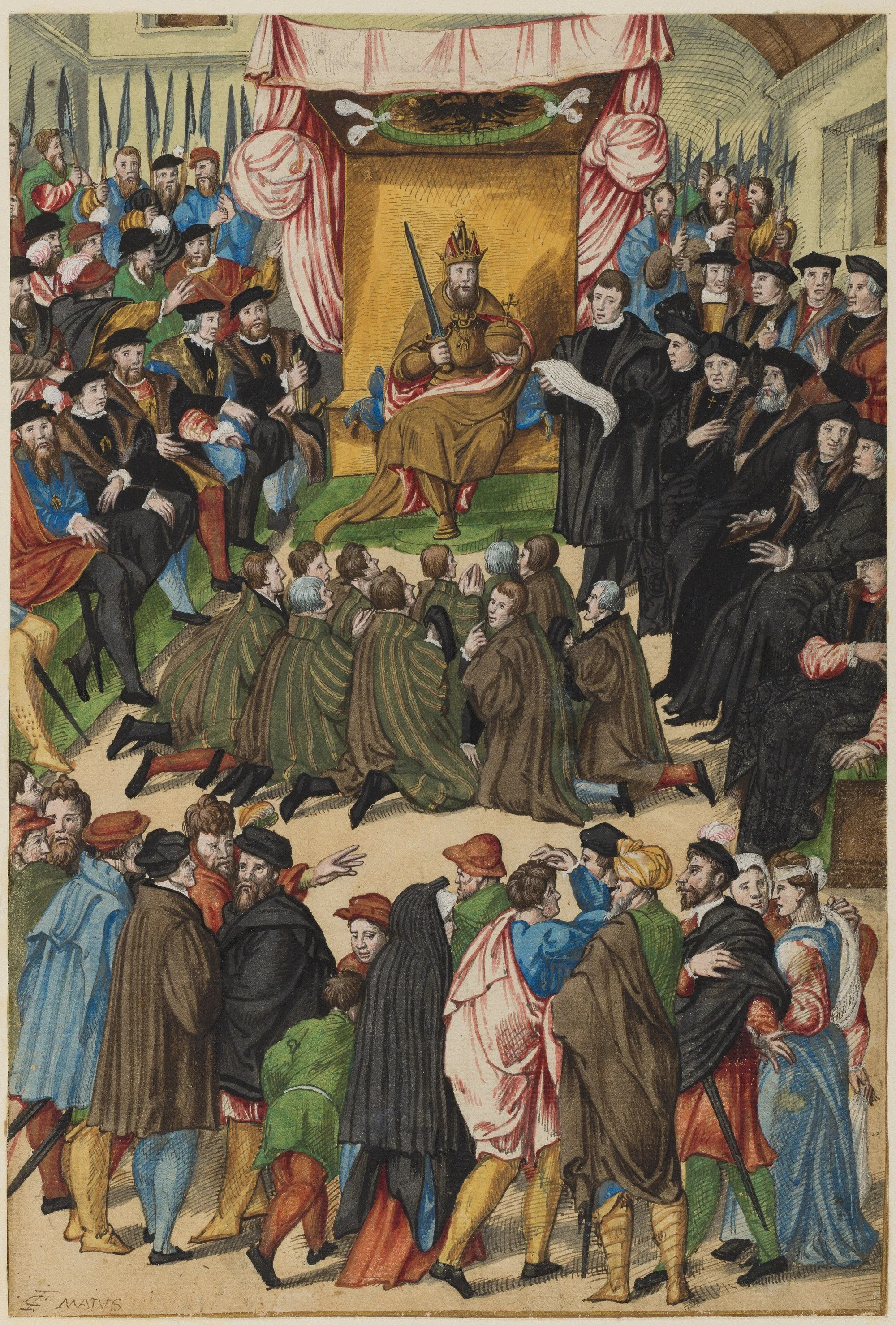
The Punishment of Ghent, a 1540 drawing by Jan Cornelisz Vermeyen, now in the Royal Library of Belgium (KBR) in Brussels. Emperor Charles V proclaims the Caroline Concession in Ghent while the city's leaders kneel in submission before him. Photo: Jan Cornelisz Vermeyen, Public domain, via Wikimedia Commons
The act makes sense only if the bell is understood as political equipment. Removing it did not just quiet a piece of bronze. It humiliated a city by taking away one of the instruments through which it had announced its own authority.
