
Ancient Chinese bells make the usual image of a round church bell look almost crude.
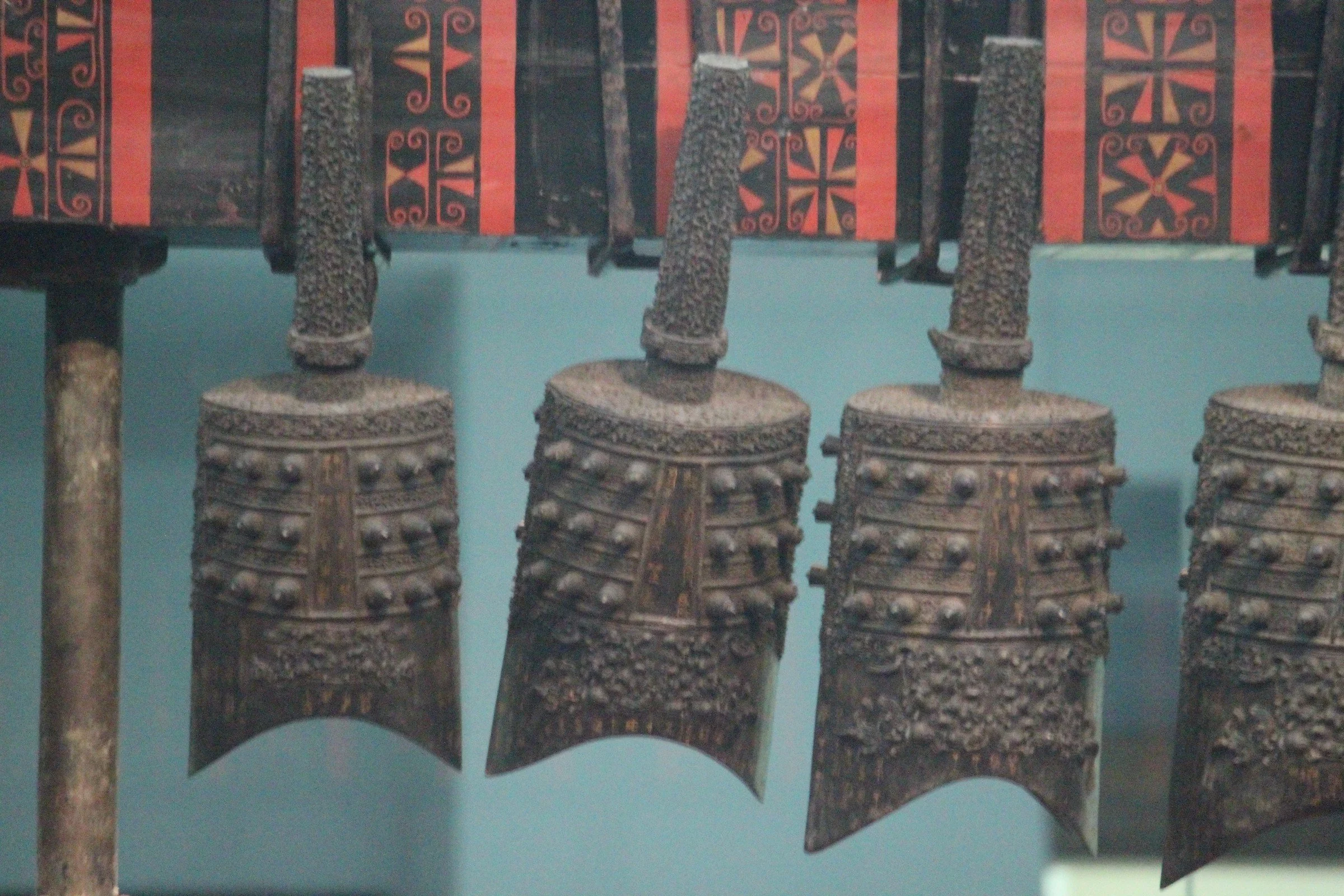
Bronze bells from the set buried with Marquis Yi of Zeng, hanging in the tomb’s gallery at the Hubei Provincial Museum in Wuhan, China, in December 2010. Photo: Gary Todd, CC0, via Wikimedia Commons
Many elite bronze bells of the Zhou period were cast with a distinctive almond-shaped cross section. Strike one area and the bell gives one pitch. Strike another and it gives a second, often separated by a musical third.
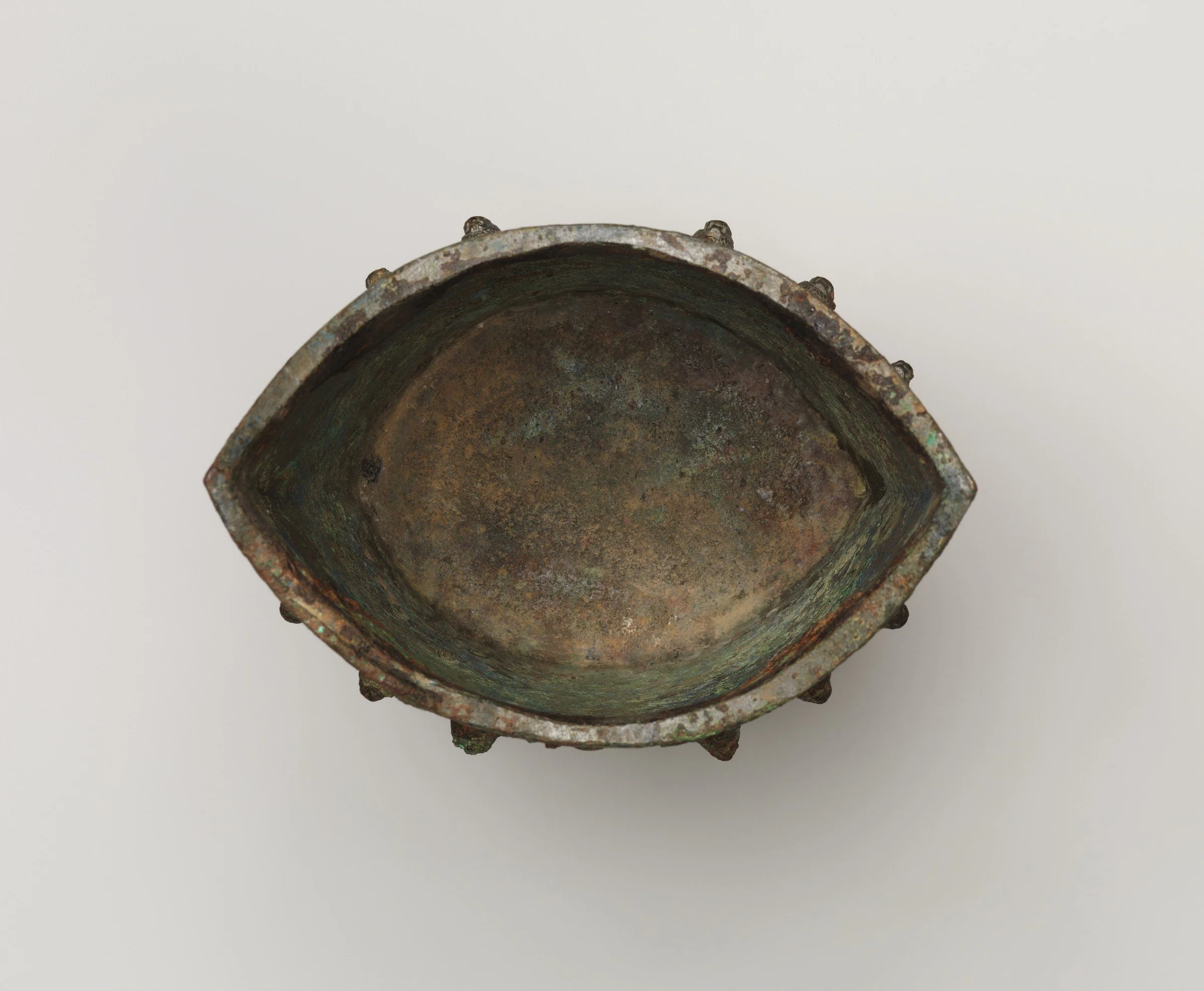
The mouth of a bronze niuzhong bell from China’s Eastern Zhou dynasty, 5th century BCE, seen from below to show its almond-shaped cross section. The bell is 29.8 cm tall and is in the Metropolitan Museum of Art. Photo: The Metropolitan Museum of Art, CC0, via Wikimedia Commons
By the fifth century BCE, bell sets could contain dozens of carefully tuned instruments. The 65-bell ensemble buried with Marquis Yi of Zeng around 433 BCE is the spectacular surviving example, but it belonged to a much older ritual and musical tradition.
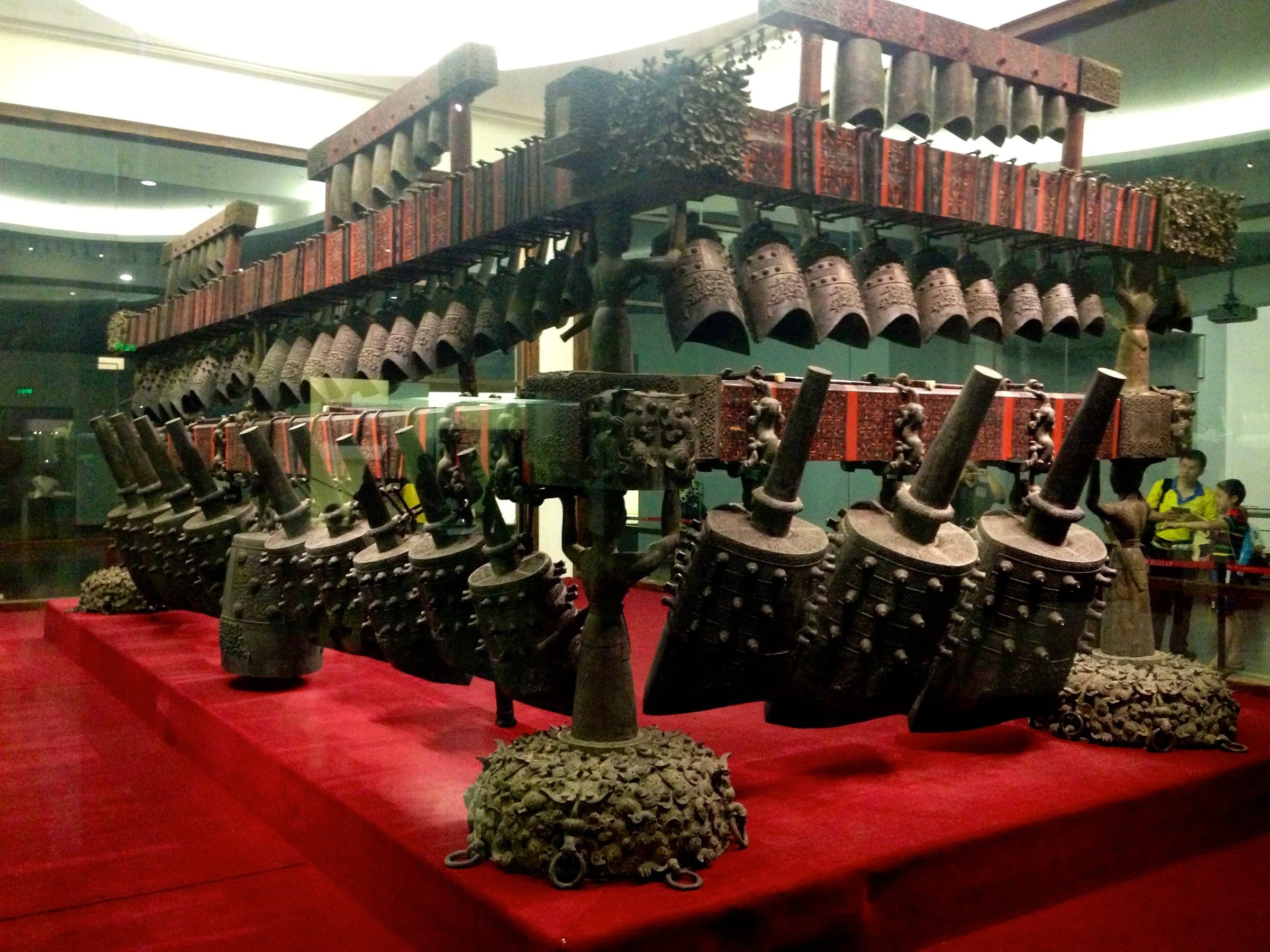
The bell set from the tomb of Marquis Yi of Zeng on display at the Hubei Provincial Museum in Wuhan, China, in August 2014. Photo: ZhengZhou, CC BY-SA 3.0, via Wikimedia Commons
These were not simply giant noise makers used to call monks to prayer. They were precision instruments tied to court ritual, rank, ancestral ceremony, and theories of ordered music.

Lacquered wooden mallets for striking bells, from the tomb of Marquis Yi of Zeng, on display at the Hubei Provincial Museum in Wuhan, China, in December 2010. Photo: Gary Todd, CC0, via Wikimedia Commons
The geometry is what makes the story land. More than two thousand years ago, founders were deliberately shaping bronze so a single bell could hold two usable notes.
