
Two of the most recognizable bells in the English-speaking world came out of the same London foundry, more than a century apart.
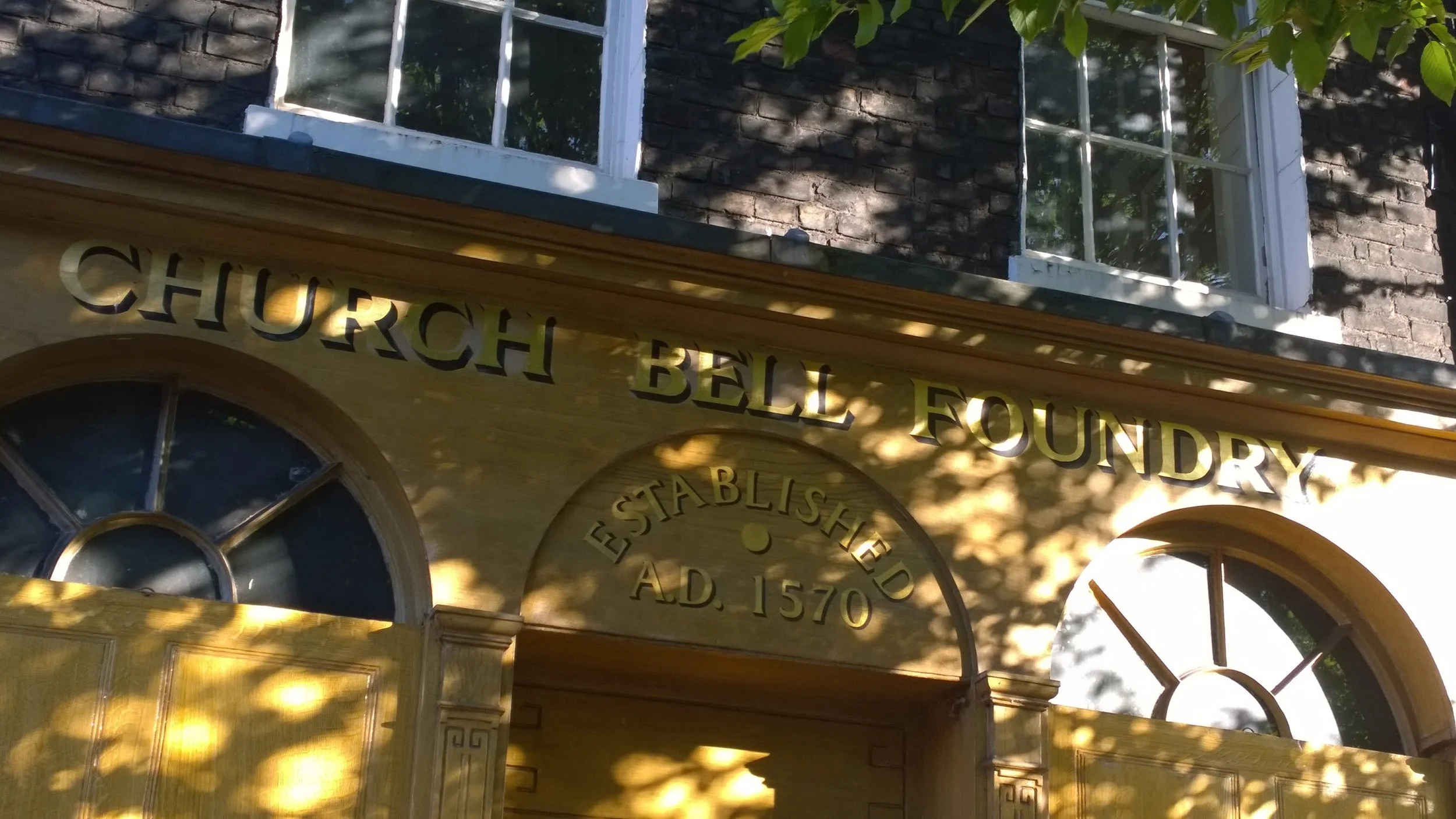
The front of the Whitechapel Bell Foundry in East London in May 2015, two years before production there ended. The lettering reads “Church Bell Foundry, Established A.D. 1570.”
Photo: terencechisholm, Public domain, via Wikimedia Commons
Whitechapel cast Pennsylvania’s State House bell in 1752. It cracked after reaching Philadelphia and was recast locally, but the original inscription and commission are part of the object now known as the Liberty Bell.
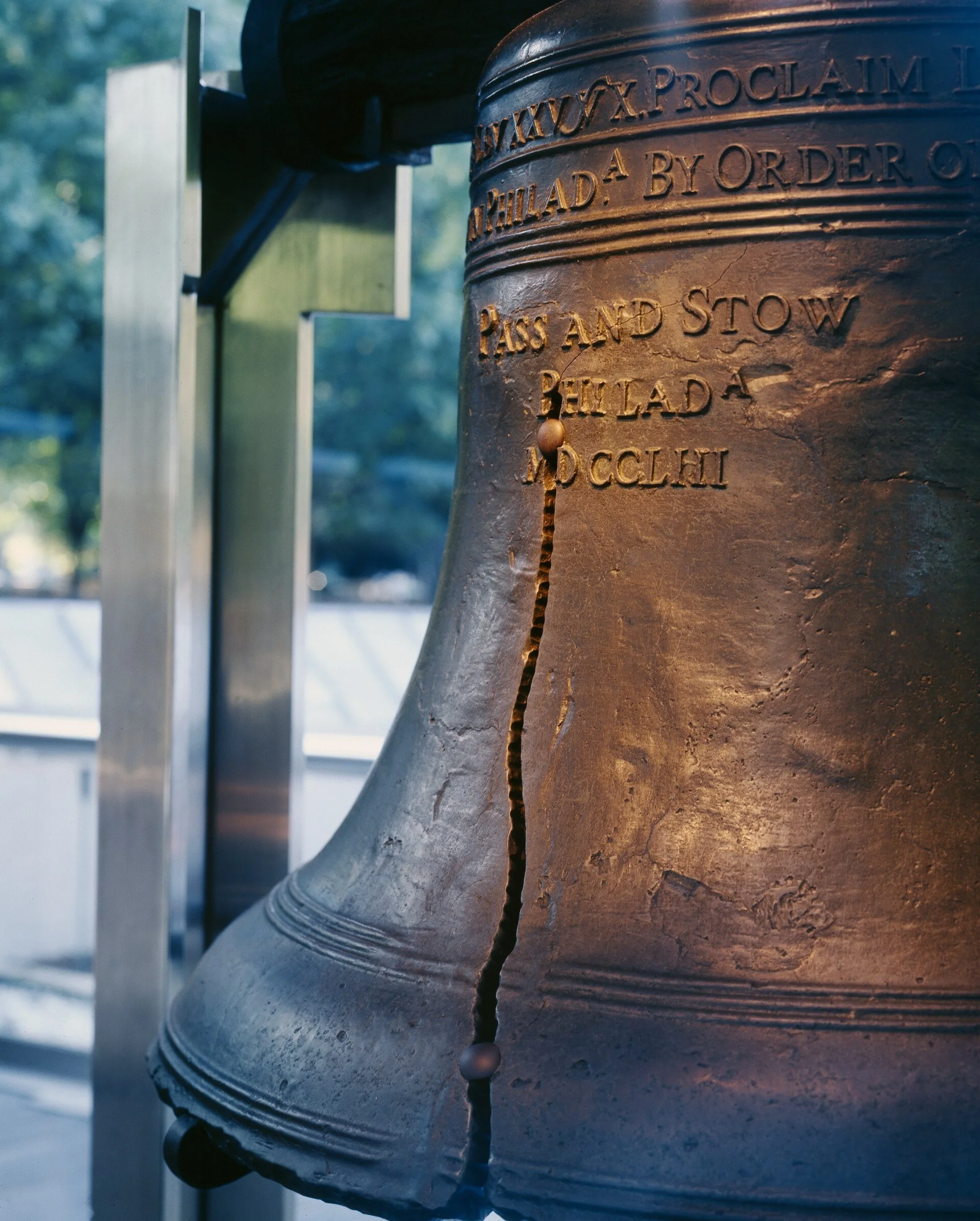
The Liberty Bell carries the names of Pass and Stow, the Philadelphia founders who recast it, with the place “Philada” and the date MDCCLIII, or 1753.
Photo: Carol M. Highsmith, Public domain, via Library of Congress and Wikimedia Commons
In 1858 Whitechapel cast a very different bell for the Palace of Westminster. Big Ben weighs about 13.5 tonnes and first struck the hour in 1859. It cracked that same year. Engineers eventually rotated it and reduced the hammer weight, which is why the bell can still strike despite the fracture that remains visible today.
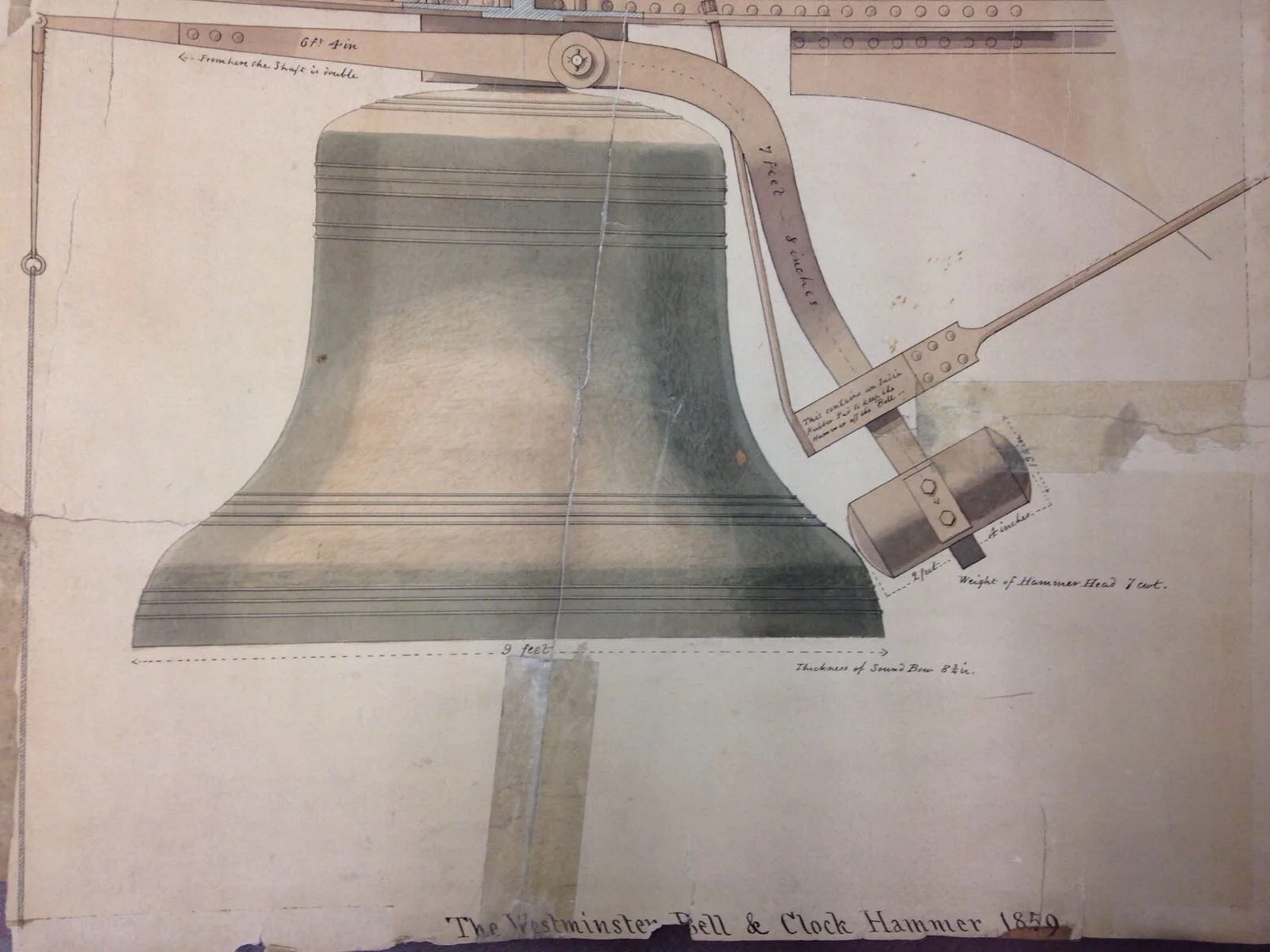
“The Westminster Bell & Clock Hammer 1859,” a Whitechapel Bell Foundry drawing of Big Ben and the hammer that strikes it. The bell is marked 9 feet across, and the hammer head is labeled 7 cwt.
Photo: Whitechapel Bell Foundry, Public domain, via London Metropolitan Archives and Wikimedia Commons
Whitechapel’s East London foundry operated for centuries before production there ended in 2017. Its history is a reminder that famous bells are rarely isolated masterpieces. They came from workshops where generations of founders learned how close a successful casting sits to a very expensive failure.
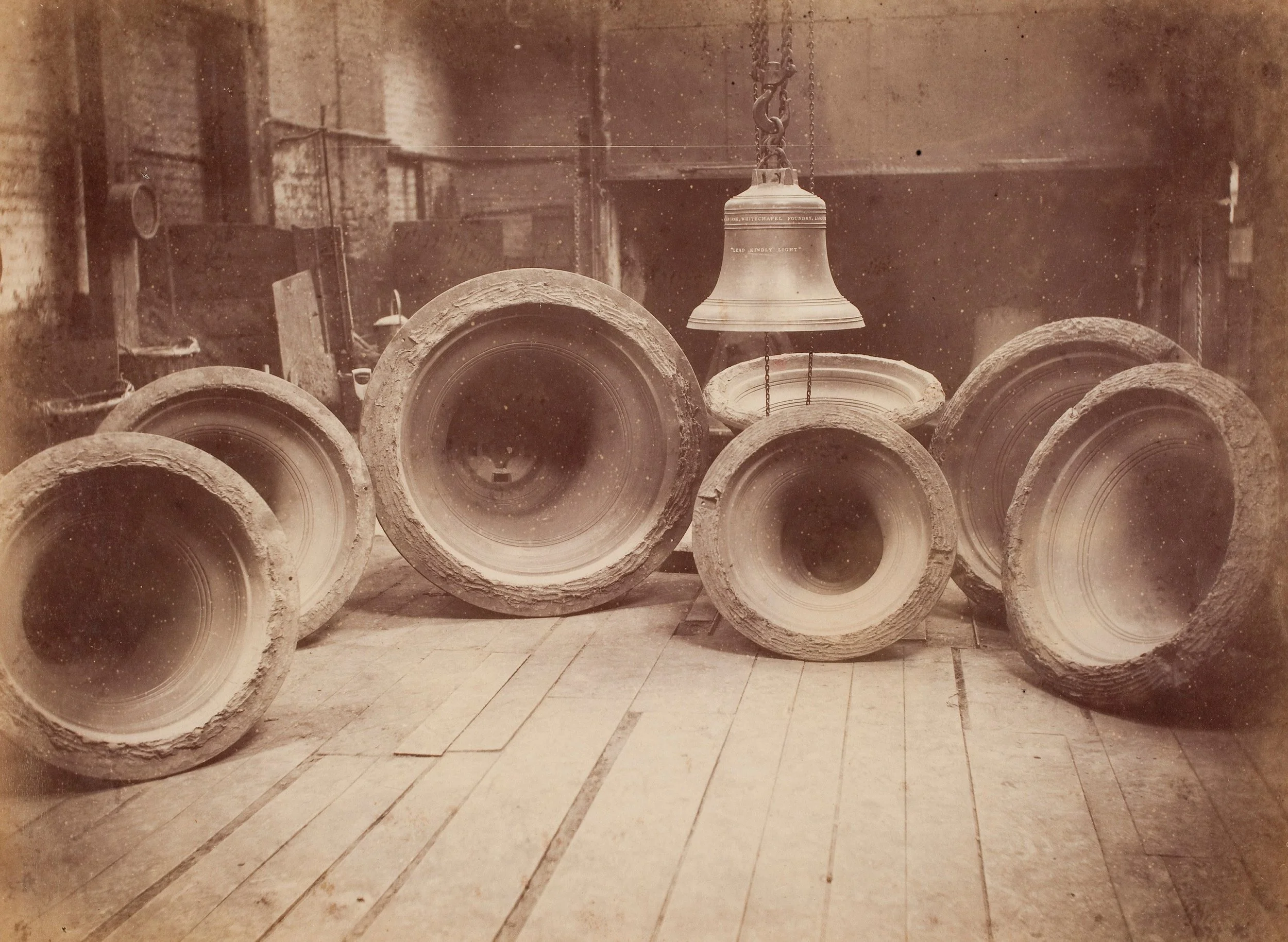
Church bells in the workshop at the Whitechapel Bell Foundry, about 1880.
Photo: Unknown photographer, Public domain, via State Library of New South Wales and Wikimedia Commons
